The United States and Iran have shattered the fragile peace of their weeks-old diplomatic detente, trading heavy missile salvos, drone waves, and kinetic strikes that reveal the baseline friction of Washington's maritime strategy.
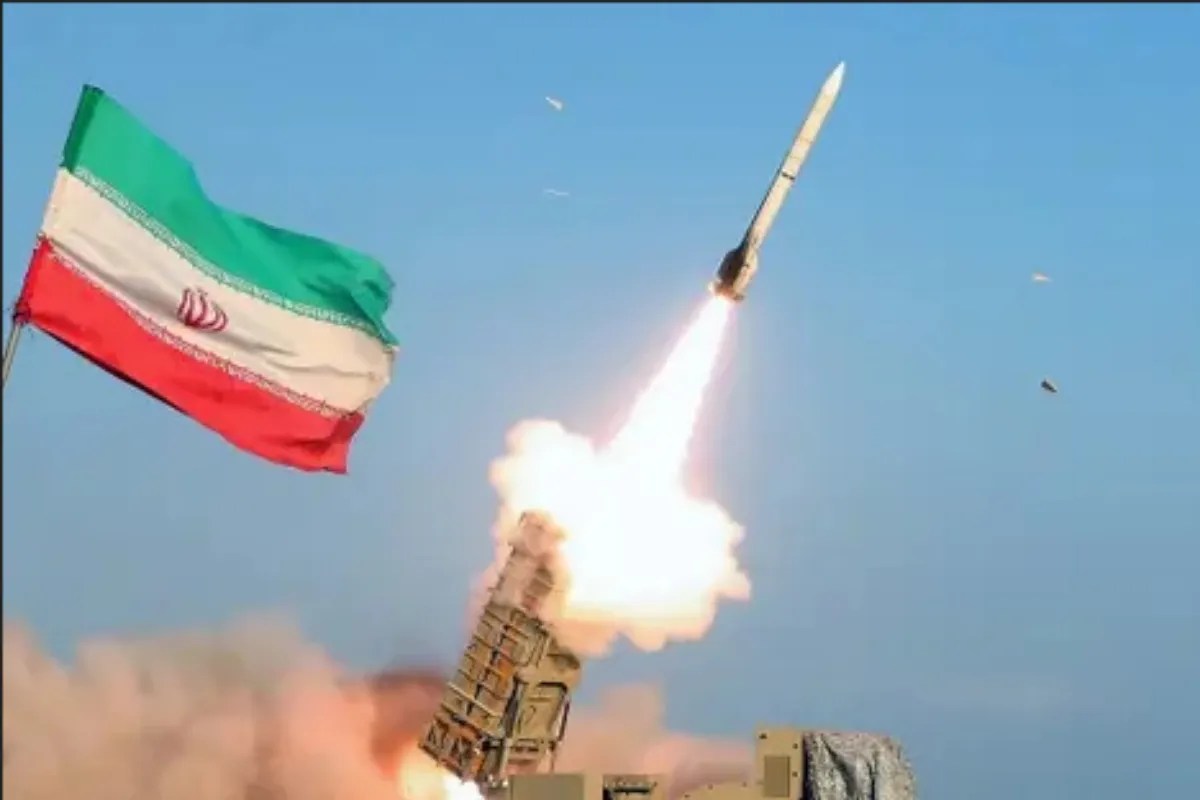
The immediate catalyst was a multi-front exchange on Tuesday. First, a U.S. aircraft fired a Hellfire missile into the engine room of an unladen, Botswana-flagged oil tanker, the M/T Lexie, disabling it as it defied a 24-hour stand-down order while bound for Iran’s Kharg Island terminal. In swift retaliation, Iran launched ballistic missiles and drone swarms aimed at regional hubs hosting Western forces, specifically targeting Kuwait and Bahrain. U.S. Central Command responded by executing precision "self-defense" strikes on Iran’s Qeshm Island, leveling a crucial Revolutionary Guard drone ground control station and radar site. Discover more on a similar issue: this related article.
While CENTCOM officials confirm all Iranian missiles either broke apart in mid-air or were successfully neutralized by Western and domestic air defense batteries, the corporate media’s focus on tactical interception misses the far more critical structural reality. This is not a random flare-up. It is the direct, predictable outcome of an aggressive American naval containment policy that attempts to maintain a high-pressure trade blockade while simultaneously trying to broker a grand diplomatic bargain.
The Logistics of Friction
The collision course was set in mid-April when the United States instituted a sweeping maritime blockade on all commercial shipping entering or exiting Iranian ports through the Strait of Hormuz. Since the enforcement mandate began, American naval assets have forcibly intercepted or redirected 122 commercial vessels. Six ships, including the M/T Lexie, have been violently disabled when their crews refused to comply with U.S. directives. More journalism by NPR delves into comparable views on this issue.
Secretary of State Marco Rubio, testifying before a congressional hearing, aggressively defended the strategy. He asserted that Iran's history of targeting commercial vessels made the blockade a necessary defensive measure, flatly stating that if global shipping cannot move safely through the region, Iranian shipping will not move at all. Rubio added that the U.S. will refuse any sanctions relief or relaxation of the blockade until Tehran fully surrenders its stockpile of enriched uranium.
Yet, this maximum-pressure strategy contains a fundamental flaw. A total maritime blockade is an act of war dressed in the language of customs enforcement. By choking off Iran's remaining economic arteries, Washington has fundamentally removed Tehran's incentive to respect the terms of the broader regional ceasefire. For the Islamic Revolutionary Guard Corps (IRGC), a ceasefire that permits the systematic destruction of the domestic economy is functionally indistinguishable from open conflict.
The Myth of Failed Deterrence
CENTCOM’s official messaging focuses heavily on technical dominance, emphasizing that the IRGC's retaliatory strikes against Kuwait's Ali Al Salem Air Base, Camp Arifjan, and the U.S. Fifth Fleet headquarters in Bahrain achieved zero operational impact. In the cold calculus of asymmetric warfare, however, physical destruction is often a secondary objective.
By forcing Kuwait to halt civilian flight operations and compelling Bahrain to shutter its national airspace, Iran demonstrated its enduring ability to impose immediate economic and logistical penalties on America's regional allies. The IRGC understands it cannot match the raw technological supremacy of a U.S. Navy carrier strike group. Instead, it relies on regional leverage, reminding neighboring Gulf states that their security remains hostages to Washington's geopolitical choices.
President Donald Trump has repeatedly insisted on social media that back-channel negotiations between Washington and Tehran are still actively moving forward. This creates a bizarre, unsustainable duality. The administration expects a cash-starved, diplomatically isolated regime to sign a definitive non-proliferation deal while American missiles are actively burning out the engine rooms of its commercial vessels in international waters.
The Geopolitical Cost of Isolation
The administration's current strategy operates on the assumption that total economic isolation will force the Iranian leadership to accept a comprehensive deal. Historical precedent suggests otherwise. When backed into a geopolitical corner, the Iranian state historically defaults to a doctrine of calculated instability, choosing to disrupt global energy markets rather than capitulating under duress.
The immediate market reaction reflects this persistent vulnerability. Brent crude prices quickly spiked toward $97 a barrel following the Qeshm Island strikes, proving that even fully intercepted missile volleys retain the power to disrupt global economic stability.
The U.S. military can continue to shoot down drones over Kuwait and intercept ballistic missiles over the skies of Manama indefinitely. The underlying structural crisis, however, cannot be solved by air defense batteries alone. As long as Washington pursues an absolute economic blockade while demanding total diplomatic capitulation, the nominal ceasefire will remain an illusion, routinely punctured by the reality of an escalating kinetic war.