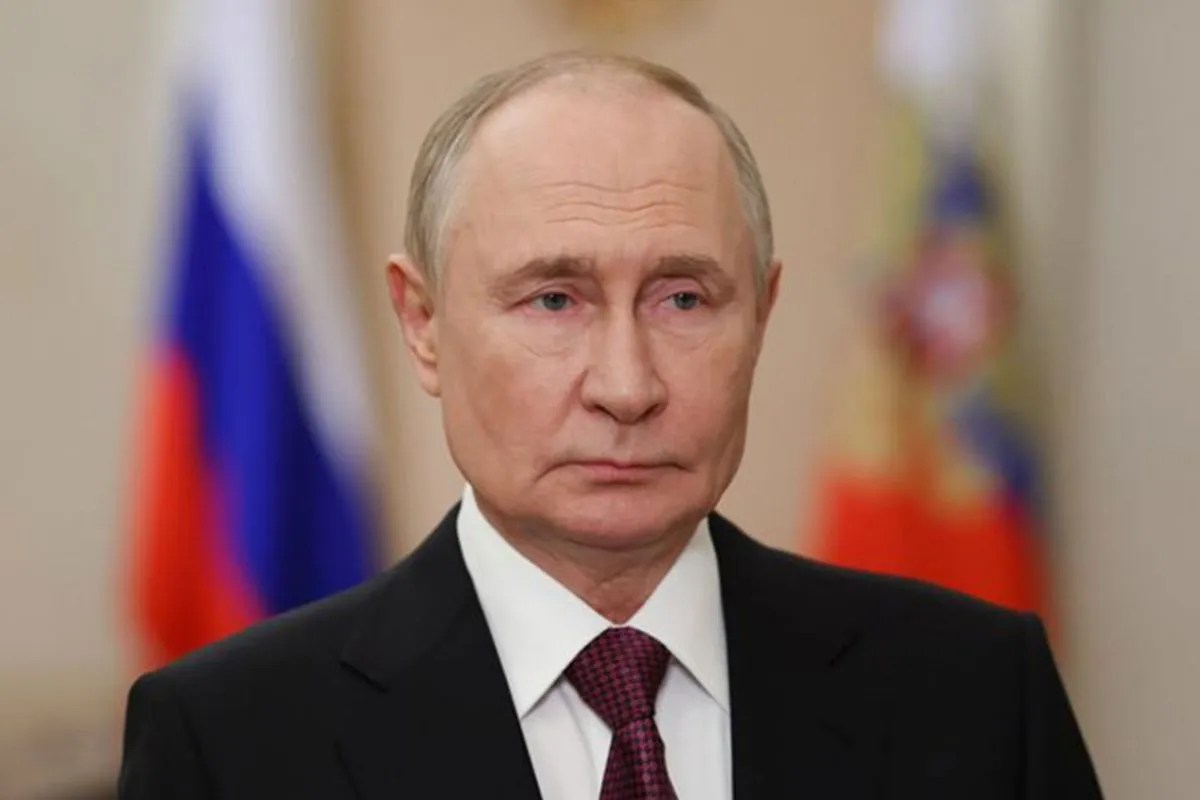
History rarely offers a clean slate, yet political survival in Damascus now depends entirely on rewriting one. Ahmed al-Sharaa, formerly known by his nom de guerre Abu Mohammad al-Julani, occupies the presidential palace once commanded by the Assad dynasty. His ascent from the leadership of a hardline militant faction to the head of a transitional state stands as one of the most jarring political pivots of the modern era. Analysts abroad scramble to label him a pragmatist or an enlightened despot, searching for signs of genuine democratic reform beneath the tailored suits and carefully scripted diplomatic overtures.
Reality on the ground proves far more complex and considerably darker than the optimistic narratives circulating in foreign capitals. Sharaa’s consolidation of power relies on a calculated performance of moderation designed to secure international recognition, lift debilitating economic sanctions, and secure foreign capital. Beneath this veneer of administrative competence lies an unyielding authoritarian apparatus forged during years of brutal civil conflict in Idlib. Understanding the trajectory of modern Syria requires looking past the public relations campaign to examine the mechanics of control currently keeping the state from fracturing entirely.
The Evolution of an Insurgent Bureaucrat
To comprehend how a former affiliate of al-Qaeda came to sip tea with international envoys, one must trace the institutional pragmatism that defined his rule in the northwest. Unlike other commanders who viewed governance merely as an afterthought to combat, Sharaa recognized early that political survival required administrative infrastructure. Through the Syrian Salvation Government, his administration taxed trade, managed municipal services, and crushed internal dissent with ruthless efficiency.
This was not a sudden ideological awakening. It was a strategic evolution. By shedding explicit transnational jihadist branding and replacing it with the technocratic branding of Hay'at Tahrir al-Sham, he positioned himself as the only viable alternative to total chaos. When the Assad regime collapsed in late 2024, Sharaa did not rush into a political vacuum without a plan. He deployed an already functioning bureaucratic machinery into Damascus, presenting foreign observers with a fait accompli: an orderly transition managed by a former extremist who promised stability over ideological purity.
The Economics of Compulsion
Rebuilding a nation reduced to rubble by a decade of civil war demands immense resources, yet international aid remains heavily conditioned. Sharaa’s administration faces the monumental task of reviving an economy crippled by corruption, infrastructure destruction, and international isolation.
State-directed recovery efforts rely heavily on central control over commerce and the co-optation of local business networks. Traditional merchant classes in Aleppo and Damascus find themselves navigating a new regulatory environment where loyalty to the transitional authority is the primary currency. While open markets are encouraged to stimulate activity, independent political organizing remains heavily suppressed.
Consider a hypothetical merchant operating a textile factory in the northern industrial corridors. Under the previous regime, business survival demanded kickbacks paid directly to Ba'ath party loyalists and security officers. Today, the extortion channels have shifted rather than disappeared. Protection money and bureaucratic compliance are now funneled through newly minted ministries overseen by former insurgent commanders. The faces at the top have changed, but the fundamental structure of extraction persists.
Managing the Margins
A stable Syria under a single centralized authority has long been an illusion, and Sharaa’s government continues to struggle with peripheral territories that refuse total subjugation. The integration of the Syrian Democratic Forces in the northeast and the management of restive southern provinces highlight the fragility of the central government's reach.
Military campaigns alternating with uneasy ceasefires characterize relations with minority populations who harbor deep, justified suspicions of a leader whose past is soaked in sectarian blood. Official decrees recognizing linguistic and cultural rights for Kurdish populations contrast sharply with reports of localized abuses and heavy-handed military crackdowns. This duality defines the al-Sharaa project: sweeping constitutional declarations designed for Western consumption, paired with coercive pacification tactics executed in the shadows.
Foreign policy follows a similarly tightrope-walk dynamic. The administration has signaled a desire to distance Syria from Iranian influence while simultaneously maintaining pragmatic channels with regional heavyweights and navigating relations with a suspicious international community. Every diplomatic handshake is calculated to chip away at remaining sanctions while preserving the internal autonomy of a regime that answers to no domestic electorate.
The Unresolved Horizon
The five-year transitional period established by constitutional declaration marches forward under the watchful eye of a security apparatus that tolerates no existential threats to its authority. International accolades from publications eager for a positive storyline in a broken region cannot mask the underlying volatility of a state held together by force of will and military dominance.
Ahmed al-Sharaa has successfully outmaneuvered his rivals, rebranded his movement, and seized the machinery of statehood, but he has yet to prove that a man who built his career on underground warfare and absolute control can ever truly foster genuine reconciliation or allow the democratic transition he periodically promises. The presidency remains less an office built on public mandate than a precarious crown resting atop an armed camp