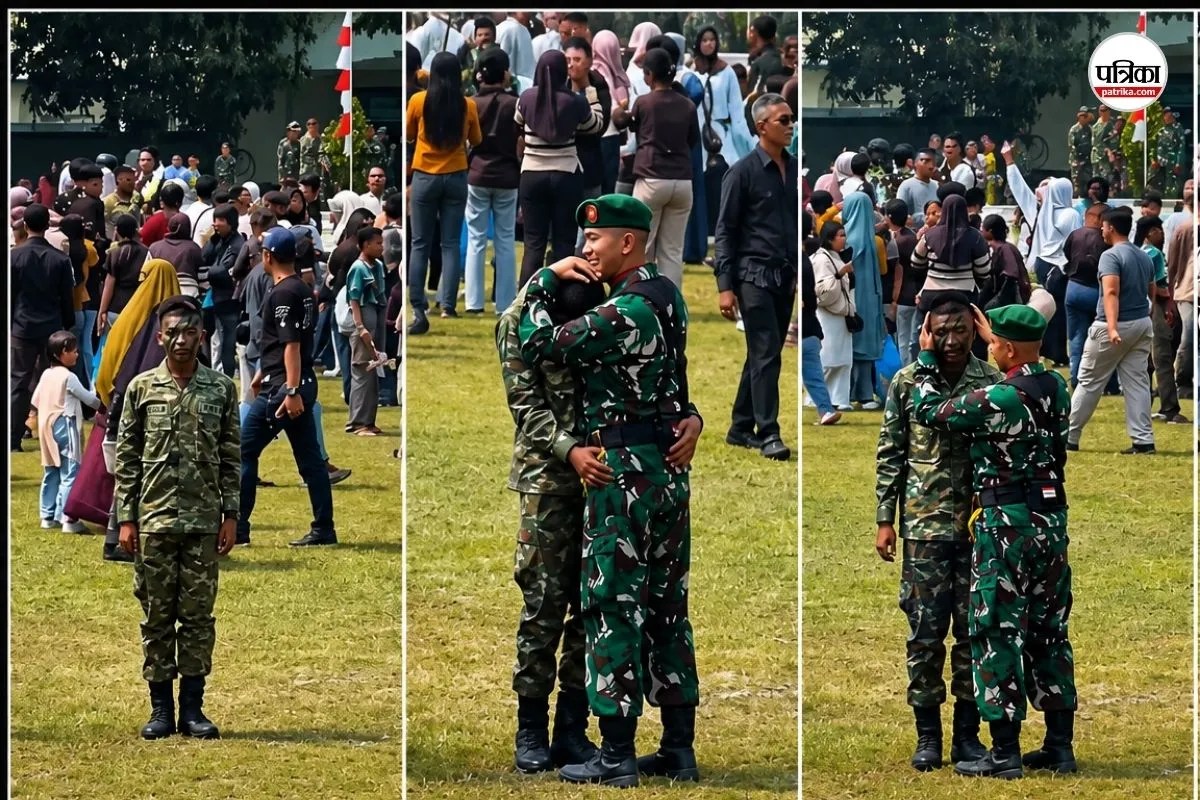
The screen glowed in the dark room, casting a pale, cold blue light across the ceiling. A video played on a smartphone. On it, a young Indonesian soldier stood tall amid a sea of green uniforms, his face set in stone, his boots freshly shined for a milestone he had dreamed of since childhood.
He had just completed his march out parade.
The cameras panned. Families crowded the perimeter. Mothers wept tears of pride, fathers hoisted younger siblings onto their shoulders, and flowers changed hands in tight, fierce embraces. But when the lens swung back to him, he was standing entirely alone. No one called his name. No one ran forward with a bouquet. No one was there to adjust the cap that sat just slightly crooked on his brow.
Across the internet, hearts broke.
Users watched the clip and felt a sudden, sharp ache in their chests. Comments flooded in, but one post cut deeper than the rest, capturing a universal grief: "Watching this, my own pain came rushing back. My family wasn't there for my march out parade either."
Silence.
We celebrate the glory of service with brass bands, grand speeches, and thunderous applause. We honor the uniform, the flag, and the abstract concept of duty. Yet we routinely forget the human being inside the heavy wool and leather. We forget the profound, hollow quiet of standing at absolute attention with no one in the crowd looking specifically for you.
Consider what happens next when the applause fades.
For many recruits who cross the threshold into military life, the physical distance is only a symptom of a much larger chasm. Poverty, distance, family disapproval, or simply the harsh isolation of a life chosen to escape a dead-end town—these are the invisible walls that separate a soldier from their loved ones. When you take an oath that demands everything, you often have to leave everyone behind.
I remember the grit of the parade ground asphalt. I remember the smell of gun oil mixed with dust and the relentless, searing heat beating down on the back of my neck. More than any of that, I remember the terrifying realization that echoed in the quiet corners of my mind during final inspection: No one is coming.
It is a strange kind of mourning. You are achieving a massive victory, perhaps the hardest thing you have ever done, yet you are doing it in total solitude. Every other face in the formation has an anchor in the stands. You are floating away, tethered only by your own sheer willpower.
Why does this specific image resonate so deeply with millions? Why did a short clip of an Indonesian recruit spark a global wave of shared trauma?
Because loneliness is the great, unspoken shadow of modern achievement. We live in societies obsessed with the highlight reel. We post the graduation photo, the promotion announcement, the finished product. We hide the empty kitchen table. We conceal the nights spent eating cold food alone in a rented room while the world outside celebrates holidays we are forced to miss.
When internet users saw that Indonesian soldier, they did not just see a foreign military milestone. They saw themselves. They saw the graduate sitting alone in an auditorium. They saw the entrepreneur celebrating a business launch with a silent toast to an empty wall. They saw every single soul who had to build their own foundation without a safety net of applause.
Duty is often romanticized as a collective endeavor. It is framed as marching side-by-side with brothers and sisters in arms, bonded by blood and sweat. That bond is real. It is fierce, unbreakable, and forged in fires that civilians can barely comprehend. But camaraderie in the barracks does not replace the specific, irreplaceable validation of a mother's hug or a father's proud nod.
When those pillars are missing, the uniform feels heavier. The medals feel colder.
We need to rethink how we witness service. We need to look closer at the edges of the parade ground, past the cheering families, to find the ones standing by themselves. Not out of pity, but out of a fierce, protective recognition.
If you have never stood alone in a crowd of thousands, consider yourself fortunate. It is a humbling, fracturing experience that forces a person to grow up all at once. You learn to become your own anchor. You learn to whisper your own congratulations into the wind.
The video of the Indonesian soldier eventually scrolled off the algorithms, replaced by the next viral flash in the pan. The internet moved on. The feeds refreshed.
But somewhere out there, that soldier is still standing tall, carrying the weight of a uniform that asked for everything and gave back silence. And somewhere out here, millions of us are still looking at our own empty chairs, remembering what it cost to cross the finish line alone.