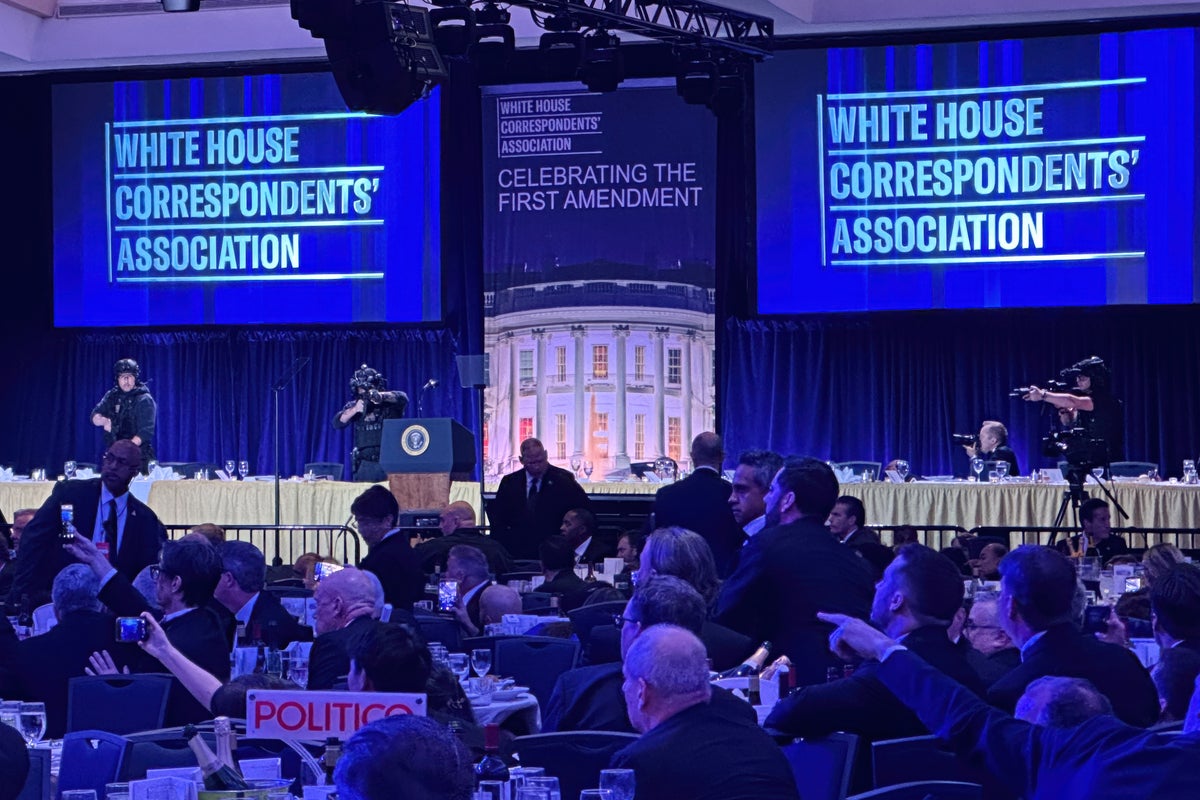
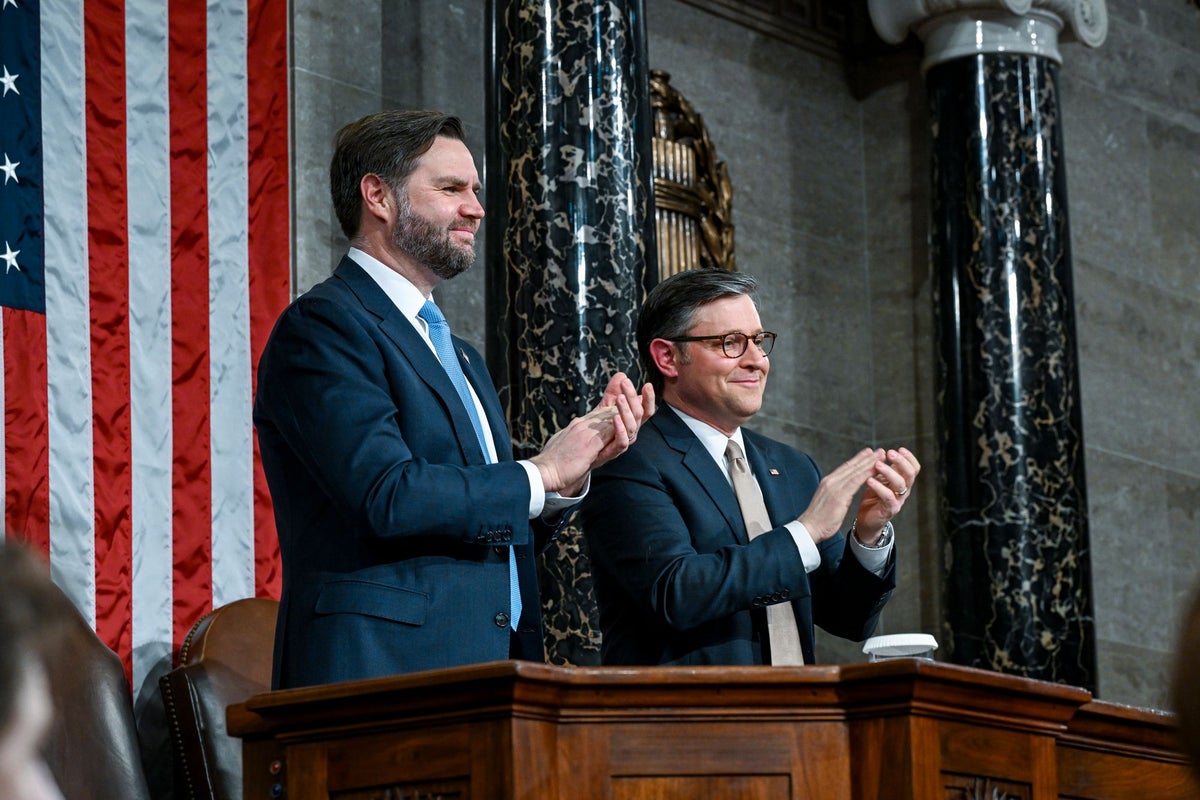
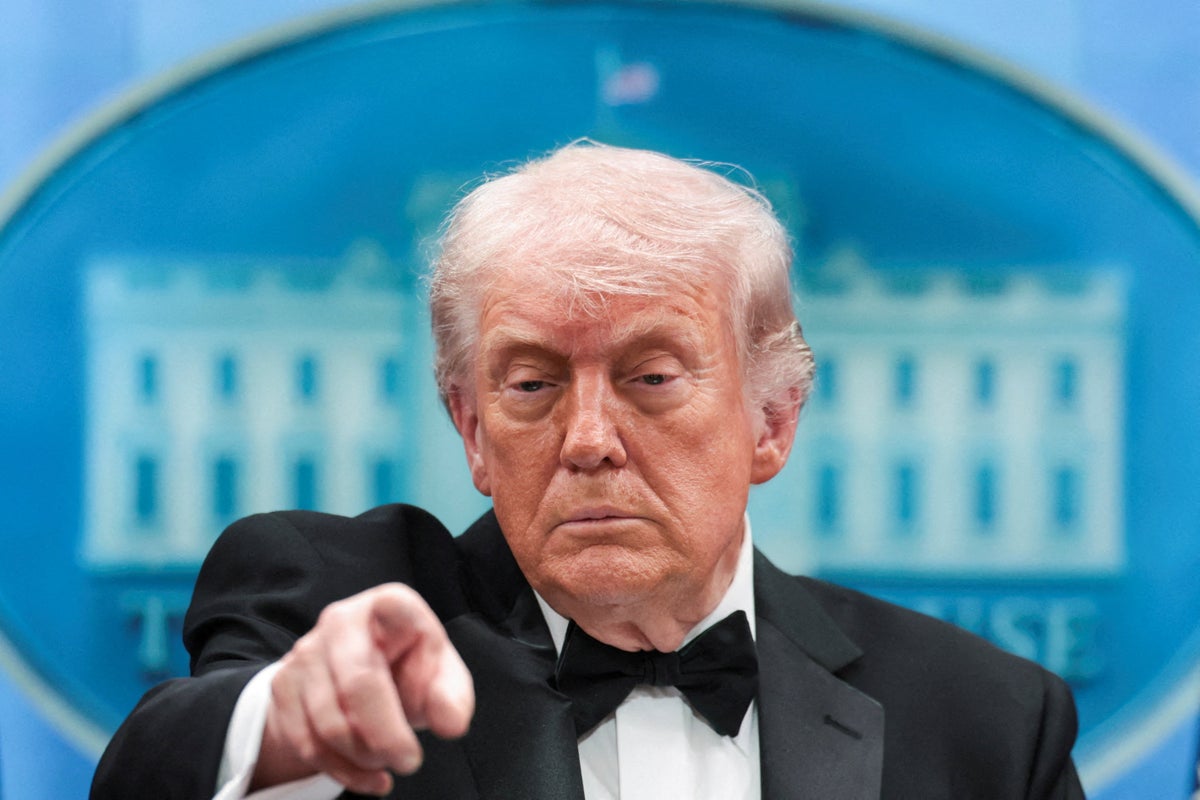
The legacy press is currently sprinting toward a cliff of its own making. When a high-profile event like the White House correspondents' dinner is hit by a security breach or a violent incident, the machinery of "breaking news" reverts to a 1990s playbook that is no longer fit for purpose. You see the same pattern every time: a rush to label, a scramble for political manifestos, and an immediate descent into tribal warfare.
But they are missing the engine behind the chaos.
Most analysts are obsessed with the "who" and the "what" while completely ignoring the "how." We are living in an era where information warfare has outpaced physical security. If you are looking at the political leanings of a suspect to explain a tragedy, you are looking at the paint on a car while the engine is exploding. The real story isn't the manifesto; it’s the systematic collapse of our shared reality through algorithmic acceleration.
The Myth of the Lone Wolf Manifesto
Stop looking for meaning in the scribblings of the deranged. The media treats these documents like sacred texts, dissecting them for ideological purity. This is a mistake. In the modern age, these "manifestos" are often designed as shitposting—deliberately contradictory documents meant to trigger maximum media friction.
When Trump or any other political figure points to a "manifesto" to claim a suspect is anti-Christian, anti-Left, or anti-Right, they are participating in a performance. The media eats it up because conflict sells subscriptions. But here is the nuance: the ideology is usually a secondary infection. The primary disease is a feedback loop where the act of violence is the ultimate "content creation" for a digital audience.
I have spent years watching how digital subcultures radicalize. It doesn't happen through a single pamphlet or a specific church. It happens through 18 hours a day of algorithmic drift. By the time a suspect picks up a weapon, their brain has been rewired by a constant stream of high-arousal, high-conflict stimuli. To argue over whether they were "anti-Christian" is to argue over which flavor of poison killed the patient. The poison is the process.
Security Theatre vs. The Digital Perimeter
The White House correspondents' dinner is one of the most "secure" rooms in the world. It is packed with Secret Service, local law enforcement, and private security. Yet, we still see these breaches. Why? Because our concept of security is rooted in the physical world while the threats are being coordinated in the digital one.
Physical barriers are useless against a threat that has been crowd-sourced. We are still using a defensive strategy based on $Static + Linear = Secure$.
$$Security \neq Walls + Guards$$
True security in the 21st century is predictive and data-driven. If the "system" cannot detect a radicalized individual until they are standing outside a ballroom with a firearm, the system has already failed. The focus on the "shooting suspect" after the fact is a post-mortem on a body that could have been saved.
The Information Trap
The Hindu and other major outlets focus on the political fallout—how this affects the polls, how it fuels the narrative of a "divided America." This is lazy. America isn't just divided; it is being actively dismantled by an information ecosystem that rewards the most extreme interpretation of every event.
When a political leader cites an "anti-Christian manifesto," they aren't informing the public. They are weaponizing a tragedy to solidify their base. When the media repeats it without a deep dive into the psychological mechanics of modern radicalization, they are acting as the delivery mechanism for that weapon.
The "status quo" news cycle looks like this:
- Incident occurs.
- Political figures claim the suspect belongs to the "other side."
- Media debates the validity of the manifesto.
- The public gets angrier.
- Nothing changes.
We need to disrupt this loop. Instead of asking "What did the suspect believe?" we should be asking "What platforms allowed this belief to become an obsession?"
The Cost of Professional Neutrality
Journalists are taught to be neutral. They report what Trump says. They report what the police say. They report what the manifesto says. This "both-sidesism" is actually a form of negligence. If one side is using a tragedy to spread misinformation about a religious or political group, and the other side is doing the same, "reporting both" just doubles the amount of garbage in the atmosphere.
True authority comes from calling out the manipulation in real-time. It’s about admitting that we don't know the suspect's true motive because the suspect themselves is likely a product of a shattered psychological state.
I've seen newsrooms dump millions into "digital transformation" only to produce the same tired, superficial stories about political blame-shifting. They are faster at being wrong. They are more "robust" at spreading panic.
Beyond the Manifesto
If we want to actually address why these events keep happening, we have to stop treating the manifesto as the "Why."
Imagine a scenario where we treated these incidents like a public health crisis instead of a political debate. In that scenario, the suspect's ideology is treated as a symptom, not the cause. We would look at data points like social isolation, platform-driven radicalization, and the failure of mental health interventions.
But that doesn't generate clicks. "Trump says suspect is anti-Christian" generates clicks.
The downside of my approach? It's boring. It requires nuance. It requires admitting that there isn't a simple "villain" that can be defeated at the ballot box. It suggests that the problem is baked into the very technology we use to read the news.
Stop Asking the Wrong Questions
People keep asking: "How do we stop the violence?"
The real question is: "How do we stop the incentive for violence?"
As long as a "manifesto" guarantees a week of international headlines and a starring role in the national political drama, there will be someone willing to write one. We are subsidizing these acts with our attention.
We are currently trapped in a cycle where the media and political leaders are effectively co-authors of the next tragedy. They provide the platform, the audience, and the historical context that these suspects crave. By focusing on the "anti-Christian" or "anti-Government" labels, we are giving the suspect exactly what they wanted: a legacy.
The only way to win is to stop playing the game. Ignore the manifesto. Starve the ideology of its oxygen. Focus on the systemic failures of the platforms and the security protocols that allowed the moment to happen.
The industry insider knows that the headline isn't the story. The headline is the distraction. The real story is that our institutions are too slow, too biased, and too addicted to conflict to actually protect us.
Burn the manifesto. Fix the algorithm. Stop the show.