The security breach involving an accused gunman near high-level officials signifies a systemic failure in the "concentric circles" model of executive protection. While public discourse focuses on the individual's intent, a rigorous analysis must prioritize the technical breakdown of threat detection and the logistical gaps that allowed a kinetic actor to penetrate secure perimeters. This incident exposes the fragile intersection of human intelligence, physical barriers, and the psychological assumptions of protection details.
The Triad of Protective Failure
Every high-profile security operation relies on three functional pillars. The failure of this specific event can be mapped directly to a degradation in one or more of these areas:
- Advance Intelligence and Surveillance: The process of identifying actors who demonstrate "pre-attack indicators" or "leakage."
- Access Control and Screening Persistence: The physical and electronic barriers designed to filter out unauthorized equipment or individuals.
- The Response Buffer: The space and time required for a protection team to neutralize a threat before it reaches the "kill zone."
In the case of a gunman targeting top officials, the primary breakdown often occurs at the intelligence level. If an individual is "believed to be targeting" specific people, as stated by defense counsel or investigators, the analytical focus shifts to how that person bypassed the initial surveillance layers. Protective details function on a probability curve; once a bad actor reaches the venue's immediate vicinity, the probability of a successful attack increases exponentially due to the reduction in reaction time.
The Calculus of Kinetic Threats
The mechanics of an assassination attempt or a targeted attack are governed by a specific cost-benefit function for the assailant. Unlike spontaneous violence, targeted attacks against high-level officials require a phase of "target acquisition."
The Target Acquisition Phase
The actor must solve three variables:
- Location Certainty: Knowing where the target will be at a specific time.
- Vulnerability Windows: Identifying moments where the target transitions (e.g., from a vehicle to a building) and security is most distracted.
- Weapon Efficacy: Ensuring the tool used matches the range and defensive measures of the environment.
When Todd Blanche—representing high-level interests—asserts the gunman intended to hit top officials, it suggests the actor had successfully navigated the acquisition phase. The failure of the security apparatus to intercept this actor earlier indicates a "blind spot" in digital or physical surveillance. If the individual was already on a watchlist or had expressed intent, the failure is one of prioritization. Security agencies often manage thousands of potential threats; the error lies in the algorithm or the human analyst who downgraded the severity of this specific actor's profile.
Proximity and the Compression of Response Time
The physical proximity achieved by the gunman is the most critical metric for evaluating the failure. In professional protection, the goal is to maintain a "Standoff Distance."
$D_{s} = v_{t} \times t_{r}$
Where $D_{s}$ is the minimum standoff distance, $v_{t}$ is the velocity of the threat, and $t_{r}$ is the reaction time of the security detail.
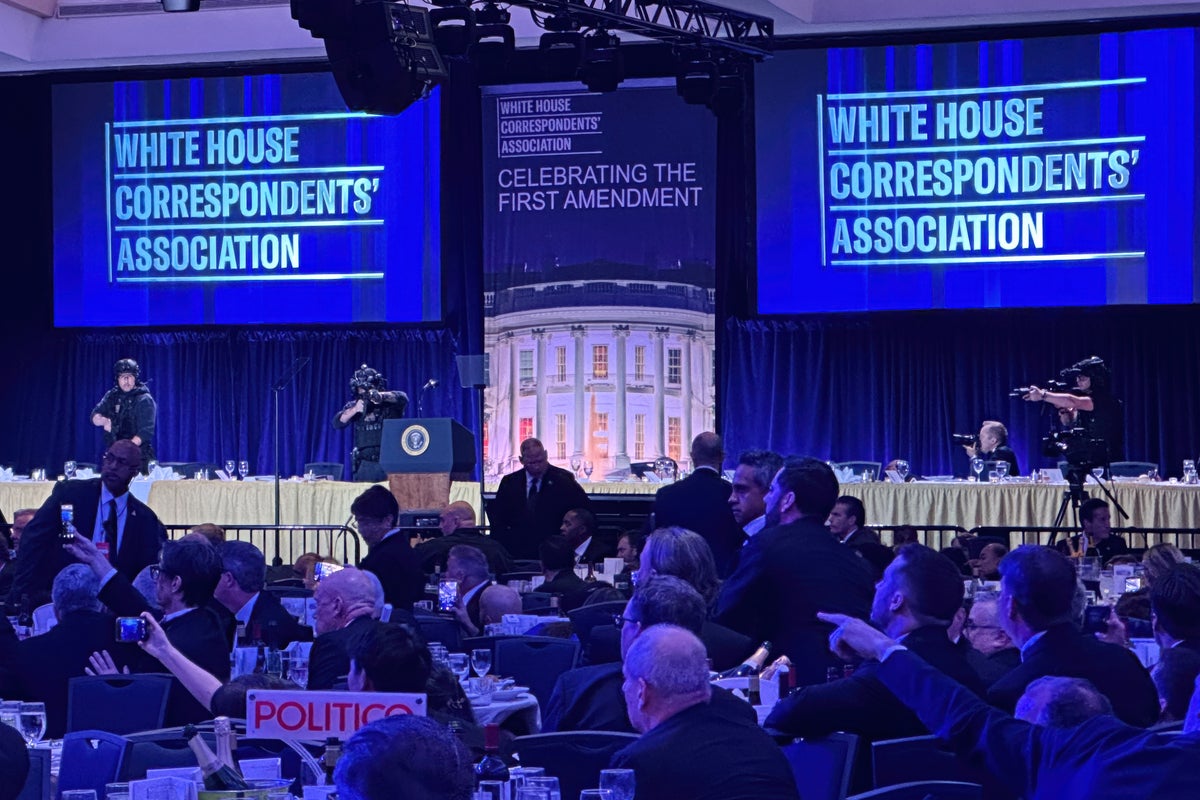
If the gunman is within the inner perimeter, $D_{s}$ approaches zero. At this point, technology is irrelevant; the outcome depends entirely on the physical intervention of human agents. The presence of a firearm near top officials at an event as heavily guarded as a major dinner suggests a breach in the screening persistence. This term refers to the rigor of checkpoints over time. Security teams often experience "vigilance decrement," where the thoroughness of searches decreases as the volume of people increases.
Categorizing the Intent: Ideological vs. Personal
To understand the broader implications of this breach, we must categorize the threat actor's motivation through a structured framework.
The Pathological Actor
Driven by internal delusions or mental instability. Their actions are often erratic, making them harder to predict via traditional intelligence but easier to spot through behavioral observation on-site.
The Tactical Actor
Driven by a specific political or ideological goal. These individuals are methodical. They conduct "dry runs," test security response times, and look for structural weaknesses in the venue. If the accused gunman falls into this category, it implies a sophisticated breach that likely involved exploiting a specific logistical flaw in the event's planning.
The Logistics of High-Volume Security Events
Major events like the correspondents' dinner present a unique challenge known as "Crowd-to-Target Density." The protection team is forced to manage a high volume of civilians (media, guests, staff) in close proximity to high-value targets.
This creates a Signal-to-Noise Ratio problem.
- The Signal: The actual threat (the gunman).
- The Noise: Thousands of legitimate attendees, bags, cameras, and rapid movements.
The second-order effect of this noise is the "Diffusion of Responsibility." Because multiple agencies (Secret Service, local police, private security) are often involved, the boundaries of jurisdiction can become porous. A gunman exploits these seams—the literal and figurative spaces between different security teams' zones of control.
The Psychological Barrier: Normalcy Bias
Security failures of this magnitude are rarely due to a lack of equipment. They are products of Normalcy Bias within the protection detail. This is the cognitive tendency to believe that because an event has been safe for decades, it will remain safe.
This bias manifests in:
- Relaxed Perimeter Checks: Assuming that "important" guests or those with certain credentials don't need the same level of scrutiny.
- Inadequate Surveillance of Secondary Access Points: Focusing on the front doors while leaving service entrances or loading docks under-guarded.
- Communication Latency: A delay in reporting a suspicious person because the observer doesn't want to "overreact" and disrupt a high-profile event.
Quantifying the Risk of "Lone Wolf" Infiltration
The "Lone Wolf" moniker is often a misnomer that masks a failure in community or digital monitoring. Most actors who target officials leave a digital trail. The breakdown is not a lack of data, but the Integration of Data.
The security apparatus must move from a reactive posture to a predictive one by utilizing:
- Sentiment Analysis: Monitoring digital platforms for escalated rhetoric that moves from general grievance to specific targeting.
- Behavioral Detection Officers (BDOs): Deploying personnel specifically trained to look for micro-expressions and physiological signs of stress (e.g., hyper-vigilance, heavy breathing, unnatural gait) that precede a violent act.
If an actor is already in the vicinity with a weapon, the predictive phase has failed. The focus then shifts to "Damage Limitation." The fact that the gunman was apprehended without hitting his alleged targets suggests that the Immediate Response Force (IRF) functioned correctly, even if the Prevention Layer did not.
Strategic Hardening of Political Venues
Moving forward, the strategy for protecting top officials must shift from a "Fortress" mindset to a "Flow" mindset. A fortress is static and can be studied/circumvented. A flow-based security model utilizes:
- Randomized Screening: Introducing unpredictable security layers that an assailant cannot plan for during a dry run.
- Red-Teaming: Constantly hiring outside experts to attempt to penetrate the security perimeter to identify gaps before an actual threat does.
- Hardened Transitions: Eliminating the "unprotected walk" where officials move through open spaces between secure zones.
The specific incident involving the accused gunman serves as a data point in a disturbing trend of increased kinetic interest in political figures. The solution is not merely "more security" but more intelligent security. This requires a shift away from the optics of protection (many guards in suits) toward the mechanics of protection (data integration, behavioral analysis, and technical screening persistence).
The most immediate strategic move is the audit of the "Credentialing Loophole." In many of these high-profile events, individuals with certain badges or affiliations are granted a lower level of scrutiny. This creates a massive vulnerability if an actor can spoof or legitimately obtain these credentials. Security protocols must be egalitarian; the level of screening must be tied to the proximity to the target, not the perceived status of the attendee.
Eliminating these hierarchical blind spots is the only way to restore the integrity of the protective circle and ensure that "intent" never translates into "execution."