When a 7.1-magnitude earthquake smashed into Japan's southern island of Kyushu, it didn't just rattle buildings. It triggered a desperate race against time. At least 13 people are confirmed dead, and emergency crews are digging through tangled concrete and industrial ruins in the Kumamoto region to find survivors.
If you've followed Japan's seismic history, this landscape feels painfully familiar. Yet every disaster brings unique structural failures that expose how even the most prepared nations face brutal logistical hurdles when the earth shakes.
Inside the Chaos at the Epicenter
The earthquake struck hard and fast, cutting power lines, tearing up highways, and plunging thousands into darkness. Prime Minister Sanae Takaichi didn't sugarcoat the situation, calling it an absolute race against time as reports of missing individuals poured in from multiple zones.
The hardest-hit locations share a common thread of heavy structural compromise. Rescuers aren't just dealing with cracked foundations; they're fighting unstable rubble that threatens to shift with every aftershock.
- The Aeon Mall Disaster: Part of the shopping complex in Kashima Town collapsed when its second floor pancaked. Worse, an explosion—suspected to be a gas leak—tore through the structure shortly after the main tremor, complicating rescue attempts and claiming the lives of two young women in their twenties.
- Industrial Collapses: At the Nippon Paper Industries factory in Yatsushiro, a massive smokestack snapped and crashed down onto the property. Emergency teams pulled survivors and bodies from the wreckage, but several workers remained unaccounted for beneath tons of debris.
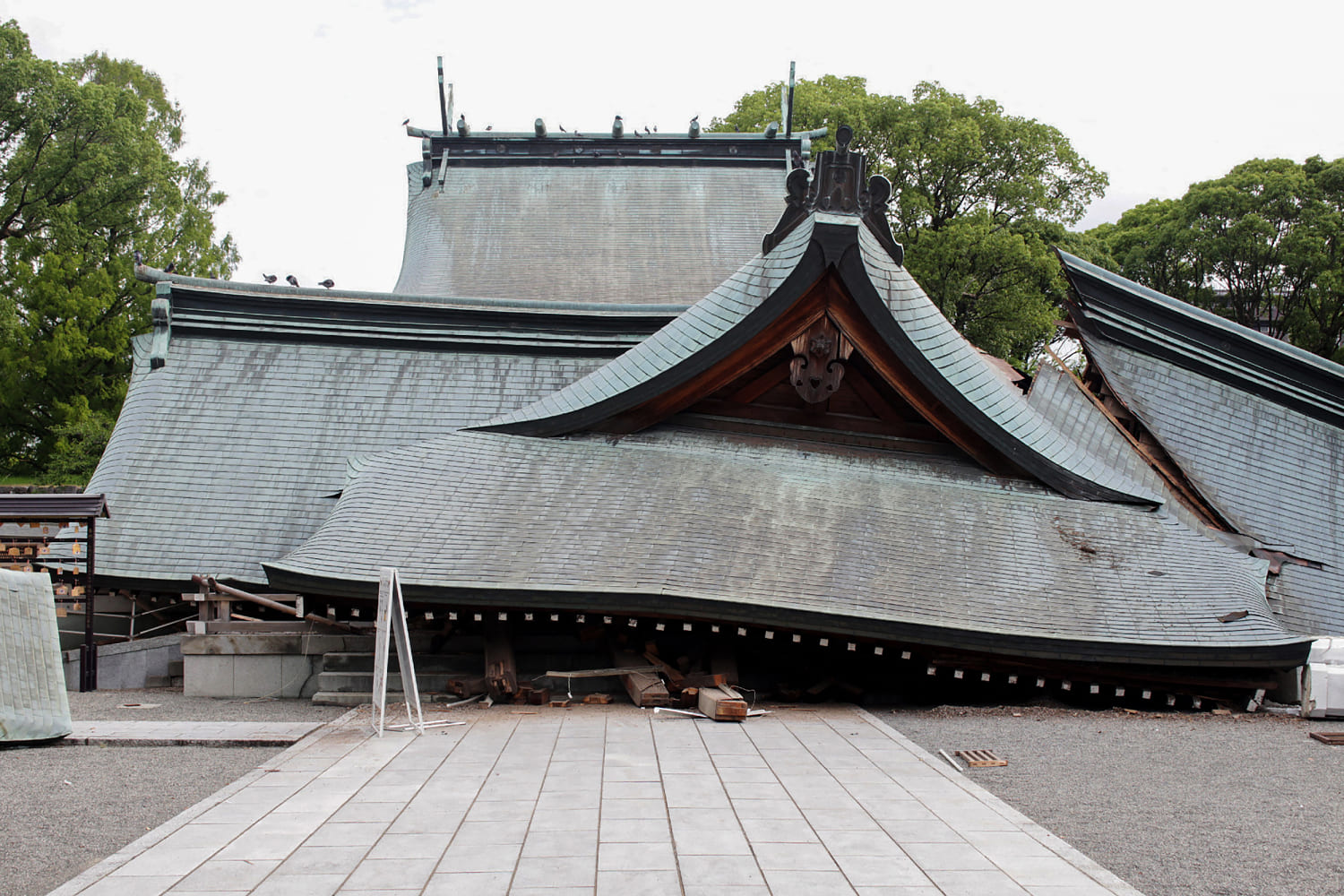
- Infrastructure Strain: Bullet train services ground to a halt, regional airports faced closures, and historic landmarks like Kumamoto Castle suffered fresh structural damage to stone walls still being repaired from the devastating 2016 seismic event.
The Hidden Battles Facing Evacuees
Surviving the initial shock is only half the battle. Over 9,000 residents packed into hundreds of designated evacuation centers across several prefectures. Meanwhile, local officials estimate that roughly 260,000 people across the wider zone faced mandatory or strongly advised evacuation orders.
The environment inside these shelters presents an immediate health crisis. Summer heatwaves in the region are pushing temperatures past 32 degrees Celsius (90 Fahrenheit). Chief government spokesman Minoru Kihara noted that authorities had to rush additional power sources to shelters just to keep air conditioning units running and prevent heatstroke among vulnerable populations.
Hospitals are feeling the pinch too. Medical facilities near the epicenter reported losing normal grid power. One local clinic transformed into a makeshift field hospital, treating dozens of patients with fractured bones, lacerations, and shock while turning away new ambulance arrivals due to capacity limits.
Why This Response Differs From Past Disasters
Japan remains the global gold standard for earthquake engineering and early warning systems. Automated alerts cut power to bullet trains fractions of a second before shockwaves hit, preventing catastrophic derailments. Nuclear regulators quickly confirmed zero abnormalities at nearby atomic plants, averting a compound technological disaster.
Even so, secondary accidents like the suspected gas blast at the shopping center remind emergency planners that modern infrastructure harbors hidden vulnerabilities. Gas lines, commercial complexes with high foot traffic, and aging industrial smokestacks react unpredictably under lateral G-forces.
Self-Defense Forces deployed thousands of personnel into the zone, bringing heavy lifting gear, portable water supplies, and medical units. But clearing debris safely takes meticulous hours. Rescuers rely on acoustic listening devices and thermal imaging to detect faint heartbeats beneath concrete slabs, where every movement risks triggering a secondary collapse.
What Lies Ahead for Kyushu
Meteorological officials are warning residents to stay hyper-vigilant. Strong aftershocks will likely rattle the Kumamoto region for days, raising the terrifying specter of triggered landslides on rain-soaked hillsides.
For the families waiting outside cordoned-off zones, recovery cannot happen fast enough. The focus remains locked on extraction, medical triage, and restoring basic utilities to tens of thousands of homes still sitting in the dark. As daylight breaks over the twisted metal of the Yatsushiro factory and the shattered facade of the Kashima mall, the sheer resilience of Japan's emergency network faces its most grueling test of the year.