Water does not negotiate. In the Okanagan Valley, every drop diverted from a snowpack-fed creek or pumped from an overstressed aquifer carries a price tag written in municipal restrictions, failing agricultural yields, and quiet ecosystem collapse. For decades, the public narrative treated this interior British Columbia basin as an endless orchard of plenty, sustained by shimmering lakes and generous summer sun. That myth is dying. Researchers wading into local streams are finding data that paints a starker, far more urgent picture than municipal brochures care to admit.
Understanding regional water security requires looking past the surface glamour of Okanagan Lake. The valley operates on a tightly closed, highly fragile hydrological loop. Winter snowpacks in the surrounding Monashee and Cascade mountains act as the primary storage bank. Spring melts fill the creeks and rivers that feed the valley bottom, where agriculture, booming residential developments, and thriving tourism economies all draw from the exact same finite pool. When the snowpack shrinks—a trend accelerating year over year—the entire system teeters.
The fieldwork happening right now in these shallow, warming tributaries is not academic exercise. Hydrologists and environmental scientists are measuring flow rates, stream temperatures, and benthic macroinvertebrate populations to understand how much water must remain in the channel to prevent absolute ecological failure. These aren't abstract numbers. They are hard thresholds determining whether salmon can spawn, whether cattle ranches get cut off mid-season, and whether suburban lawns face mandatory drought bans by July.
The Mirage of Abundance
Drive down Highway 97 in August, and the valley looks deceptively lush. Vineyards roll across benchlands in perfect geometric rows, orchards groan under the weight of ripening fruit, and pleasure boats churn the blue waters of Skaha and Osoyoos lakes. This visual feast masks a profound structural vulnerability. The Okanagan is technically a semi-arid shrub-steppe. Without massive, engineered intervention and constant pumping, large parts of this valley would naturally revert to sagebrush and cactus.
For generations, water management operated on a supply-side philosophy. If demand went up, engineers built bigger intake pipes or drilled deeper wells. That era is over. The subterranean aquifers underlying the valley floor are not infinite underground lakes waiting to be tapped; many are slow-recharging basins currently operating at a deficit. When extraction rates outpace natural recharge from precipitation and mountain runoff, water tables drop. Wells run dry. In some agricultural pockets, irrigators are already hauling water or scrambling to secure junior water licenses that get shut off first during dry spells.
Climate volatility has rewritten the rules. Spring freshets now arrive weeks earlier than historical averages, slamming the valley with high-water events in April rather than sustaining a steady melt through June and July. By the time peak agricultural demand hits in the scorching heat of mid-summer, the natural reservoirs are empty. Streams that once ran cold and clear all summer now trickle through baking gravel beds, pushing native fish populations toward thermal stress and localized extinction.
Inside the Streamflow Monitoring Trench
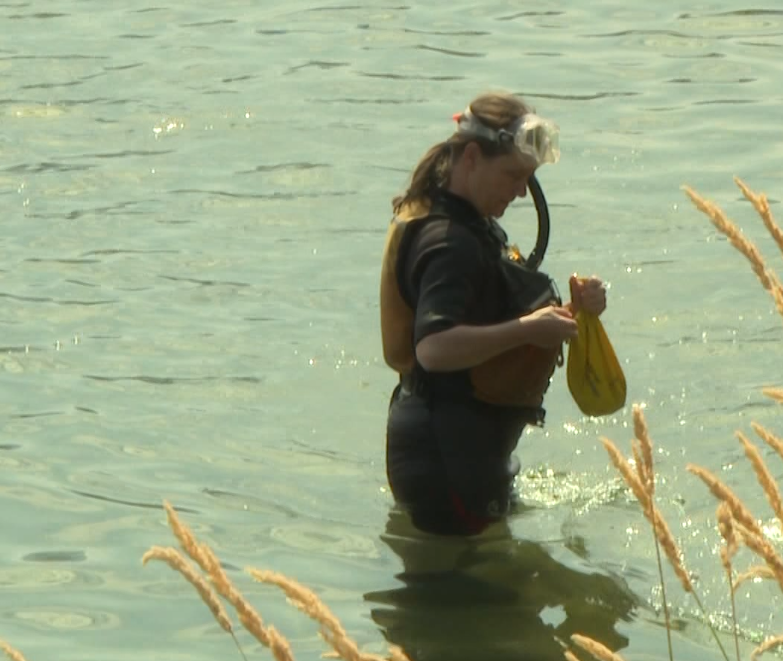
To grasp what is happening on the ground, follow the researchers into the mud. Armed with portable flow meters, data loggers, and turbidity sensors, field teams wade waist-deep into glacier-fed creeks that feed the main valley lakes. Their mission is to measure discharge down to the liter per second, mapping how much water vanishes between high-elevation forest canopies and valley-bottom irrigation intakes.
The tools have evolved, but the physical reality remains unforgiving. Automated telemetry stations now beam real-time data back to provincial labs, tracking the pulse of watersheds in agonizing detail. What those numbers reveal is a system under chronic strain. Low flows in late summer concentrate pollutants, raise water temperatures to lethal limits for cold-water species like kokanee salmon and rainbow trout, and trigger toxic cyanobacteria blooms in the lakes below.
Consider the role of agriculture, which consumes the lion's share of the region's allocated water. Modern vineyards and orchards have largely moved away from wasteful flood irrigation, adopting sophisticated drip systems that target moisture directly to the root zone. Yet efficiency gains often trigger a paradox known to economists and hydrologists alike. When it becomes cheaper and easier to use water efficiently, growers often expand their cultivated acreage or plant thirstier crops, resulting in zero net reduction in total water consumption. The basin remains just as thirsty as it was before the drip lines went in.
Municipalities share the blame. Urban sprawl creeps steadily up the valley benches, replacing native bunchgrass and permeable forest floors with asphalt, concrete, and manicured lawns. Every new subdivision draped in Kentucky bluegrass adds a permanent drain on municipal water treatment plants and deep-well pumps. Turf grass does not belong in a semi-arid desert, yet master-planned communities continue to market lush green landscapes as the standard of luxury living.
The Regulatory Labyrinth
Managing this finite resource requires navigating a historical patchwork of water rights that date back to the colonial era. British Columbia's Water Sustainability Act replaced century-old legislation, finally requiring groundwater users to license their wells alongside surface water diverters. It was a necessary step, but implementation has been sluggish, contentious, and underfunded.
Thousands of legacy well owners still operate in a regulatory gray zone, drawing water from shared aquifers without comprehensive monitoring or volume caps. When shortages strike, adjudicating who gets water and who gets cut off sparks bitter disputes between commercial agriculture, environmental conservationists, and expanding municipalities. Senior water rights holders hold immense legal leverage, while junior users—often smaller organic farms or ecological restoration projects—absorb the brunt of early season restrictions.
Enforcement remains a weak link. Provincial compliance officers are spread dangerously thin across massive geographic territories, leaving illegal water diversion largely unchecked outside of high-profile crisis years. Without robust, real-time auditing of actual consumption versus licensed allocations, the system relies heavily on the voluntary goodwill of users who have every financial incentive to maximize their intake before the tap runs dry.
Indigenous communities throughout the Okanagan Nation Alliance are asserting their inherent stewardship rights, bringing traditional ecological knowledge into modern water governance. Their involvement injects a long-term, holistic perspective into planning discussions that historically prioritized short-term economic yield over watershed health. Indigenous leadership emphasizes that water is not a commodity to be fully extracted until empty, but an ancestral relative with its own intrinsic right to flow and sustain life.
Preparing for the Inevitable Dry Year
The trajectory is clear. Without radical policy shifts and substantial infrastructure investments, the Okanagan faces a future defined by chronic rationing and escalating resource conflicts. Farmers are already experimenting with drought-tolerant rootstocks, subterranean moisture sensors, and dry-farming techniques that abandon irrigation entirely for specific varietals. These innovations show promise, but they require capital investments that smaller generational farms struggle to afford.
On the municipal side, progressive towns are moving toward mandatory xeriscaping bylaws, tiered water pricing that penalizes excessive consumption, and decentralized wastewater recycling plants that treat greywater for industrial and agricultural reuse. These measures are no longer optional environmental branding exercises. They are basic survival metrics for communities clinging to the edges of a warming desert.
The data gathered by researchers in the streams provides the early warning system. Every low-flow reading and high-temperature spike is a flashing red light on the dashboard of a regional economy barreling toward a hard limit. The question is no longer whether the Okanagan will run out of water during a bad drought year, but how gracefully the valley will adapt when the taps finally slow to a trickle.