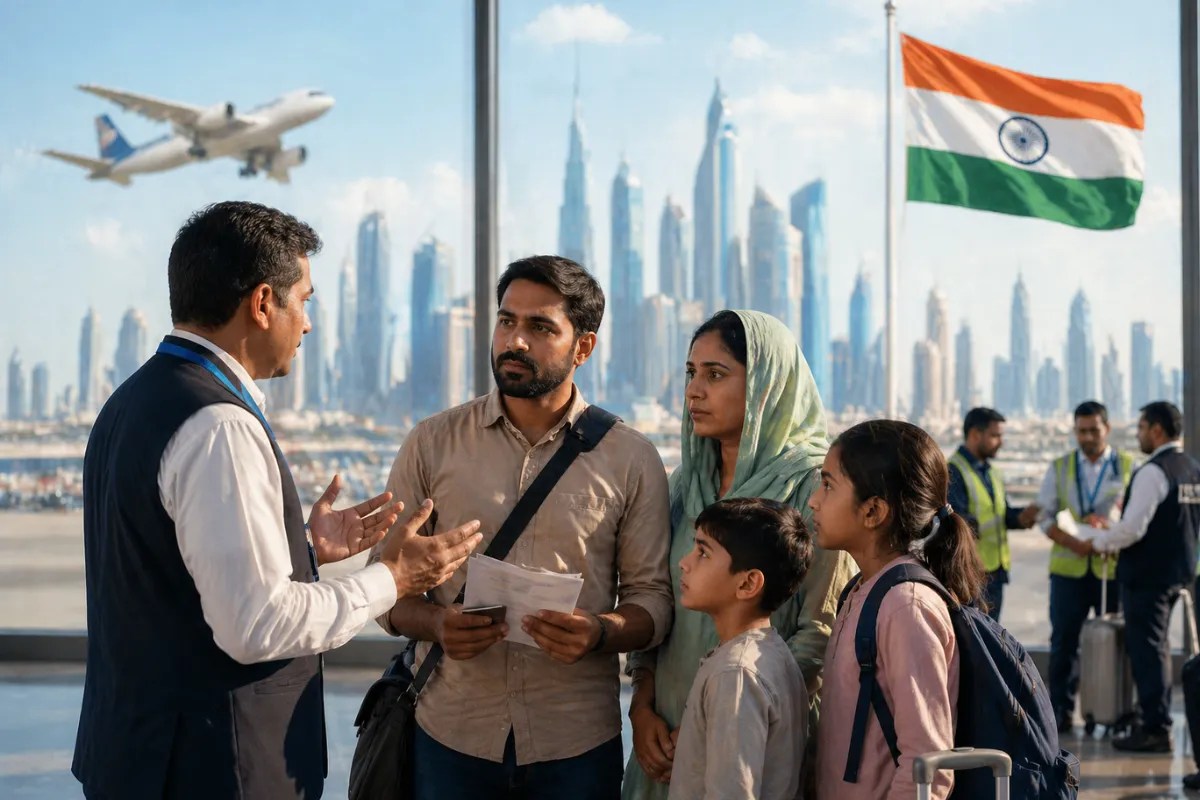
The Ministry of External Affairs is currently managing a demographic logistics puzzle that dwarfs most peacetime operations. Since February 28, 2026, over 13.19 lakh passengers have moved from the Gulf and West Asia back to India. This mass movement follows a sharp escalation in regional conflict that began with the Iran crisis and has since radiated outward, threatening the stability of the Strait of Hormuz and the safety of roughly 9 million Indian nationals. While official advisories focus on safety, the underlying story is a desperate government scramble to protect energy security and economic remittances without burning diplomatic bridges.
The Strategy of Quiet Extraction
India’s traditional playbook in West Asia is defined by non-interference. However, the current conflict has forced a shift from passive observation to active extraction. Unlike previous crises where the government waited for a full-scale war to trigger evacuations, the 2026 strategy is one of "proactive thinning." By keeping commercial flight corridors open while issuing increasingly stern advisories, New Delhi is attempting to reduce the population of vulnerable citizens in high-risk zones like Iran, Israel, and Lebanon before a total regional shutdown occurs.
The numbers released by Additional Secretary (Gulf) Aseem R Mahajan suggest a massive voluntary exodus. The 13.19 lakh returnees represent nearly 15% of the regional diaspora in just two months. This isn't just about safety; it is about the sudden evaporation of economic stability. For the first time in decades, the "Gulf Dream" is being weighed against the immediate physical risk of a widening theater of war.
Energy Sovereignty and the Hormuz Chokepoint
The security of Indian nationals is inextricably linked to the security of the sea lanes they navigate. The Ministry of Petroleum and Natural Gas recently took the unusual step of issuing domestic fuel stock assurances, a move designed to prevent panic buying as the situation in the Strait of Hormuz remains precarious.
India’s reliance on this corridor is its greatest strategic vulnerability. To counter the volatility, the government has implemented several high-stakes domestic measures:
- Export Levies: A sudden hike in export levies on diesel to ₹55.50 per litre and ATF to ₹42 per litre to keep fuel on Indian soil.
- The RELIEF Scheme: A ₹497 crore intervention for exporters whose goods are literally stuck at sea or in conflict-heavy ports.
- Refinery Repurposing: Refineries in Mumbai, Kochi, and Vizag have been ordered to prioritize raw materials for the pharmaceutical and chemical sectors, anticipating a prolonged disruption in global supply chains.
The Hidden Crisis for Seafarers
While the headline news focuses on land-based advisories, the real investigative "dark spot" is the status of Indian seafarers. Thousands of Indians man the tankers and cargo ships that traverse the Persian Gulf. The Directorate General of Shipping has been handling an unprecedented volume of emergency calls as vessels find themselves in the crosshairs of drone strikes and naval blockades.
So far, over 2,700 seafarers have been repatriated, but many more remain aboard foreign-flagged vessels. These individuals are often the "forgotten" diaspora, lacking the immediate protection of an embassy because they are technically in international waters or operating under "flags of convenience." The MEA’s outreach to Iranian authorities specifically regarding the Strait of Hormuz highlights that the safety of the ship is now as important as the safety of the citizen.
The Diplomatic Tightrope
The diplomatic dance behind these advisories is performed in the dark. National Security Advisor Ajit Doval’s recent trip to Riyadh and the External Affairs Minister’s visit to the UAE were not social calls. They were high-level negotiations to ensure that if the conflict goes "total," India has secured landing rights and logistical hubs for a potential massive airlift—a "Vande Bharat" mission on steroids.
India is currently the only major power that maintains functional relationships with all primary combatants in this conflict. This neutrality is the only reason 1.3 million people were able to leave via commercial channels without a shot being fired at their transport. But neutrality has a shelf life. As the conflict intensifies during the current month of April, the pressure on India to take a side—or at least a firmer stance—is growing.
Domestic Impact of a Protracted Conflict
Back home, the government is treating the West Asia crisis as a domestic emergency. Over 2,100 raids were conducted in a single day to stop the hoarding of LPG. This shows that the administration expects the crisis to last long enough to affect the kitchen budgets of the Indian middle class. The "Natural Gas and Petroleum Products Distribution Order, 2026" was essentially a wartime measure enacted in a time of technical peace.
The government is also pushing an aggressive transition to Piped Natural Gas (PNG) to reduce the reliance on imported LPG cylinders. Since March, over 5.45 lakh new PNG connections have been gasified. This isn't just an environmental push; it is an attempt to insulate the domestic energy market from the explosions occurring 3,000 miles away.
The definitive action for Indian nationals still in the region is clear: do not wait for the government to declare a formal evacuation. The logistics of moving 9 million people are impossible under fire. The current "advisory" period is the only window for a controlled exit before the geography of West Asia becomes a closed loop.