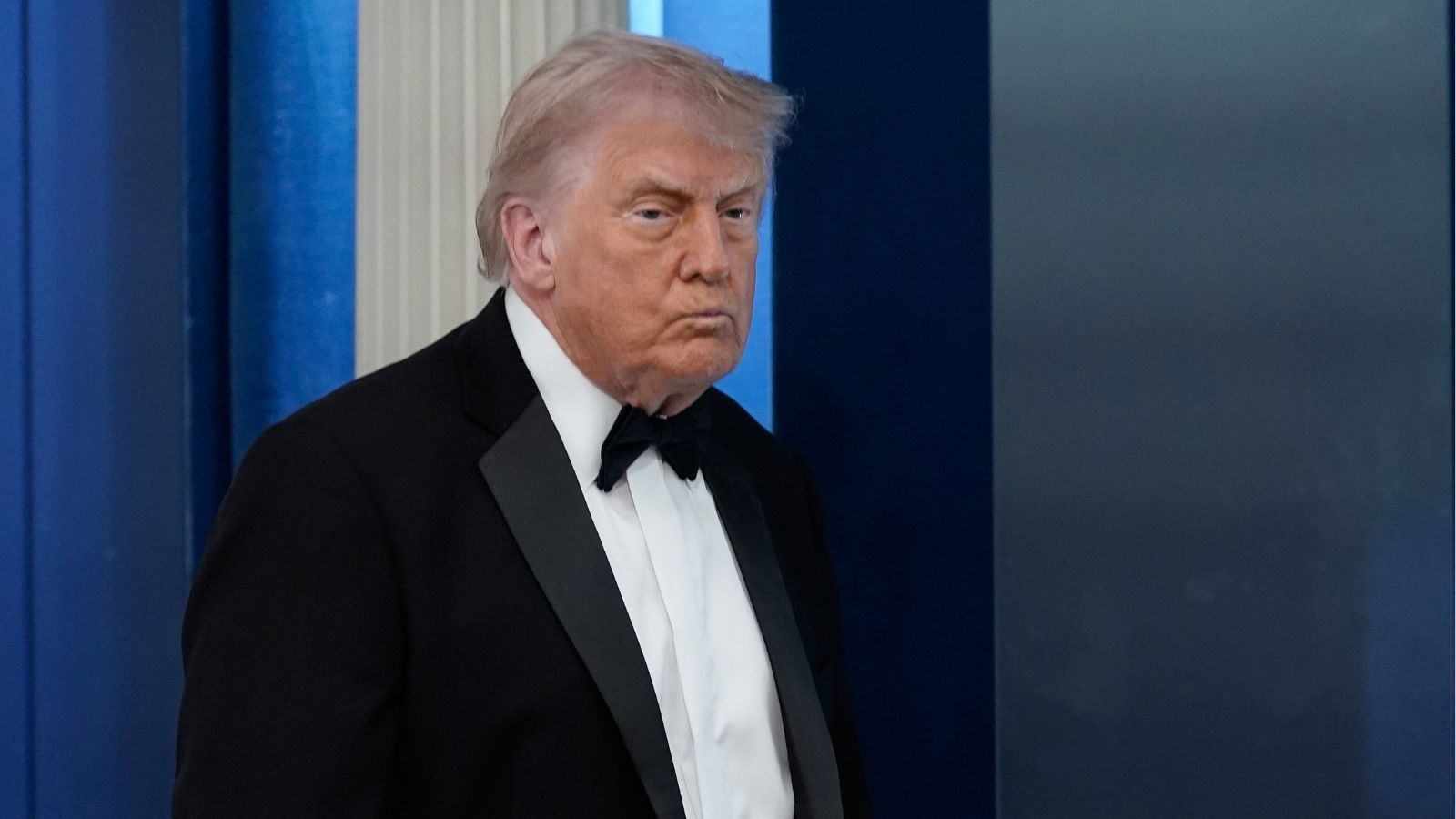
The confrontation between Donald Trump and the press regarding the alleged "manifesto" of a shooter represents a collision between two divergent operational models: the traditional journalistic demand for transparency and a political strategy rooted in the aggressive redirection of liability. This interaction is not merely an emotional outburst; it is a case study in the tactical use of high-intensity rhetoric to obscure informational voids. When a politician adopts an adversarial posture during a crisis, they are often executing a defensive maneuver designed to shift the focus from the content of a document to the perceived bias of the interrogator.
The Information Gap and the Burden of Proof
Political communication operates under a specific cost-benefit analysis during active investigations. In the vacuum created by unreleased law enforcement documents, such as a shooter's manifesto, speculation becomes the primary currency. The "disgrace" label applied to the reporter serves as a preemptive strike against the validity of the question itself. Building on this topic, you can also read: Colombia Terror Escalation and the Myth of Total Peace.
- Strategic Obfuscation: By framing the request for information as an act of malice or "pedophilia," the speaker attempts to delegitimize the inquiry. This is a classic diversionary tactic where the character of the messenger is used to shield the message from scrutiny.
- The Asymmetry of Evidence: Journalists operate under the assumption that public interest necessitates the release of motive-based documents. Conversely, political entities view these documents as potential liabilities that could link their rhetoric to the actions of a radicalized individual. The resulting tension is a structural byproduct of their conflicting objectives.
The refusal to address the manifesto’s contents—or the timeline of its release—indicates a calculated risk assessment. If the document contains language that mirrors political slogans, the cost of transparency is high. If the document is withheld, the cost is a temporary skirmish with the media, which often yields a net positive in terms of base mobilization.
Psychographic Priming and the Labeling Mechanism
The use of extreme pejoratives like "pedophile" in a political context is rarely accidental. It functions as a psychological anchor. Within the current political ecosystem, this specific label carries the highest possible social and moral weight, designed to trigger an immediate "us versus them" response in the audience. Experts at NBC News have shared their thoughts on this situation.
The Mechanism of Moral Outsourcing
When a public figure accuses a member of the press of being a "disgrace" or worse, they are outsourcing the moral judgment to their supporters. This creates a feedback loop where the validity of the reporter’s question is drowned out by the volume of the counter-accusation. The logic follows a predictable sequence:
- The question implies a connection between the politician and a violent act.
- The politician identifies the question as an existential threat.
- The politician utilizes a "nuclear" rhetorical option to neutralize the threat.
- The media coverage shifts from the shooter’s motives to the hostility of the exchange.
This shift is a successful outcome for the political actor. It replaces a complex, data-driven discussion about radicalization and policy with a simplified narrative of media bias.
The Institutional Failure of the Manifesto Release Cycle
The delay in releasing shooters' writings creates a recurring bottleneck in public discourse. This delay is governed by three primary variables: law enforcement protocols, the risk of "copycat" contagion, and political pressure.
Variable 1: Law Enforcement Discretion
Investigative agencies prioritize the integrity of the prosecution over the public's "right to know." However, when a manifesto is leaked or selectively quoted, it creates an environment of partial truths. This partiality allows political actors to fill the gaps with their own framing.
Variable 2: Media Contagion Theory
There is a legitimate sociological concern that publishing a manifesto provides the perpetrator with the "glory" they sought, potentially inspiring future attacks. This concern is often used by political figures as a convenient shield to justify the suppression of documents that might be politically inconvenient.
Variable 3: The Political Filter
Documents are rarely released into a vacuum. They are filtered through press secretaries, lawyers, and partisan commentators. By the time the public sees the "facts," the narrative has already been hardened. The Trump-reporter exchange is the friction point of this filter.
Quantification of Rhetorical Volatility
The intensity of a political response can be mapped against the proximity of the threat. In this instance, the volatility of the response (the "snap") is directly proportional to the potential damage the manifesto could cause to the candidate's brand.
- Low Threat: Calm dismissal or referral to law enforcement.
- Medium Threat: Sarcasm or questioning the reporter's credentials.
- High Threat: Personal vitriol, moral condemnation, and the use of extreme labels.
The transition to high-threat rhetoric suggests that the subject matter—the shooter’s manifesto—is viewed by the Trump campaign as a significant risk factor. The goal is to make the cost of asking the question so high (in terms of personal vitriol and professional pushback) that other reporters become hesitant to follow the same line of inquiry.
The Bottleneck of Accountability
A significant structural limitation in these interactions is the format of the press briefing or the "impromptu" interview. These formats favor the person with the loudest voice and the most authority, not the person with the most facts.
The reporter’s question represents an attempt to pierce the corporate-style messaging of a political campaign. The politician’s response represents the immune system of that campaign. When the immune system overreacts—as seen in the use of the "pedophile" slur—it indicates a system under extreme stress.
This stress is driven by the looming possibility of "narrative collapse," where a single piece of evidence (the manifesto) could potentially invalidate months of strategic positioning. To prevent this, the politician must maintain total control over the informational environment.
Tactical Response for Information Integrity
For observers and analysts, the objective is to decouple the theatricality of the exchange from the underlying data. The "disgrace" comment is noise; the "manifesto" is the signal.
The strategy for navigating these polarized information cycles requires a departure from traditional "he-said-she-said" reporting toward a forensic analysis of the available data.
- Verify the Chain of Custody: Identify which agency holds the document and what the specific legal hurdles are for its release.
- Analyze the Redirection: Track how often the "media bias" defense is used in direct response to specific inquiries regarding violence or radicalization.
- Cross-Reference Rhetoric: Compare the language used in known excerpts of the manifesto with the standard rhetorical tropes used by political figures across the spectrum.
The focus must remain on the document’s contents and its implications for public safety and policy, regardless of the rhetorical barriers erected by those it might implicate. The most effective counter-strategy to high-decibel political redirection is the persistent, dispassionate pursuit of the original data point. If a document exists that explains the "why" behind a tragedy, no amount of personal invective can permanently suppress its relevance to the public interest.
The immediate requirement is a demand for the full, unredacted release of the document by law enforcement to eliminate the opportunity for political maneuvering and to allow for a comprehensive, data-backed assessment of the shooter’s motives. Until that occurs, the cycle of accusation and diversion will continue to serve as a substitute for actual accountability.