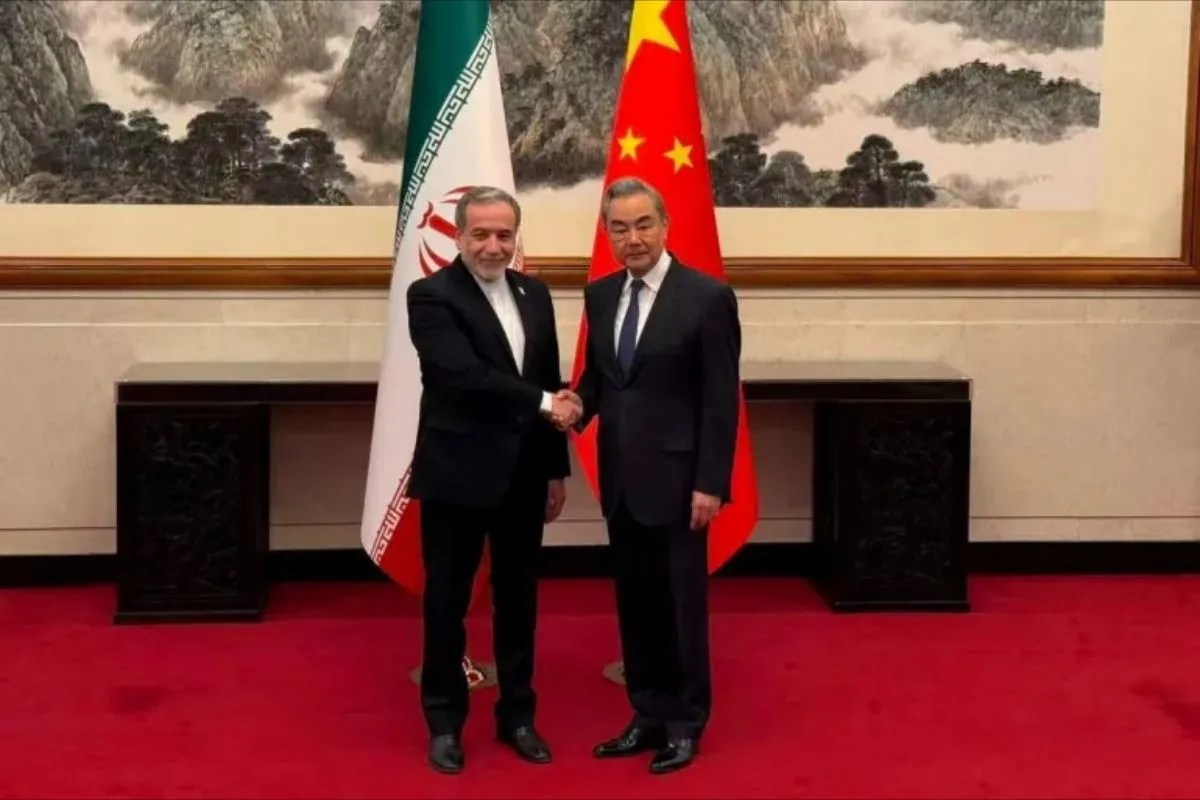
The current diplomatic impasse between Washington and Tehran is not a failure of communication but a high-stakes calibration of the Cost-of-Inaction vs. Risk-of-Kinetic-Escalation. By reviewing a formal U.S. proposal under the explicit threat of renewed bombardment, the Iranian leadership is forced to calculate the shelf-life of their "Strategic Patience" doctrine against a U.S. administration that has decoupled diplomatic engagement from the traditional sequence of de-escalation. The strategy employed here shifts the negotiation from a cooperative game to a non-zero-sum coercive framework where the "Floor" of the agreement is set by the physical destruction of infrastructure rather than economic sanctions alone.
The Triad of Coercive Pressure
Traditional diplomacy operates on a linear progression: sanctions, diplomatic isolation, and then—rarely—military intervention. The current U.S. posture collapses this timeline into a simultaneous delivery mechanism. Three distinct pillars define this pressure:
- The Compressed Decision Window: By attaching a specific military threat to a diplomatic proposal, the U.S. removes the Iranian advantage of "Time-as-a-Weapon." Tehran historically uses long-tail negotiations to advance nuclear enrichment or regional proxy positioning. A credible threat of bombing creates a hard deadline that forces a binary choice before technical gains can be consolidated.
- Asymmetric Risk Distribution: For the U.S., the risk of a limited bombing campaign is primarily political and logistical. For Iran, the risk is existential to its internal infrastructure and regime stability. This imbalance is the primary lever of the current proposal.
- Targeted Infrastructure Logic: The shift from broad economic sanctions to specific kinetic threats signals a move toward "Precision Attrition." Instead of targeting the general economy, the threat focuses on high-value military and nuclear nodes, forcing the Iranian Revolutionary Guard Corps (IRGC) to weigh their institutional assets against a diplomatic compromise.
The Iranian Response Matrix: Defensive Realism vs. Regime Survival
Tehran’s "review" of the proposal is a tactical necessity rather than a sign of immediate submission. Their internal logic must navigate three conflicting variables:
The Legitimacy Constraint
Any agreement perceived as a total capitulation under fire risks destabilizing the hardline factions within the Iranian parliament and the IRGC. To mitigate this, Tehran must find "Gray Zone" concessions—points that allow for technical compliance without the optics of surrendering sovereignty. The review process is, in reality, a search for linguistic ambiguities in the U.S. proposal that can be sold domestically as a "Strategic Reset" rather than a defeat.
The Nuclear Breakout Hedge
The primary variable in these negotiations is the status of 60% enriched uranium stockpiles. From a data-driven perspective, Iran’s enrichment levels act as their only meaningful counter-leverage. The U.S. proposal likely demands a hard cap or removal of these materials. The Iranian counter-move is to offer "Monitoring Access" in exchange for the removal of the bombing threat, attempting to preserve the physical material (the "Hardware") while offering transparency (the "Software") as a temporary pacifier.
The Regional Proxy Variable
The U.S. threat of renewed bombing likely extends beyond Iranian soil to include assets in Syria, Iraq, and Lebanon. The Iranian "review" includes a calculation of how much they can afford to "Retrench" their proxy network without losing their forward-defense capabilities. If the U.S. proposal requires the abandonment of these groups, the cost-function for Iran may shift back toward accepting the risk of a strike rather than losing their regional "Shield."
The Mechanics of a Credible Military Threat
For a threat of bombing to influence a state actor, it must satisfy the Credibility Formula: $C = B \times W \times P$. (Credibility = Benefit of Action $\times$ Will to Execute $\times$ Proceptual Capability).
- Benefit of Action ($B$): The U.S. must demonstrate that destroying specific Iranian facilities provides a greater strategic return than the cost of the ensuing regional instability.
- Will to Execute ($W$): This is established through the rhetoric and historical record of the U.S. executive branch. By utilizing a "Madman Theory" approach—where the adversary is uncertain of the actor's restraint—the U.S. increases the perceived value of $W$.
- Perceptual Capability ($P$): The physical presence of carrier strike groups and B-52 deployments provides the empirical evidence that the threat is not merely rhetorical.
If any of these variables approach zero, the Iranian review process becomes a stalling tactic. The current tension suggests that Tehran perceives $B$, $W$, and $P$ as being at their highest levels in a decade, which explains why the proposal is being reviewed rather than dismissed outright.
The Economic Bottleneck of Continued Defiance
While the military threat is the headline, the underlying decay of the Iranian Rial and the exhaustion of their "Resistance Economy" create the environment where a military strike would be catastrophic.
- Capital Flight Acceleration: The mere threat of bombing triggers an immediate exit of private capital from Iranian markets, further devaluing the currency before a single munition is dropped.
- Energy Infrastructure Fragility: Iran’s oil export capacity, already hampered by sanctions, is a "Soft Target." A targeted strike on the Kharg Island terminal would effectively zero out Iran’s remaining foreign currency revenue.
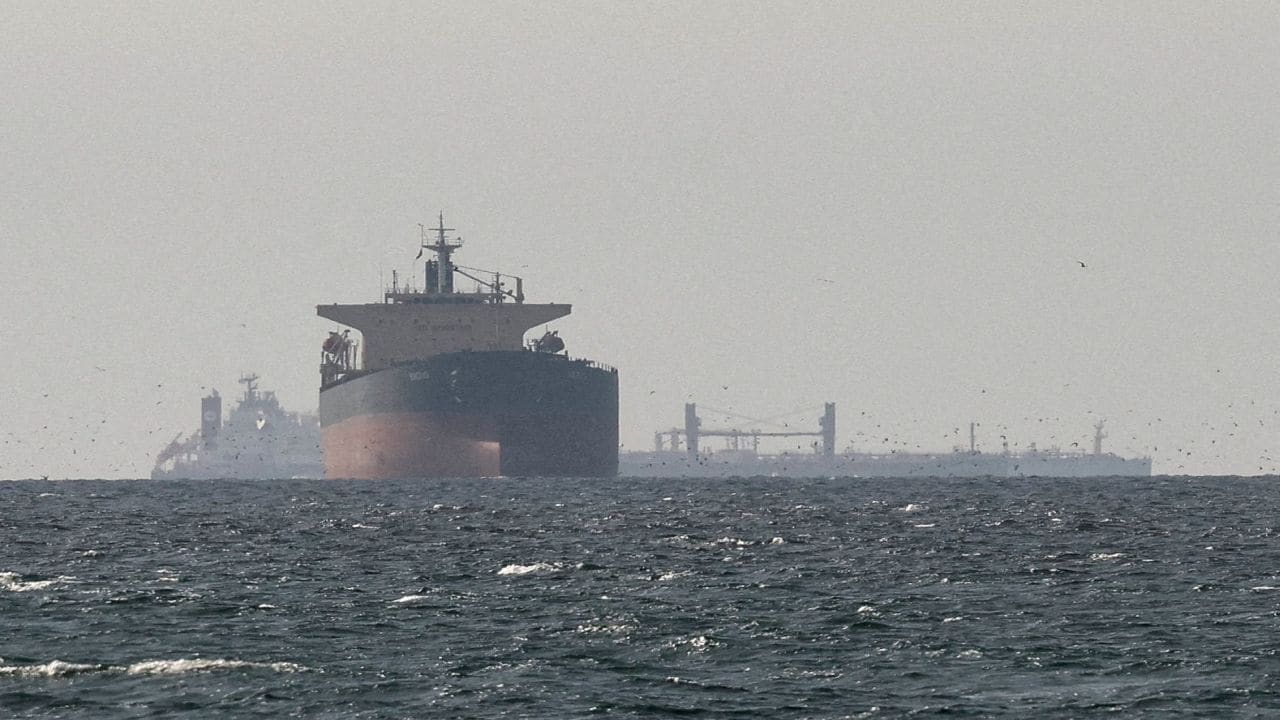
- Supply Chain Interruption: Iran relies on a complex web of "Ghost Fleet" tankers. A heightened U.S. military posture in the Persian Gulf increases the insurance and operational costs of these illicit transfers, creating a de facto blockade even without an active kinetic engagement.
Strategic Divergence: The Risk of Miscalculation
The primary danger in this specific diplomatic-military crossover is the "Signal-to-Noise" ratio. If Iran interprets the U.S. threat as a bluff, they may continue enrichment, triggering the very bombing they sought to avoid. Conversely, if the U.S. interprets Iranian "Reviewing" as a stall tactic, it may launch a strike prematurely, closing the window for a non-kinetic resolution.
The U.S. strategy assumes that the Iranian leadership is a "Rational Actor" focused on regime preservation. However, this ignores the possibility of "Ideological Overdrive," where certain factions within the IRGC may view a limited conflict as a way to consolidate internal power and purge moderates.
Operational Recommendations for the Negotiation Phase
To maximize the probability of a favorable outcome without resorting to kinetic force, the U.S. strategy must shift from broad threats to Granular Conditionality:
- Phase-Locked Relief: The proposal should not offer broad sanctions relief but rather "Micro-Exemptions" for specific Iranian industries (e.g., civilian aviation or pharmaceuticals) in direct exchange for verified enrichment freezes. This creates immediate, tangible benefits for the Iranian population, increasing the internal pressure on the regime to comply.
- The "Closed-Loop" Strike Warning: The U.S. must communicate exactly which categories of assets will be targeted in the event of a "No" response. General threats of "bombing" are less effective than the specific identification of enrichment halls or IRGC command centers. Specificity increases the psychological burden on the Iranian decision-makers.
- Third-Party Guarantors: Utilizing regional actors like Oman or Qatar to "Escrow" certain concessions allows Iran to save face. They are not "Agreeing to U.S. Demands" but "Participating in a Regional Stability Framework."
The current situation is a race between Iranian technical advancement (enrichment) and U.S. political patience. The U.S. has correctly identified that the status quo favors Iran; therefore, the introduction of a kinetic threat is an attempt to break the equilibrium. The success of this move depends entirely on the U.S. ability to maintain the "Threat-Utility" without actually needing to deploy it. If the threat is exercised, the diplomacy has failed; if the threat is ignored, the U.S. loses its primary tool of influence for the remainder of the administration's term. The only viable path forward is a settlement that offers Tehran a "Golden Bridge" to retreat across—a way to accept the proposal while framing it as a triumph of Iranian diplomacy over Western aggression.