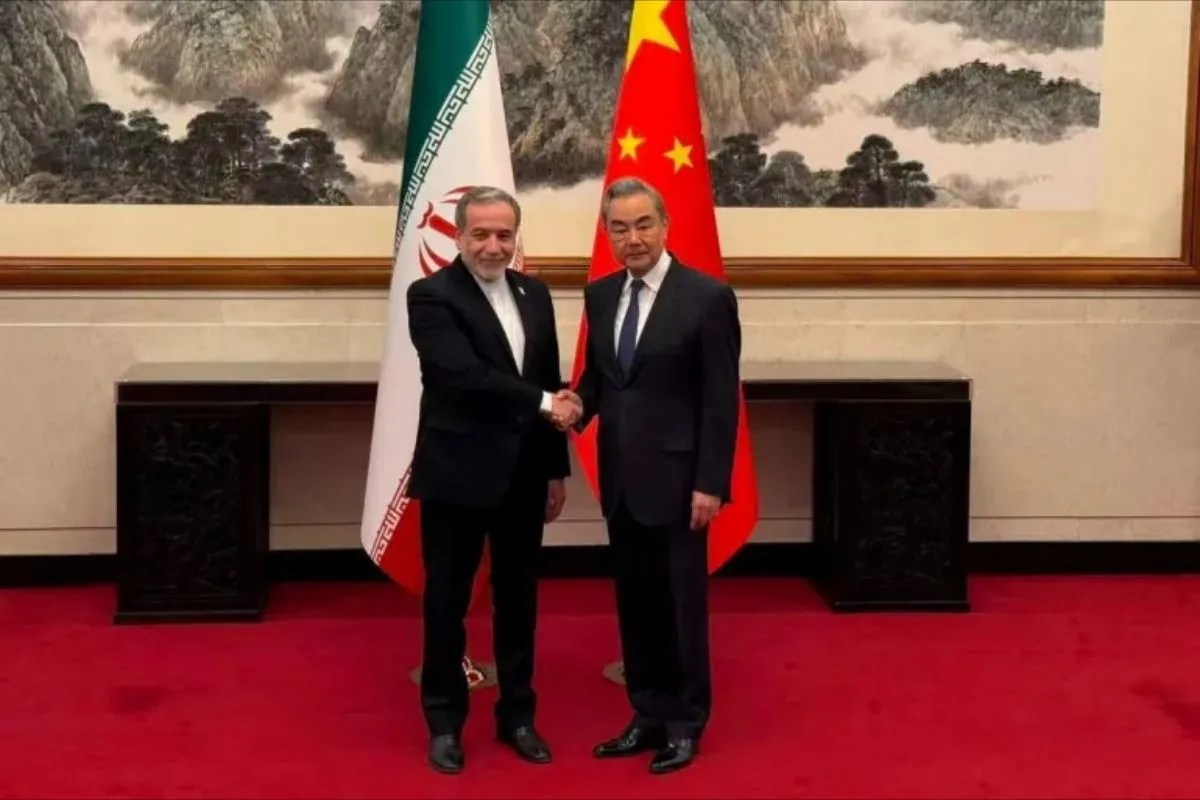
The Beijing Pitstop Myth
Mainstream media loves a predictable narrative. Iranian Foreign Minister Abbas Araghchi lands in Beijing, and the immediate headline is a tired trope: "Tehran seeks Chinese shield against Washington." The lazy consensus suggests this is a strategic masterstroke intended to build leverage before a potential sit-down with the Trump administration.
It isn't. It’s a desperate optics exercise.
The idea that China is a reliable "Plan B" that keeps the U.S. at bay is a fundamental misunderstanding of how the Beijing-Tehran-Washington triangle actually functions. China isn't Iran’s savior; it is Iran’s pawnshop. Beijing buys Iranian oil at steep "sanction discounts"—sometimes up to 20-30% below market value—and pays in yuan or barter goods. This isn't a partnership. It is a slow-motion asset liquidation.
The China Trap
People often ask: "Can China protect Iran from U.S. sanctions?" The answer is a brutal no.
China’s trade volume with the United States and its allies dwarfs its interests in the Islamic Republic. In 2023, China-U.S. trade stood at hundreds of billions of dollars. China’s economic health is tied to the stability of the global dollar-clearing system. Beijing will never risk its access to the American consumer market or the SWIFT system to protect a middle-management power like Iran.
When the Trump administration’s "Maximum Pressure" campaign hits its second iteration, China will do exactly what it did last time: comply just enough to stay under the radar while squeezing Tehran for even cheaper oil. If you think Araghchi is in Beijing to build a "fortress," you haven't been paying attention to the balance sheets. He is there to see how much of the family silver he has left to sell.
Trump Wants a Deal, Not a War
The biggest misconception in the current geopolitical chatter is that Trump’s return means inevitable conflict.
Trump is a transactionalist. He views foreign policy through the lens of a real estate developer looking for a distressed asset. He doesn't want to occupy Tehran; he wants to be the one who finally "solved" the Iran problem where his predecessors failed.
Tehran knows this. The trip to Beijing is a theatrical performance meant for an audience of one: Donald J. Trump. By pretending to have a strong backer in the East, Iran hopes to walk into negotiations with an inflated valuation. They are trying to create the illusion of a bidding war.
But Trump isn't buying the hype. He knows that China’s support for Iran is shallow. He knows that the Iranian economy is currently a house of cards held together by black-market oil sales and domestic repression. The "tension" the media predicts isn't for Trump; it’s for the Iranian leadership who realize their leverage is evaporating.
The Sanction Discount Reality Check
Let’s look at the math that the pundits ignore.
The Iranian Rial has lost over 90% of its value in the last decade. Inflation is a permanent guest. When Iran sells oil to China, they aren't getting liquid cash they can use to stabilize their currency or invest in infrastructure. They are getting restricted credit lines and Chinese consumer goods.
Imagine a scenario where a business owner is forced to sell their product at a massive loss to the only guy in town willing to buy it, but that buyer only pays in store credit for his own shop. That isn't a "strategic alliance." That’s a hostage situation. Araghchi’s visit is an attempt to negotiate the terms of that credit, not to build a military or political axis that can challenge a U.S. carrier strike group.
Stop Asking the Wrong Questions
Most analysts ask: "How will this deal affect the Middle East?"
The better question is: "How much longer can the Iranian regime survive on China’s scraps?"
The "Belt and Road" promises in Iran have largely remained just that—promises. Major infrastructure projects are stalled because Chinese state-owned enterprises fear secondary U.S. sanctions. If Beijing was truly committed to "tension" with Trump over Iran, we would see massive, non-oil investments flowing into the country. We don't. We see predatory purchasing.
The Illusion of the "Axis of Resistance"
The media groups Russia, China, and Iran into a monolithic "Axis." This is a convenient but flawed mental model.
- Russia needs Iran for drones and regional distraction, but they are competitors in the oil market.
- China needs Iran for cheap energy but views them as a volatility risk to their maritime trade routes.
- Iran needs both but trusts neither.
By flying to Beijing, Araghchi is signaling weakness, not strength. He is showing the world that he has no other doors to knock on. If Iran actually had the upper hand, they wouldn't be sending their top diplomat to beg for a public photo-op in Beijing. They would be waiting for the phone to ring in Tehran.
The Contrarian Play
If you are an investor or a policy watcher, ignore the "Beijing Shield" narrative.
The real story is the inevitable U.S.-Iran backchannel that is likely already humming. Everything else—the trips to China, the fiery rhetoric, the "Strategic Partnership" talk—is just the opening bid in a high-stakes poker game where Iran is holding a pair of twos and pretending it’s a full house.
Trump loves a "tough" opponent because it makes the eventual "deal" look better on the 24-hour news cycle. Tehran is providing the theater. Beijing is providing the stage. But the script is being written in Mar-a-Lago.
Stop falling for the optics of the "China pivot." In the world of high-stakes geopolitics, if you aren't at the table, you're on the menu. Iran is currently sitting at a table in Beijing, but they’re paying for the meal with their own future.
The "tension" isn't rising for Trump; it's peaking for a regime that has run out of moves and is now resorting to the oldest trick in the book: pretending your biggest creditor is your best friend.
Don't buy the hype. Buy the volatility.