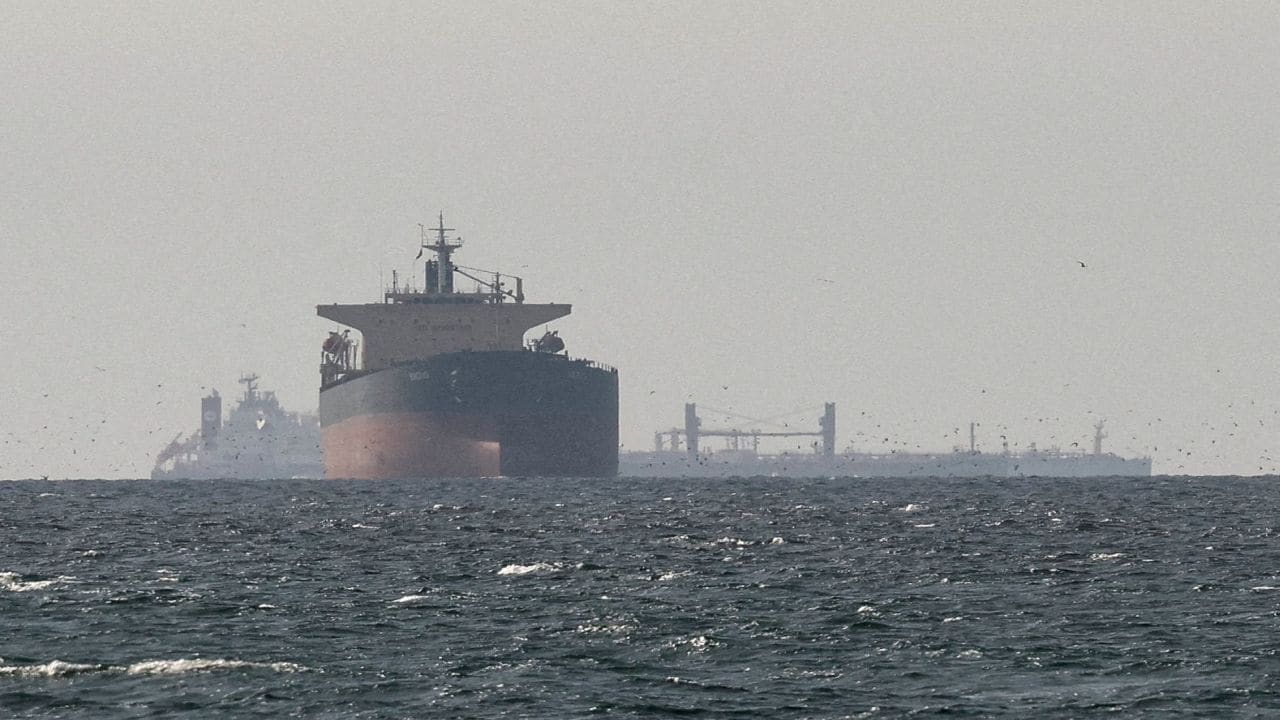
The sea does not care about geopolitics. It only understands salt, pressure, and the relentless corrosion of anything that dares to sit still. But the Charles de Gaulle is not sitting still. It is a nuclear-powered island, a floating piece of French sovereign soil, and it is currently carving a white wake toward the Red Sea.
When a nation moves an aircraft carrier, it isn't just moving a ship. It is moving a statement of intent that weighs 42,000 tonnes.
Deep in the belly of the vessel, the air smells of hydraulic fluid and jet fuel. It’s a scent that sticks to the back of your throat. Here, the abstract maps drawn by diplomats in Paris become visceral. For the sailors on board, the "Hormuz mission" isn't a bullet point in a briefing. It is the rhythmic thud of Rafale marine jets hitting the deck—a sound so violent it vibrates through the soles of your boots and settles in your teeth.
The Weight of a Floating Border
The world often views the deployment of the Charles de Gaulle through a lens of cold strategy. We talk about power projection and maritime security. We analyze the proximity to the Strait of Hormuz. But consider the reality of what this machine represents. It is the only nuclear-powered carrier outside of the United States Navy. It is a singular, complex masterpiece of engineering that allows a European power to whisper—or scream—across oceans.
France is signaling that the Red Sea is no longer just a transit point. It has become a friction point.
The mission is ostensibly about keeping the sea lanes open. Think of these lanes as the jugular veins of global commerce. Most of the things in your house right now—the phone in your pocket, the grain in your pantry, the fuel in your car—likely passed through a narrow chink in the world’s armor known as a chokepoint. When those veins are constricted, the world gets a headache. When they are cut, the global economy suffers a stroke.
France isn't just joining a neighborhood watch. It’s bringing its own heavy security detail to ensure the lights stay on in Lyon, London, and beyond.
Steel and Sovereignty
The decision to move this carrier group toward the Red Sea, with eyes firmly fixed on the mission near the Strait of Hormuz, reveals a shifting European psyche. For years, the security of these waters was an American burden. That era is fading. The Charles de Gaulle moving into these volatile waters represents a "European strategic autonomy" that has moved from a theoretical white paper to a physical reality of steel and radar.
Imagine a hypothetical bridge. Every day, thousands of trucks carry food over it. Suddenly, people start throwing rocks from the banks. Then someone brings a rifle. Eventually, the trucks stop coming because the risk is too high. The Charles de Gaulle is the armored convoy that parks on the bridge and says, "Keep driving."
But the cost of parking on that bridge is astronomical. Not just in Euros, but in human endurance.
The crew lives in a world of artificial light and cramped quarters. Their reality is measured in "cycles"—the intense windows of time where aircraft are launched and recovered. During these cycles, the flight deck is the most dangerous square mile of territory on earth. One slip, one missed signal, and the ocean swallows a multi-million-euro jet or, worse, the person standing next to it.
The stakes are invisible until they are absolute.
The Silent Duel of Sensors
Modern naval warfare isn't like the movies. There are no dramatic broadsides or wooden masts splintering. It is a silent, electronic duel. It happens in darkened rooms filled with glowing screens and the low hum of cooling fans.
The carrier group acts as a massive sensory organ. Its frigates and Hawkeye early-warning aircraft reach out hundreds of miles, "feeling" the electromagnetic spectrum for threats. They are looking for the tell-tale signature of a drone, the ghost of a submarine, or the trajectory of an anti-ship missile.
The Red Sea has become a laboratory for a new kind of conflict. Asymmetric. Cheap drones versus billion-euro defenses. In this environment, the Charles de Gaulle is a high-value target that forces the adversary to think twice. It’s a chess piece that controls multiple squares just by existing.
The mission toward Hormuz adds another layer of complexity. The Strait is a narrow throat through which a fifth of the world’s oil flows. It is a place where the distance between "routine transit" and "international crisis" is measured in yards. By moving the carrier there, France is not just protecting trade; it is claiming a seat at the table where the future of energy security is decided.
The Human Cost of Presence
We often forget that a carrier is a city. It has a bakery, a hospital, a post office, and a jail. There are young men and women on that ship who haven't seen the sun in days because their jobs keep them below the waterline. They are the ones who keep the nuclear reactors humming, the ones who scrub the grease off the catapults, the ones who cook thousands of meals in a kitchen that never stops moving.
Their lives are dictated by the tensions of leaders they will never meet.
The move to the Red Sea is a reminder that peace is an expensive, high-maintenance machine. It requires constant lubrication with money, sweat, and the physical presence of overwhelming force. You cannot secure a waterway from a Zoom call. You have to be there. You have to let the salt air pit your paint and the humidity test your electronics.
There is a specific kind of exhaustion that comes from being on high alert in a combat zone for months at a time. It’s a quiet, grinding fatigue. It’s the sound of a letter from home being read for the tenth time. It’s the sight of the same three faces in a cramped berthing area. This is the human currency spent to ensure that the rest of the world can ignore the complexities of global shipping.
The Horizon is Not a Line
As the Charles de Gaulle nears its station, the political rhetoric will sharpen. Analysts will debate the "message" sent to regional actors. They will count the number of sorties flown and the gallons of fuel consumed.
But the real story isn't in the numbers.
It is in the silhouette of the ship against a desert sunset. It is in the eyes of a pilot who just landed on a pitching deck in the middle of a moonless night, his heart hammering against his ribs like a trapped bird. It is in the realization that our modern world—so digital, so ethereal, so "cloud-based"—actually rests on the shoulders of people living on a giant piece of metal in the middle of a hostile sea.
We live in an age where we expect things to simply appear when we click a button. We have divorced ourselves from the physical reality of how goods move across the planet. The presence of a French carrier in the Red Sea is a sudden, sharp reminder of that reality. It is a physical manifestation of the fact that the "seamless" world is actually held together by welds, rivets, and the will of a crew thousands of miles from home.
The ship moves forward. The water closes behind it. The mission continues, not because it is easy, but because the alternative is a world that stops moving.
Behind the sophisticated radar and the sleek delta-wing jets, there is a fundamental truth as old as the Vikings: if you want to protect what is yours, you must be willing to stand where the wind is coldest and the water is deepest.
The Charles de Gaulle is standing there now.
In the quiet of the night, when the flight deck is finally still, you can hear the ship groan. It’s the sound of thousands of tons of steel reacting to the temperature change of the water. It sounds like a living thing. And in a way, it is. It is the heartbeat of a nation, pulsing out in the dark, watching a horizon that never ends.