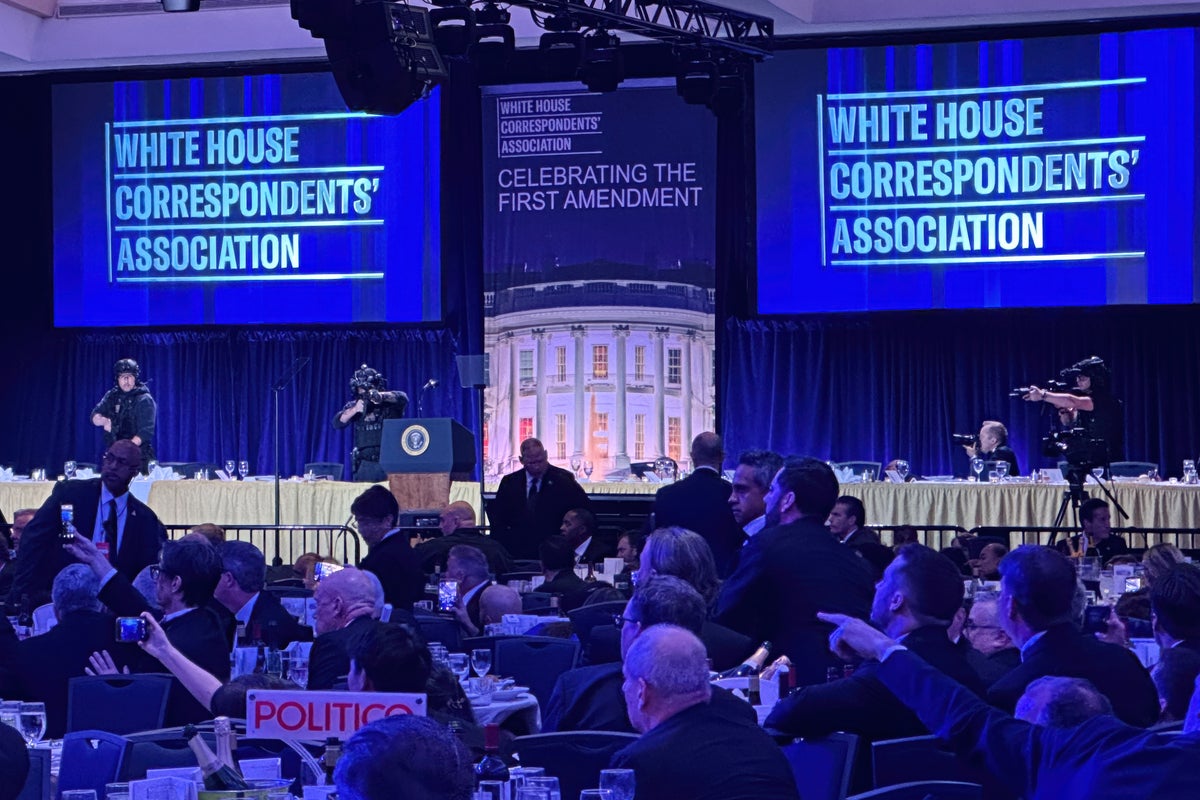
The security perimeter at the Washington Hilton was supposed to be impenetrable. On April 25, 2026, as the elite of the American press corps and the highest levels of the executive branch gathered for the White House Correspondents' Dinner, that illusion vanished. A thirty-one-year-old man named Cole Tomas Allen, armed with a cocktail of weapons and a detailed manifesto of grievances, attempted to breach the checkpoint. He didn't make it to the ballroom, but the cracking sounds of the confrontation sent the most powerful people in the country diving under tables.
This was not an isolated flash of madness. It was the third time in less than two years that the physical safety of Donald Trump had been directly threatened. But more importantly, it was a data point in a decade-long decay of the American political square. We are no longer living in an era of civil disagreement; we are living in the "Sticks and Stones" era, where the rhetorical heat of the platform has finally, permanently ignited the crowd.
The Architecture of Aggression
To understand why a man from Torrance, California, would drive across the country to storm a dinner, you have to look at the machinery of the American rally. For ten years, the campaign event has shifted from a venue for policy to a theater of combat.
It began as early as 2015. In Birmingham, Alabama, a Black Lives Matter protester was shoved and kicked. Trump’s response from the podium became the blueprint: "Maybe he should have been roughed up." That wasn't just a throwaway line. It was a permission slip. Investigative traces of these events show a consistent feedback loop between the microphone and the floor. When a leader identifies an "enemy"—be it the press, a protester, or a political rival—the crowd internalizes that person not as a fellow citizen with a different view, but as an illegitimate intruder.
The "why" is rooted in the dehumanization of the opponent. By framing rivals as "vermin" or "traitors," the psychological barrier to physical violence is lowered. Once a person is stripped of their legitimacy, hitting them feels like an act of patriotism rather than an assault.
The Escalation of the Near Miss
The 2024 campaign cycle changed the stakes from scuffles in the aisles to high-caliber projectiles. In July 2024, at a rally in Butler, Pennsylvania, Thomas Matthew Crooks fired an AR-15 from a rooftop, grazing Trump’s ear and killing a spectator. The image of a bloodied Trump pumping his fist and shouting "Fight!" became the defining icon of his political survival.
But icons carry weight. For his supporters, it was proof of divine protection and an invitation to further militancy. For his detractors, it was a terrifying escalation that seemingly validated their most extreme fears. Two months later, the Secret Service thwarted another attempt at his Florida golf club.
The 2026 Hilton incident represents a different, perhaps more dangerous, stage of this cycle. The suspect, Allen, didn't fit the profile of a "lone wolf" with no plan. His manifesto, parts of which have circulated through investigative leaks, suggests a cold, calculated prioritization of targets. He wasn't just aiming for the man at the top; he was aiming for the "administration" as a concept.
The Social Cost of the Rhetorical War
Beyond the high-profile assassination attempts lies a more insidious spread of violence that rarely makes the front page. This is the "Main Street" effect.
Research from the Wharton School and other institutions suggests that the aggressive rhetorical style modeled at the highest levels of government filters down into everyday social norms. In the months following highly polarized election cycles, data shows a spike in adversarial behavior in non-political settings. Men negotiate more aggressively against women; drivers exhibit more road rage; school bullying incidents involving ethnic slurs rise.
This is the "normalization" of the fight. When the leader of a movement suggests that "the other side" is trying to destroy the country, the average supporter begins to see their neighbor’s yard sign as a declaration of war. We have moved from a society that debates the tax code to one that debates the right of the opponent to exist.
The Security Failure of the Perimeter
We must address the technical reality of how these incidents occur. The Secret Service is currently facing a crisis of resources and imagination. In Pennsylvania, the failure was a literal blind spot—a rooftop left unmonitored. In Washington, the failure was the "soft" perimeter of a hotel gala.
Modern political violence is increasingly decentralized. You are no longer just looking for a Lee Harvey Oswald in a window; you are looking for an individual who has been "pushed" by a thousand digital nudges. Social media platforms like X, Reddit, and various fringe forums act as an accelerant. Data from the Institute for Strategic Dialogue indicates that violent rhetoric online often precedes physical incidents by a predictable margin. After the search warrant at Mar-a-Lago in 2022, violent threats against officials spiked by nearly 500%.
The problem is that the security apparatus is built for physical threats, while the actual threat is a psychological contagion.
The Unity Paradox
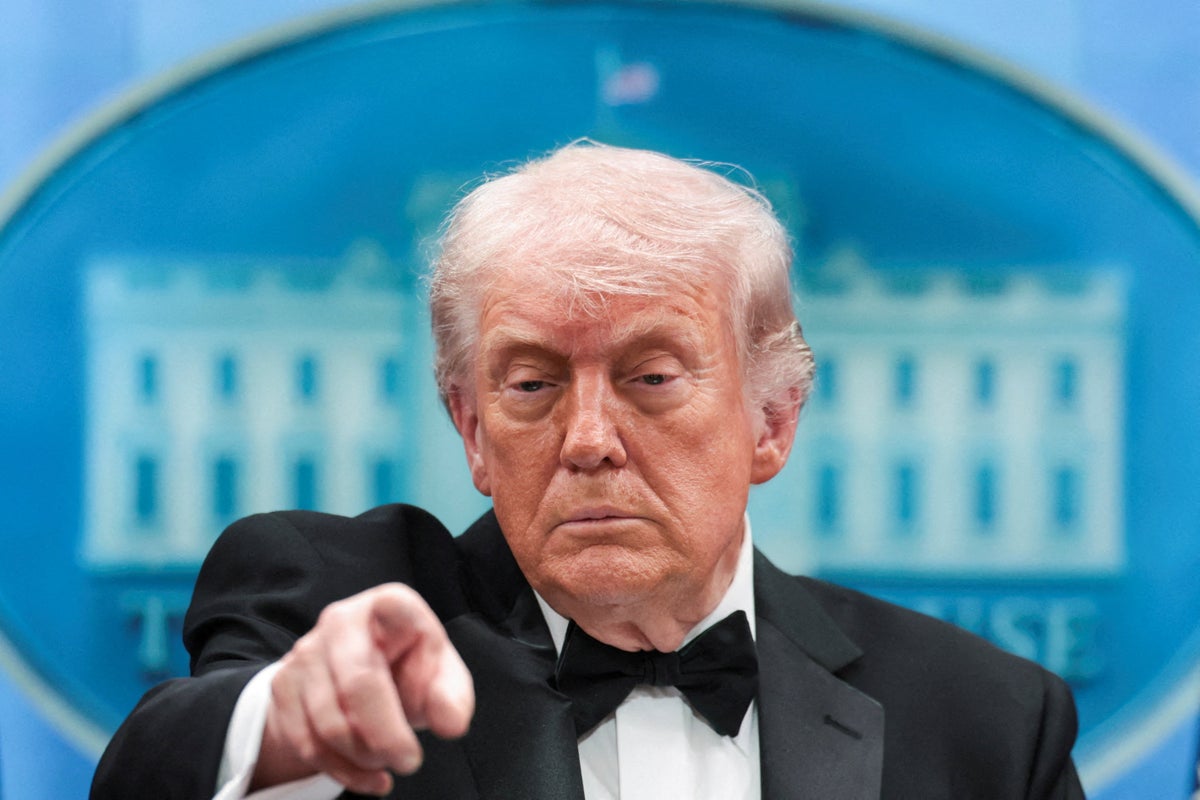
After the Hilton shooting, Trump held a press conference at the White House that was, for him, remarkably subdued. He called for "unity" and "bipartisan healing." He compared himself to Abraham Lincoln, noting that the most impactful leaders are the ones "they go after."
However, the "unity" requested in these moments is often a tactical pause rather than a shift in philosophy. True de-escalation would require a wholesale abandonment of the "traitor" and "enemy" rhetoric that fuels the base. But that rhetoric is exactly what won the base in the first place. This is the trap of modern populism: you cannot turn off the heat without losing the steam that moves the engine.
The American public is now caught in a cycle where violence begets security, security begets inconvenience, and inconvenience begets further resentment. We are building higher fences and wider perimeters, but the threat isn't coming from outside the walls. It is coming from the people we have told to fight.
The reality of 2026 is that the "Sticks and Stones" have been replaced by rifles and knives, and the "words" that were never supposed to hurt have become the most dangerous weapons in the arsenal. The next breach won't be a failure of the Secret Service; it will be the logical conclusion of a decade spent convincing a nation that it is at war with itself.