The dust never really settles in the Negev. It hangs in the air, a fine, pale veil that coats the olive leaves and clings to the skin long after the wind has died down.
Stand on a crest overlooking the coastal strip, and the proximity is startling. You can see the gray blocks of buildings, the thin plumes of smoke rising from mundane domestic fires, the jagged silhouettes of a landscape holding its breath. It is a place where geography is a cage. Two populations, inextricably bound by history and geography, living out a permanent state of high-stakes theater.
And then come the maps.
In air-conditioned capitals thousands of miles away, strategists unfold glossy paper. They draw blue arrows sweeping across deserts. They draft timelines with crisp, optimistic headers. Peace plans. Cereal-box solutions for generational wounds.
We look at those maps and we sigh. Because we know the distance between a conference room in Washington and a kitchen table in Sderot or Gaza City isn't measured in miles. It's measured in blood, broken trust, and the stubborn physics of survival.
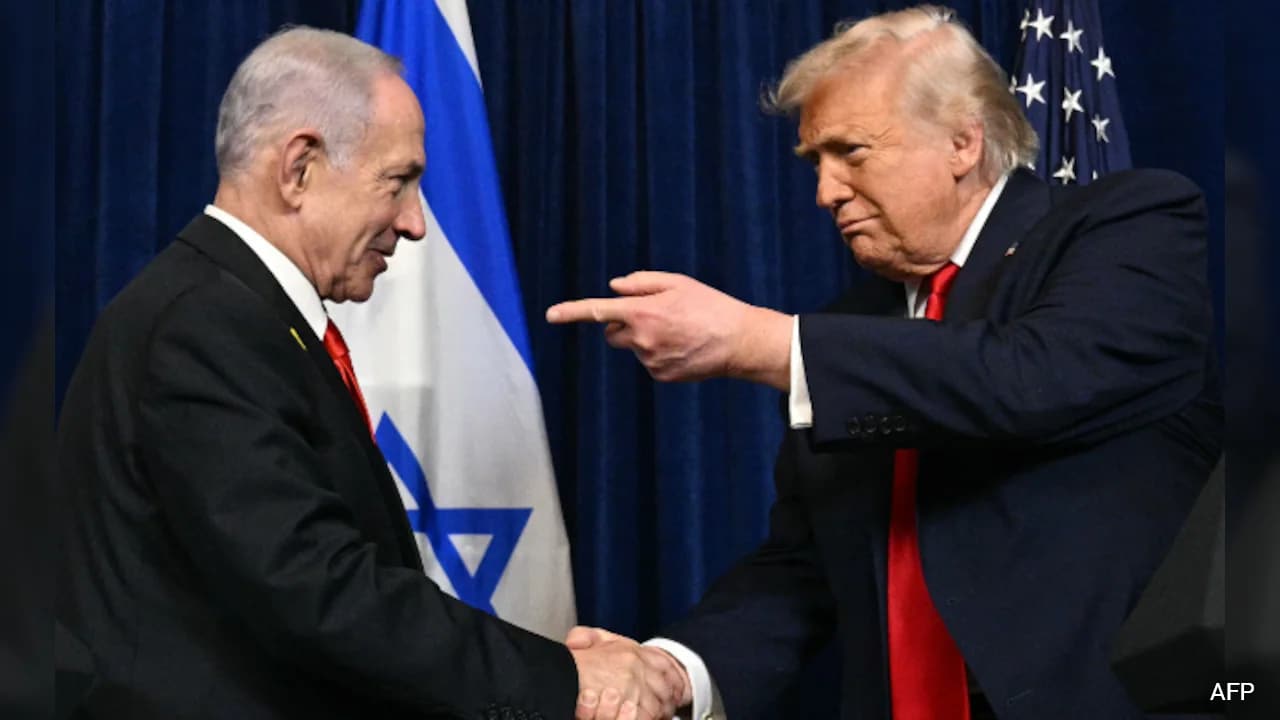
Consider what happened when the latest blueprint dropped. The diplomatic machinery whirred. Announcements were made. Cameras flashed. The core proposition of the plan was simple: a pathway forward, a cessation of hostilities, a structured pullout of military forces. A clean break.
Israel said no.
To the casual observer tuning into the evening news, the refusal sounds like stubbornness. It sounds like an unwillingness to take a chance on tomorrow. But listen closer to the hum of the streets here. Talk to the mother checking the reinforced door of her safe room for the fourth time today. Talk to the reservist whose boots are caked in the same mud they were caked in six months ago.
The Israeli government's stance was stark, unyielding, and rooted in an absolute refusal to gamble with existential threat: there will be no military pullout, no withdrawal of forces, until Hamas completely disarms.
Total disarmament. It sounds bureaucratic. It sounds like a negotiating stance.
It is neither. It is a line drawn in blood.
The Anatomy of an Ultimatum
Let us trace the logic, stripped of political spin.
Imagine living in a home where the lock on your front door is made of paper. Imagine knowing that the people on the other side of that door have explicitly stated, repeatedly and without equivocation, their intention to tear it down and harm everything you love.
Now, imagine someone walks into your living room, points to a map, and says, "Step back. Take down your defenses. Trust the process."
Would you do it?
That is the emotional core of the current impasse. For Israel, the events of October 7 carved a permanent scar into the national psyche. The illusion of containment—the belief that a hostile, heavily armed force could be managed with fences, blockades, and occasional airstrikes—shattered permanently.
When a nation faces an adversary whose charter or operational doctrine calls for its dissolution, strategic patience expires. The calculus shifts from political negotiation to absolute security. From the perspective of the Israeli leadership, pulling troops out before the weaponry is seized, before the tunnels are permanently collapsed, and before the military infrastructure is eradicated is not a step toward peace.
It is suicide.
Yet, look across the invisible line.
In the densely packed alleys of the strip, millions of people wake up to a different kind of terror. The sky falls without warning. Water is a luxury. Medical supplies are a distant memory. For a teenager in Gaza, the future is an empty horizon, defined by rubble, displacement, and the crushing weight of a war they did not start and cannot stop.
When leaders talk about "disarmament," they are talking about a total surrender of means. But in a landscape shaped by total devastation, the demand feels to many on the ground like an ultimatum for total subjugation. How do you convince a population already crushed under the rubble that laying down whatever protection they perceive to have will lead to safety, rather than annihilation?
This is the tragic symmetry of the conflict. Both sides are trapped by their own terror. Both sides view the other's demands as an existential threat.
The Illusion of the Quick Fix
We love simple narratives. We want the movie where the hero swoops in, signs a parchment, and the credits roll over a sunlit horizon.
Real life refuses to cooperate.
Diplomacy in the Middle East is often treated as a series of events—a summit, a treaty, a press conference. But peace is not an event. It is an infrastructure, and right now, the foundation is pulverized.
When international architects draft peace proposals, they frequently operate on a timeline of months. They have election cycles to worry about. They have domestic approval ratings to manage. They need a win. They need a headline.
The people living here operate on a timeline of generations.
A treaty signed on a mahogany table in Europe means nothing if a rocket flies across the border forty-eight hours later. A withdrawal plan means nothing if the underground networks of munitions remain intact, waiting to be re-supplied and re-staffed.
This is why the Israeli rejection of the phased pullout was absolute. It wasn't designed to sabotage diplomacy; it was designed to reflect a brutal, unvarnished reality: you cannot build a house on quicksand. Until the weapons are gone, any discussion of withdrawal is just a conversation about the next war.
And yet, staying put is its own form of slow poison.
The Cost of Standing Still
Permanence is exhausting.
When an army digs in for an indefinite occupation or containment, it changes the nation doing the digging. The economy strains under the weight of endless reserve duty. Young men and women are pulled from universities, from startups, from families, slipping back into uniforms month after month. The national conversation narrows. Nuance dies. Paranoia becomes a civic virtue.
You can see it in the eyes of the soldiers at the checkpoints. You can feel it in the quiet classrooms where children practice running to shelters.
To say "no pullout until disarmament" is a statement of necessity, but it is also a trap. Because total disarmament of a deeply entrenched, guerrilla-style insurgent force in an urban environment is a nearly impossible military objective. It requires door-to-door clearance, meticulous intelligence, and time—infinite time, paid for with more lives, more destruction, and deeper hatred.
What happens when an immovable object meets an irresistible force?
Nothing good.
The Human Thread
Strip away the geopolitical jargon—the ceasefires, the tranches, the deterrence doctrines, the governance frameworks. What remains?
A father holding his daughter's hand in a shelter.
A mother listening to the whistle of incoming fire.
A soldier staring out over a wall of concrete and razor wire, wondering if tomorrow will look exactly like today.
These are the human stakes. They are invisible on the maps drawn in foreign capitals, but they are the only things that truly matter.
The rejection of the peace plan was framed as a diplomatic failure. Perhaps it was. Or perhaps it was the most honest moment in a very long time. It stripped away the comforting fictions that a piece of paper can bridge a chasm of mutual terror without addressing the fundamental root of the violence.
Peace cannot be legislated into existence by outsiders who fly away when the smoke clears. It has to be forged by people who have no other choice than to look each other in the eye across a cleared field, once the guns are silent and the weapons are truly, permanently gone.
Until that day comes, the dust will keep blowing across the border. The maps will remain folded in their drawers. And the two peoples will continue to wait, locked in a painful, unbreakable embrace, watching the horizon for a dawn that refuses to break.