Rain does not merely fall on the runway at Kozhikode. It descends like a heavy, dark curtain, blurring the boundary between the sky and the earth.
On a tabletop runway, there is no margin for error. You land, or you fall.
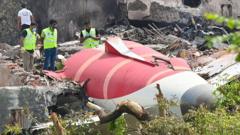
When Air India Express Flight 1344 slid off the edge of that wet plateau, splitting into three clean, terrible pieces in the mud below, the clock did not stop. For the families of the twenty-one people who never made it home, the clock froze entirely. For the investigators of India’s Aircraft Accident Investigation Bureau, a different kind of clock began to tick. It is a slow, agonizingly meticulous clock that measures time not in minutes, but in microscopic fractures of metal and fractions of a second on a flight data recorder.
Now, we are told the final report is coming. October is the whispered deadline.
To the casual observer, October is just another month on a calendar. To those who wait, it is the difference between a lifetime of unanswered questions and the cold, hard reality of closure. But an aviation accident report is never just a collection of facts. It is an autopsy of human decision-making, mechanical capability, and the unpredictable fury of nature.
The Anatomy of the Wait
Imagine sitting in a quiet living room in Kozhikode or Mumbai. The monsoon rains still drum against your window, sounding exactly like they did on that August night. Every time the wind howls, you are transported back to the phone call that shattered your life.
You want answers. You want them immediately.
But the people tasked with finding those answers cannot afford to rush. They work in a sterile world of metal stress tests, fuel calculations, and audio analysis. They must reconstruct a tragedy backward, starting from the wreckage and working their way up to the moment the pilots first buckled their seatbelts in Dubai.
Consider the complexity of their task.
A modern commercial aircraft is a marvel of engineering, generating millions of data points every single minute. Investigators must download the digital flight data recorder—the "black box"—and align its numbers with the cockpit voice recorder. They have to synchronize the sound of a rain wiper scraping against windshield glass with the exact degree of the plane's flaps.
One second of audio can take weeks to decode. Was that a sigh of fatigue? Was it a gasp of realization? Or was it merely the cabin air conditioning cycling through a routine pressure adjustment?
This is not a bureaucratic delay. It is a sacred duty.
To rush a crash report is to risk missing the very flaw that could save the next flight. If the investigators blame the pilots prematurely, they ignore systemic airline pressures or mechanical quirks. If they blame the weather, they let the airport operators off the hook for a runway that many captains had warned was a hazard during the monsoon season.
So, the families wait. They watch the months turn into seasons, hoping that when October finally arrives, the paper in their hands will carry the weight of truth.
The Illusion of the Tabletop
To understand what happened, one must understand the unique terror and beauty of landing at Kozhikode.
The airport sits on a hill. It is what pilots call a tabletop runway. From the cockpit, as you approach at night through heavy rain, the runway looks like an aircraft carrier floating in a sea of pitch-black forest. There is no flat ground on either side. There is only the strip of asphalt, and then a steep, seventy-foot drop into the valley below.
It requires precision. Absolute, unflinching precision.
- The Wind: A tailwind pushes the aircraft forward, making it land faster and further down the runway than intended.
- The Water: A thin sheet of water on the asphalt can cause hydroplaning, turning heavy rubber tires into useless skis.
- The Lights: Rain on the windshield distorts the approach lights, creating an optical illusion that makes the runway seem closer or further than it actually is.
On that night, the flight crew attempted to land once and aborted. They circled. They tried again from the opposite direction.
A layperson might ask why they didn't simply divert to another airport. It is a fair question. But the answer is rarely simple. Pilots are constantly calculating fuel reserves, passenger connections, and company protocols. They are highly trained professionals who believe, right up until the final second, that they can handle the challenge.
They are human.
When we read the dry headlines about the upcoming October report, we must remember that the document will attempt to map the minds of two men who are no longer here to defend themselves. Capt. Deepak Sathe was a decorated former Indian Air Force test pilot. He was a man who had survived a previous, unrelated crash and returned to the skies. He was not a novice.
Yet, something went wrong.
The report will have to untangle the delicate hierarchy of the cockpit. Did the younger co-pilot feel comfortable challenging his legendary captain? Did fatigue from the pandemic-era repatriation flights cloud their judgment? These are not mechanical questions. They are deeply psychological ones.
The Silent Witness in the Metal
While the human element is complex, the metal does not lie.
For months, investigators have been analyzing the physical remains of the Boeing 737. They look at the tires to see if the tread wear indicates hydroplaning. They analyze the brake assemblies to determine if they were fully engaged. They study the engine turbines to see if they were producing thrust at the moment of impact.
This is the silent, objective testimony of the aircraft itself.
Every scratch on the fuselage tells a story. The way the fuselage broke apart upon hitting the perimeter wall reveals the speed and angle of the impact. If the plane had been traveling just five knots slower, would the hull have held? If the safety area at the end of the runway had been longer, would the plane have simply mired itself in soft earth instead of plunging over the cliff?
These are the variables that keep safety advocates awake at night.
India’s aviation sector has grown at a breathtaking pace over the last two decades. Millions of people who had never set foot on an airplane now fly regularly. But infrastructure must keep pace with ambition. The table-top airports of the country—Kozhikode, Mangalore, Shimla—present challenges that require more than just standard safety measures. They require engineered margins of safety that can forgive human error.
The upcoming report will likely address these systemic issues. It will look beyond the cockpit of Flight 1344 and examine the very ground upon which it landed.
The Quiet Hope of October
When the report is finally released, it will not make headlines for long. The news cycle will move on to the next political scandal, the next economic crisis, the next viral sensation.
But for a select group of people, those pages will be read and re-read for decades.
Engineers will study them to design better braking systems. Airline executives will use them to rewrite training manuals. Most importantly, widows, children, and parents will read them to understand the final moments of the people they loved.
Safety is not an accident. It is a hard-won peace built on the debris of past tragedies.
We wait for October not because we want to assign blame, but because we need to believe that we can learn. We need to believe that the loss of twenty-one lives bought us a safer sky. As the investigators compile their final findings, they carry the memory of those who perished, translating their silent, final moments into lessons that will protect every traveler who buckles their seatbelt and looks out the window as the engines roar to life.
The rain will continue to fall on the tabletop of Kozhikode. The planes will continue to land. But because of what is written in that forthcoming report, they might just land a little safer, a little surer, on the wet asphalt high above the valley floor.