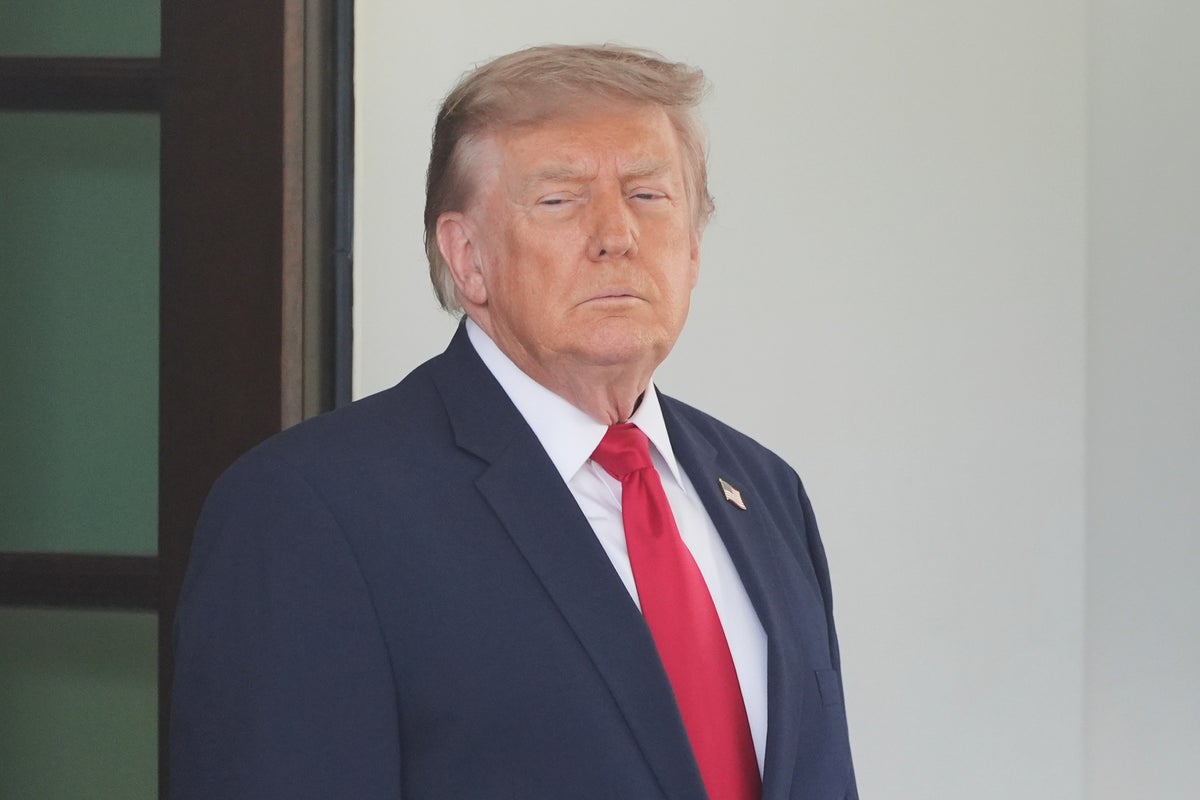
The federal lawsuit filed in Manhattan by Democracy for the Arab World Now (DAWN) and the Taxpayers Alliance Against Genocide strikes at the core of the executive branch’s power to police American political expression under the guise of national security. The complaint seeks to block Executive Order 14203, a sweeping sanctions framework enacted by the Trump administration to shield U.S. and Israeli officials from war crimes investigations by the International Criminal Court (ICC). By designating foreign human rights defenders, UN rapporteurs, and international judges as national security threats, the White House has constructed a financial tripwire that effectively criminalizes domestic legal advocacy and data sharing.
This is not a peripheral debate about the Rome Statute; it is a fundamental test of the First Amendment's durability against the expanding reach of the International Emergency Economic Powers Act (IEEPA).
For decades, Washington has used economic sanctions as an instrument of asymmetric warfare against rogue regimes, terrorists, and cartel bosses. The architecture of these sanctions depends entirely on IEEPA, a 1977 statute allowing the president to declare a national emergency and freeze assets or block transactions involving foreign entities. But Executive Order 14203 stretches this Cold War statutory tool past its breaking point. By making it a federal crime to provide a "service" to or receive one from a sanctioned individual, the administration has imported a mechanism designed to cripple banks and weaponized it against domestic speech.
The legal peril for American human rights advocates is acute. Under the current enforcement posture, an American researcher who emails an expert analysis to UN Special Rapporteur Francesca Albanese—or coordinates a legal briefing with designated Palestinian human rights groups—faces the prospect of multi-million dollar civil fines and up to 20 years in federal prison. The definition of a "service" under Treasury Department guidelines is notoriously elastic, encompassing virtually any non-commercial exchange of information or intellectual labor that confers a benefit. Consequently, organizations like DAWN have completely halted their submissions to the ICC and severed collaborative networks built over decades. The administration has achieved a domestic information blockade without passing a single law through Congress.
The Collateral Damage of Executive Overreach
The immediate objective of the executive order is to insulate political and military leaders from accountability at The Hague. Secretary of State Marco Rubio made this explicit, declaring an intent to dismantle the ICC "brick by brick". Yet, the mechanism employed does nothing to alter the independent operations of prosecutors in the Netherlands. Instead, it functions as a censorship dragnet targeting American citizens on sovereign soil.
The current litigation exposes a critical statutory exemption that the executive branch has systematically ignored. When Congress passed IEEPA, lawmakers included the Berman Amendment, a deliberate safeguard designed to prevent the executive branch from restricting the flow of informational materials and non-commercial personal communications across borders. By reclassifying legal documentation and investigative reporting as illicit "services," the Office of Foreign Assets Control (OFAC) has executed a regulatory end-run around explicit statutory limits.
Consider the structural impact on independent journalism and academic research. If an American analyst cannot exchange data with an overseas human rights organization without evaluating whether that group has been placed on the Specially Designated Nationals (SDN) list, the entire ecosystem of international reporting collapses. This is a deliberate chilling effect. It transforms standard research into a high-stakes legal gamble where the prosecutor, the judge, and the jury reside inside the Treasury Department.
The Financial Death Penalty for Judicial Independence
While the domestic fight centers on the First Amendment, the external consequences of this policy have triggered an unprecedented institutional crisis between Washington and its closest Western allies. For the first time in the history of international law, sitting ICC judges—including Kimberly Prost of Canada, Solomy Bossa of Uganda, and Reine Alapini-Gansou of Benin—have filed independent lawsuits in U.S. federal courts to challenge their own designations.
The reality of living under OFAC sanctions is devastating. It is a financial death penalty enforced by algorithmic compliance. When an individual is placed on the SDN list, global financial institutions immediately terminate their accounts to avoid catastrophic secondary sanctions from the U.S. banking system. The plaintiffs have had their U.S. bank accounts frozen, their credit cards cancelled, and their access to basic digital infrastructure—from Google accounts to private health insurance policies—summarily revoked.
This aggressive use of economic statecraft targets the core tenet of judicial independence. By punishing judges for rendering legal decisions regarding territorial jurisdiction in Gaza and Afghanistan, the administration is attempting to dictate the parameters of international jurisprudence through financial coercion. European allies and the European Union Commission have condemned the measures as unacceptable interference, noting that independent tribunals must be permitted to discharge their duties free from geopolitical blackmail.
The Dangerous Precedent of Manufactured Emergencies
The systemic danger of Executive Order 14203 lies in its utility as a blueprint for suppressing domestic dissent on any controversial foreign policy issue. By declaring a formal "national emergency" over a foreign court's legal deliberations, the executive branch has established a precedent that can be easily repurposed.
Hypothetically, a future administration dissatisfied with global climate activism could declare a national emergency over high domestic energy costs, designate foreign environmental NGOs that campaign against fossil fuel extraction, and instantly criminalize any collaborative research or advocacy conducted by American climate scientists. Once the judiciary concedes that the executive can use IEEPA to police non-commercial political speech, the statutory wall protecting the First Amendment from national security overreach is effectively demolished.
The Manhattan lawsuit follows a partial victory in Maine, where human rights advocates secured a preliminary injunction after demonstrating a high likelihood of success on their First Amendment claims. A similar historical challenge during the first Trump administration was blocked by a federal judge on identical constitutional grounds before being temporarily rescinded under the Biden administration. The cyclical resurrection of this policy demonstrates that the executive branch views national security powers as an elastic mandate to override domestic constitutional protections whenever foreign policy objectives are challenged.
The defense of this policy rests on a absolute assertion of presidential authority over foreign affairs. The administration argues that the court's actions threaten American sovereignty and that the executive must possess unchecked authority to deploy sanctions against foreign actors who challenge U.S. interests. But that argument deliberately conflates the power to sanction foreign nationals with the power to silence American citizens. The Constitution does not permit the government to insulate foreign leaders from legal scrutiny by imposing a blanket gag order on its own populace. The federal courts must now decide whether the preservation of executive convenience in foreign policy justifies the permanent subordination of the First Amendment to the dictates of the Treasury Department.