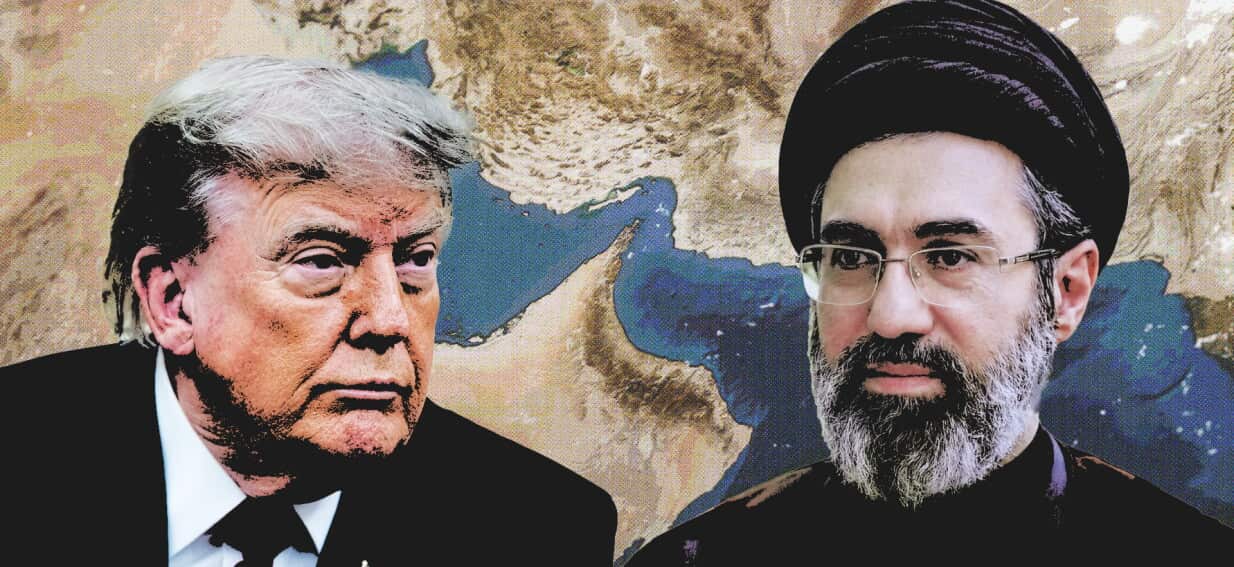
The global maritime commons operate on a foundational legal fiction: the assumption that international chokepoints are neutral public goods insulated from unilateral economic extraction. This paradigm is collapsing. When geopolitical friction points like the Strait of Hormuz transition from active security theaters to unilateral toll or blockade vectors, the underlying economic architecture of international trade is fundamentally altered. The vulnerability is not merely a localized shipping bottleneck; it is a structural flaw in how global supply chains price risk, sovereign jurisdiction, and maritime law.
To understand the breakdown of this order, the problem must be disassembled into its mechanical parts. The current friction within the Strait of Hormuz exposes the vulnerabilities of a global supply chain optimized for efficiency over resilience.
The Strategic Trilemma of Maritime Chokepoints
The governance and stability of any international strait rest upon a delicate equilibrium between three competing variables: coastal state sovereignty, user state economic dependence, and freedom of navigation under international law. When one actor seeks to maximize its leverage, the entire system destabilizes.
                  [Coastal Sovereignty]
                         /     \
                        /       \
                       /         \
                      /   System  \
                     /  Imbalance  \
                    /               \
[Freedom of Navigation]-----------[Economic Dependence]
The Legal Friction Vector
Under Part III of the United Nations Convention on the Law of the Sea (UNCLOS), international straits like Hormuz are governed by the regime of transit passage. This framework dictates that coastal states cannot suspend, hamper, or impair the continuous and expeditious navigation of foreign vessels. However, a structural vulnerability exists: Iran is a signatory to UNCLOS but has never ratified it, meaning it adheres primarily to customary international law. By executing what it defines as "security-related operational measures"—such as cargo inspections, boarding actions, and targeted drone or mine deployments—a coastal state can functionally close a waterway without declaring a formal blockade, bypassing traditional legal triggers while achieving identical economic denial.
The Cost Function of Maritime Delay
When a chokepoint is compromised, the cost to commercial shipping is non-linear. The economic impact is calculated through a clear mathematical relationship:
$$\text{Total Disruption Cost} = C_d \cdot T + C_f \cdot \Delta D + \Delta I_m$$
Where:
- $C_d$ represents daily vessel operating costs (hull risk premiums, crew war-risk bonuses, and demurrage fees).
- $T$ is the delay time spent in anchorage outside the chokepoint.
- $C_f$ is the marginal fuel cost per nautical mile.
- $\Delta D$ is the additional distance required to reroute around Africa (e.g., via the Cape of Good Hope) if the chokepoint is bypassed completely.
- $\Delta I_m$ is the market-driven inflation of cargo insurance premiums.
When war-risk insurance premiums spike from standard nominal rates to fractions of a percent of total hull value per voyage, the operational viability of thin-margin bulk transport evaporates. Cargo sits idle not because the route is physically impassable, but because it is financially uninsurable.
The Economics of Kinetic and Diplomatic Friction
The Strait of Hormuz handles approximately 21 million barrels of oil and petroleum products daily, alongside roughly 10 billion cubic feet of liquefied natural gas (LNG). This accounts for over 20% of global seaborne petroleum consumption. The vulnerability of this volume introduces specific structural distortions to global markets.
Asymmetric Leverage and Demand Inelasticity
Energy importing economies—particularly in East Asia, where nearly 90% of the strait's crude flows—possess highly inelastic short-term demand curves for crude oil and LNG. Because refining infrastructure is tuned to specific crude assays (such as sour Middle Eastern grades), switching to alternative suppliers requires significant lead times and capital expenditure. A hostile actor or an uncoordinated naval blockade that constricts supply by even 5% creates an exponential price spike in global spot markets due to panic buying and structural inflexibility.
The Weaponization of Tariffs and Levies
Proposals to impose unilateral transit fees or security tolls on commercial vessels represent a structural shift in maritime economics. Historically, the defense of freedom of navigation by global naval powers was treated as a non-excludable public good. Monetizing maritime security via a direct levy introduces a transactional framework to global chokepoints. The long-term risk of this strategy is precedent duplication:
- If a major superpower claims the right to charge a premium for route security, coastal states bordering other vital corridors—such as the Malacca Strait, the Bab el-Mandeb, or the Turkish Straits—gain a blueprint to impose their own sovereign transit taxes.
- The introduction of arbitrary transit pricing breaks the predictability required by international shipping consortia, driving capital away from globalized supply chains toward localized, high-cost domestic alternatives.
Operational Constraints and Systemic Fault Lines
The core limitation of relying on naval power to maintain chokepoint stability is the asymmetry of modern naval warfare. Protecting vast commercial shipping lanes requires near-perfect interception capabilities, whereas disrupting them requires only a modest investment in low-cost, deniable kinetic assets.
- The Drone-Mine Bottleneck: The deployment of low-cost loitering munitions, anti-ship ballistic missiles, and unexploded naval mines forces naval escorts into an unsustainable cost-exchange ratio. Expending million-dollar air defense missiles to neutralize cheap attack drones drains naval inventory faster than industrial bases can replenish them.
- The Neutral State Cascade: Disruption in a primary corridor causes secondary infrastructure to buckle. Rerouting tankers forces structural port congestion elsewhere, creating shortages of container availability, container ship misallocation, and severe capacity constraints at alternative bunkering hubs.
Strategic Playbook for Global Logistics Chains
To mitigate the accelerating decay of maritime legal norms, global enterprise supply chains and sovereign state planners must pivot from reactive crisis management to a proactive structural defense framework.
- De-risk Through Assay-Flexibility and Strategic Stockpiles: Industrial refiners must adjust operational parameters to handle a broader array of global crude inputs. Concurrently, sovereign states must maintain a minimum of 90 days of net import coverage via Strategic Petroleum Reserves (SPR) held outside vulnerable choke zones.
- Establish Multi-Modal Redundancy Passages: Freight forwarders must permanently shift a baseline percentage of cargo allocation to overland rail links (such as transcontinental Eurasian corridors) and pipeline networks that bypass key maritime chokepoints entirely, regardless of short-term cost differentials. Treating pipeline transit fees as an insurance premium ensures operational readiness when maritime routes fracture.
- Implement Dynamic Contractual Escrow: Shipping consortia must restructure charter party agreements to incorporate automated, smart-contract-driven risk pricing. Freight rates must instantly adjust based on real-time maritime telemetry and localized risk metrics, removing the friction of legal negotiation when a transit corridor goes hot.
:max_bytes(150000):strip_icc():focal(749x0:751x2)/auschwitz-2-691cb034ee9e43cfa45a0969012c6337.jpg)