The air up there smells like old stone and nothing else.
If you have ever stood at four thousand meters above sea level, you know the silence. It is not the quiet of a bedroom or a library. It is a heavy, ringing absence of noise, broken only by the sound of your own blood hammering in your ears and the sudden, terrifying crack of something very large breaking very far away.
Dawa sits on a crate of dry yak dung outside his tea house, staring up at the white ramparts of the Himalaya. He has lived beneath these peaks for sixty-two years. He remembers when the glacier tongue licked the edge of the lower pasture, a thick, blue-white wall that felt as permanent as the bones in his own hands. Today, that tongue has pulled back, leaving behind a raw, gray scar of loose moraine and a growing pool of water that looks too still, too dark, to be trusted.
"The mountain is getting tired," Dawa says. He does not use big words. He does not talk about degrees Celsius or radiative forcing or parts per million. He just points with a calloused thumb at the fresh notch torn into the ridge where a massive chunk of ice detached without warning, sending a million tons of stone and slush crashing down into the valley below.
We call it a glacier collapse.
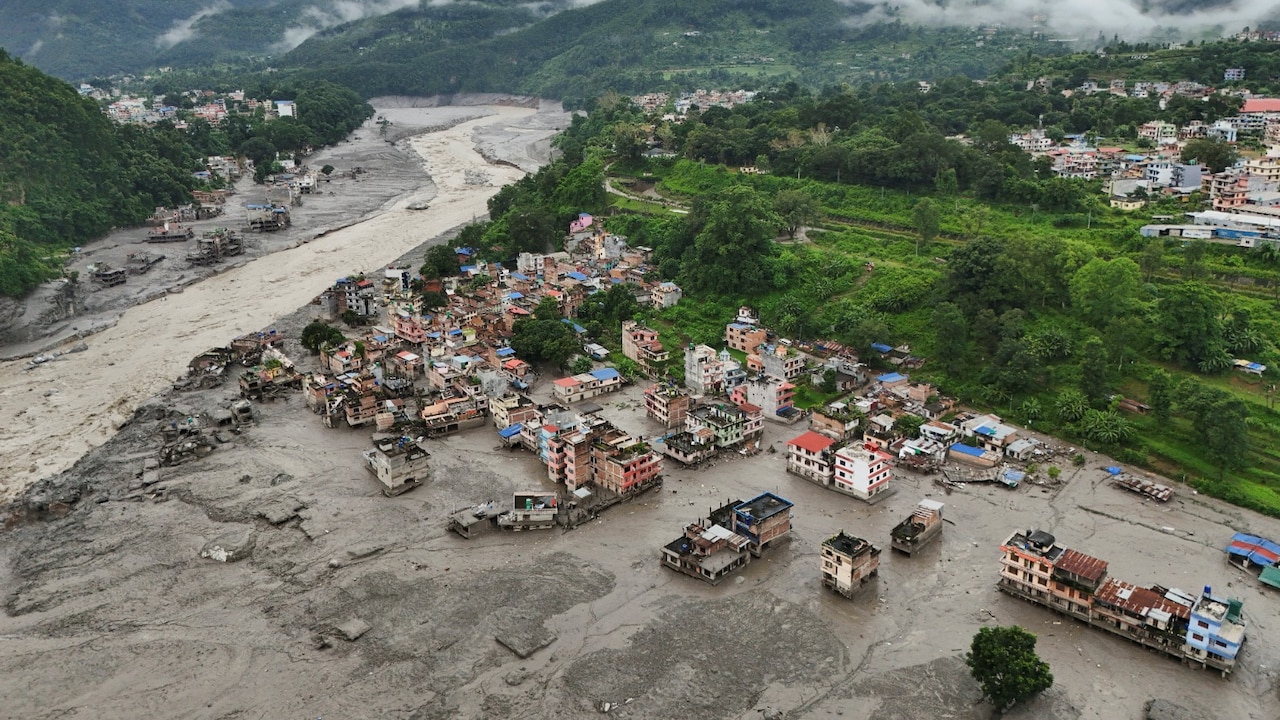
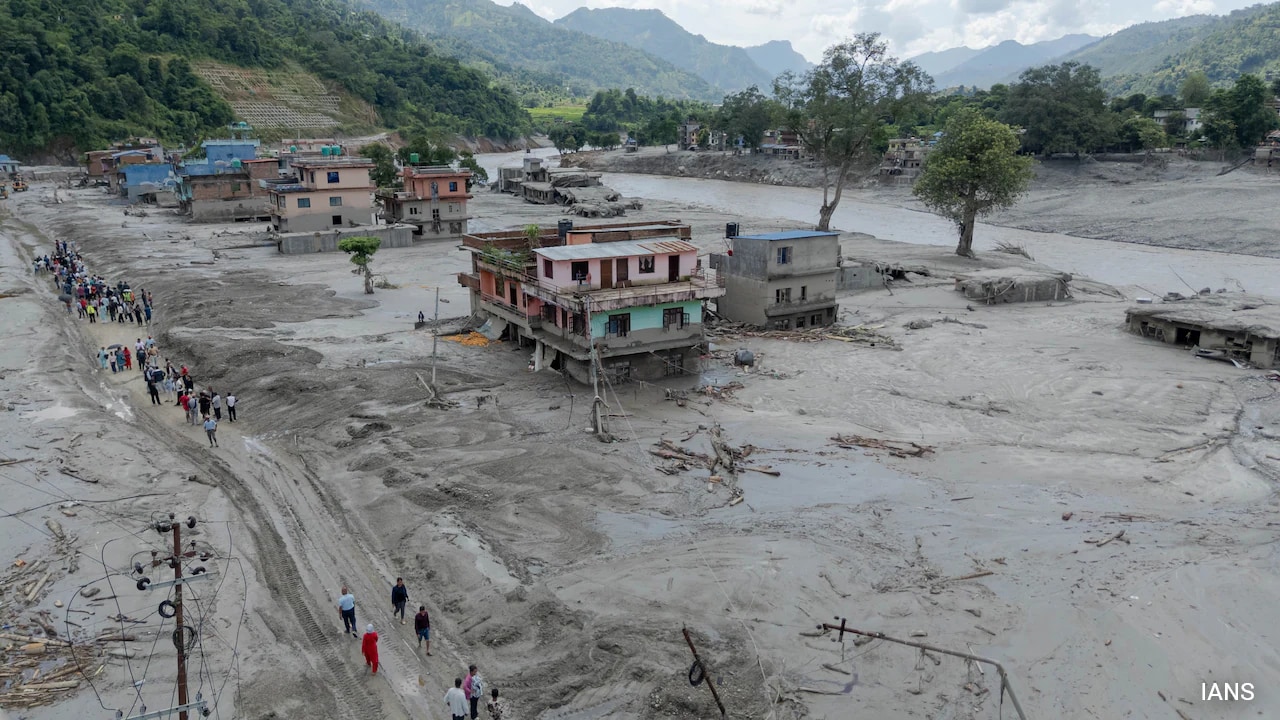
The phrase sounds clean, almost clinical. It belongs in a textbook or a morning news brief between weather updates and market futures. But when a hanging glacier lets go in Nepal, it is not an abstract data point. It is an avalanche of liquid terror that moves faster than a galloping horse, scouring the earth down to the bedrock, wiping out footbridges, hydro stations, and centuries of human history in the space of a heartbeat.
Consider what happens when thousands of years of frozen weight suddenly lose their grip.
To understand why the mountains are fracturing now, you have to look past the snow and into the physics of ice. Ice is not a rock. It is a slow, cold fluid that moves under its own immense gravity. As long as the sub-surface stays frozen solid, anchoring the mass to the granite slope, the glacier holds its pose. But when the temperature climbs—even fractionally, even in places where human lungs burn for want of oxygen—water finds its way into the microscopic cracks.
Water is an aggressive substance. When it freezes, it expands. When it melts, it flows. It lubricates the base of the ice sheet like grease on an axle.
Deep inside these ancient bodies, subterranean lakes are forming. They swell behind natural dams made of loose gravel and terminal moraines. These are known as glacial lake outburst floods, or GLOFs. They are ticking clocks carved out of ice and debris. When the gravel wall gives way, the water does not trickle. It surges. A wall of mud, boulders, and ice rushes down the narrow gorges, transforming peaceful alpine streams into liquid battering rams.
Downstream, millions of people live in the braided channels of the Ganges and Brahmaputra basins. They have names like Ramesh, Sita, and Priya. They plant rice in the monsoon mud, listen to cricket matches on crackling transistor radios, and watch the monsoon clouds roll in from the Bay of Bengal with a mixture of hope and dread. They are downstream from Dawa's tea house. They are downstream from the collapsing ice walls.
They do not check scientific preprints on cryospheric instability. They only know that the well water tasted muddy yesterday, and the river rose three feet overnight without a drop of rain falling on their roofs.
The risk is not just about a single dramatic collapse captured on a climber's GoPro. The risk is systemic. It is the creeping, silent unravelling of the world's water tower. More than a billion people depend on the snowpack and glaciers of the Hindu Kush Himalaya for their dry-season drinking water, their irrigation, their very survival. When the ice disappears too quickly, there is a dangerous feast followed by a permanent famine. First comes the flood. Then comes the dust.
Scientists have mapped the danger zones. They use satellites that orbit hundreds of miles above the earth, bouncing radar waves off the ice to measure how much a mountain slope sags in the summer sun. They count the lakes. They measure the temperature at high-altitude weather stations where the batteries freeze and the wind strips the paint off the metal casings.
The numbers are unambiguous. The glaciers of the Hindu Kush Himalaya lost ice at a significantly accelerated rate over the last decade compared to the decade before. They could lose up to eighty percent of their current volume by the end of the century if current emissions trajectories hold.
Yet, numbers are notoriously bad at breaking hearts.
A statistic does not smell like wet wool and woodsmoke. A graph does not show the look in an elder's eyes when he realizes the glacier his grandfather worshipped as a deity is now just a weeping gray cliff of melting slush.
We have treated the high mountains as a permanent backdrop, a scenic wallpaper for our postcards and mountaineering expeditions. We forgot that ice is a record. Every layer is a year of snow, a frozen diary of the atmosphere, capturing the dust of ancient fires, the fallout of industrial revolutions, and the quiet rhythm of the seasons.
When that ice melts and collapses, it is not just losing mass. It is erasing the archive.
Back in the village, the sun dips behind the western ridge, plunging the valley into a sudden, biting chill. Dawa stokes the fire inside the tea house, the dry dung giving off a pungent, familiar smoke that stings the eyes. Outside, the great white peaks fade from gold to bruised purple, then to black.
Somewhere up in the dark, three miles above sea level, another ton of ice is shifting. Another invisible crack is widening by a fraction of a millimeter. The water waits. The mountain waits. And down in the valleys, millions of lives keep turning on the edge of a question we are running out of time to answer.