Washington’s old playbook in Asia is cracked. For decades, the "hub and spoke" system—where the US sat at the center of separate bilateral treaties with Japan, South Korea, the Philippines, and Australia—kept the peace. It worked because the trade-off was simple. You got a security umbrella, and you didn't ask too many questions about who was in charge. That era is dead. Today, US-led security alliances in Asia are losing coherence because the economic and political costs of picking a side have become too high for Washington's partners to ignore.
The strategy used to be about containment. Now, it's about managing a messy, multipolar reality where every "ally" has a different breaking point. You can't just point at Beijing and expect everyone to line up. Economic gravity pulls one way; security fears pull the other. This friction isn't just a minor speed bump. It's a fundamental breakdown in how these nations view their own survival.
The China trade trap is real
Let’s be blunt. You can’t ask a country to treat its biggest customer like its biggest enemy and expect them to do it with a smile. For the likes of South Korea and Australia, China isn't just a neighbor. It's the primary engine of their prosperity. When the US pushes for "de-risking" or aggressive semiconductor bans, it isn't just asking for military cooperation. It's asking these nations to take a massive hit to their GDP.
Japan and South Korea have watched the US embrace protectionism under both the Trump and Biden administrations. They see the Inflation Reduction Act and the CHIPS Act not just as industrial policy, but as a signal that "America First" is here to stay. If Washington is going to hoard the supply chain, the incentive for Tokyo or Seoul to follow every US security whim vanishes. Why stay loyal to a partner who’s actively trying to suck the high-tech manufacturing out of your own borders?
They aren't just worried about China's Rise. They're worried about America's unpredictability.
Fear of abandonment vs fear of entrapment
The biggest nightmare for any Asian ally used to be abandonment. They worried the US wouldn't show up if things got ugly in the South China Sea or the Taiwan Strait. That fear hasn't gone away, but it's now joined by a new, sharper anxiety: entrapment.
Allies don't want to get dragged into a war they didn't start over interests that aren't strictly theirs. If the US and China stumble into a kinetic conflict over a reef or a trade dispute, the Philippines and Japan are on the front lines. They’re the ones who will take the missiles. They’re the ones whose ports will be leveled.
This creates a massive "coherence" problem. Washington wants a united front. The allies want a "Goldilocks" level of US presence—just enough to deter Beijing, but not so much that it triggers a preemptive strike or forces a total economic break with the mainland. It’s a needle nobody knows how to thread.
The internal political rot
We often talk about these alliances as if they're monolithic agreements between governments. They aren't. They’re subject to the whims of domestic voters who are increasingly skeptical of foreign entanglements.
Look at the Philippines. Under Rodrigo Duterte, the alliance was treated like a bargaining chip. Under Ferdinand Marcos Jr., it’s back in vogue. But for how long? In South Korea, the pendulum between "progressive" presidents who want to talk to the North and "conservative" presidents who want more US nukes is exhausting. Washington can't build a long-term strategy on a foundation that shifts every four years.
Even in Japan, the push to increase defense spending to 2% of GDP faces massive hurdles. The Japanese public is aging, the debt is astronomical, and the pacifist streak runs deep. US planners want a "global Japan," but the Japanese taxpayer just wants to know how they’re going to pay for healthcare.
The rise of the minilaterals
Because the big alliances are becoming too clunky, we’re seeing a shift toward "minilateral" groups like the Quad (US, India, Japan, Australia) or AUKUS (US, UK, Australia). On paper, these look like they add strength. In reality, they’re a symptom of the "hub and spoke" model's failure.
These smaller groups are more flexible, sure. But they also create a "spaghetti bowl" of security commitments. Who takes the lead in a crisis? If India stays neutral in a Taiwan conflict—which it almost certainly would—what does the Quad actually do? If AUKUS focuses solely on nuclear subs that won't be ready for a decade, how does that help a crisis happening next Tuesday?
This fragmentation isn't a sign of health. It’s a sign that the US is trying to find a workaround for the fact that it can no longer command a single, unified regional bloc.
Middle powers are finding their own voice
Countries like Indonesia and Vietnam don't want to be anyone's "spoke." They’ve watched the US-led order closely and decided that "strategic autonomy" is a better bet. They’ll take US weapons, sure. They’ll also take Chinese infrastructure investment.
They’ve learned that being a "swing state" gives them more leverage than being a loyal lieutenant. By refusing to join formal security alliances, they force both Washington and Beijing to court them. This drives the US State Department crazy, but it’s a perfectly rational move for Jakarta or Hanoi.
The US obsession with "values-based" alliances—talking about democracy vs. autocracy—actually pushes these middle powers away. They don't care about a crusade for democracy. They care about sovereignty and the price of rice. When the US makes the alliance about ideology, it loses the pragmatic players who just want to keep the sea lanes open.
The nuclear umbrella is leaking
Perhaps the most dangerous threat to alliance coherence is the growing doubt over the "extended deterrence" provided by the US nuclear arsenal. For years, South Korea was content to stay non-nuclear because it believed the US would use its own nukes to protect Seoul.
That belief is wavering.
Polls in South Korea consistently show that a majority of the population now favors developing their own nuclear weapons. They look at a nuclear-armed North Korea and an increasingly powerful China and ask themselves: "Would an American president really trade San Francisco for Seoul?"
If an ally starts building its own nukes, the US-led alliance system as we know it is over. It would trigger a domino effect across the region, leading to a nuclear-armed Japan and a complete collapse of the non-proliferation regime. The US hasn't found a way to reassure these allies without also escalating tensions to a breaking point.
How to actually fix the drift
If you’re a policymaker or a business leader looking at this mess, don't wait for a grand "re-coherence." It isn't coming. The days of a single, US-dictated security architecture are gone.
Instead, expect more of this:
- Transactionalism: Alliances will become "pay-to-play." Partners will demand specific trade concessions or technology transfers in exchange for basing rights.
- Divergent Interests: You’ll see Japan and Australia cooperate on some things while completely ignoring US requests on others, especially regarding China trade.
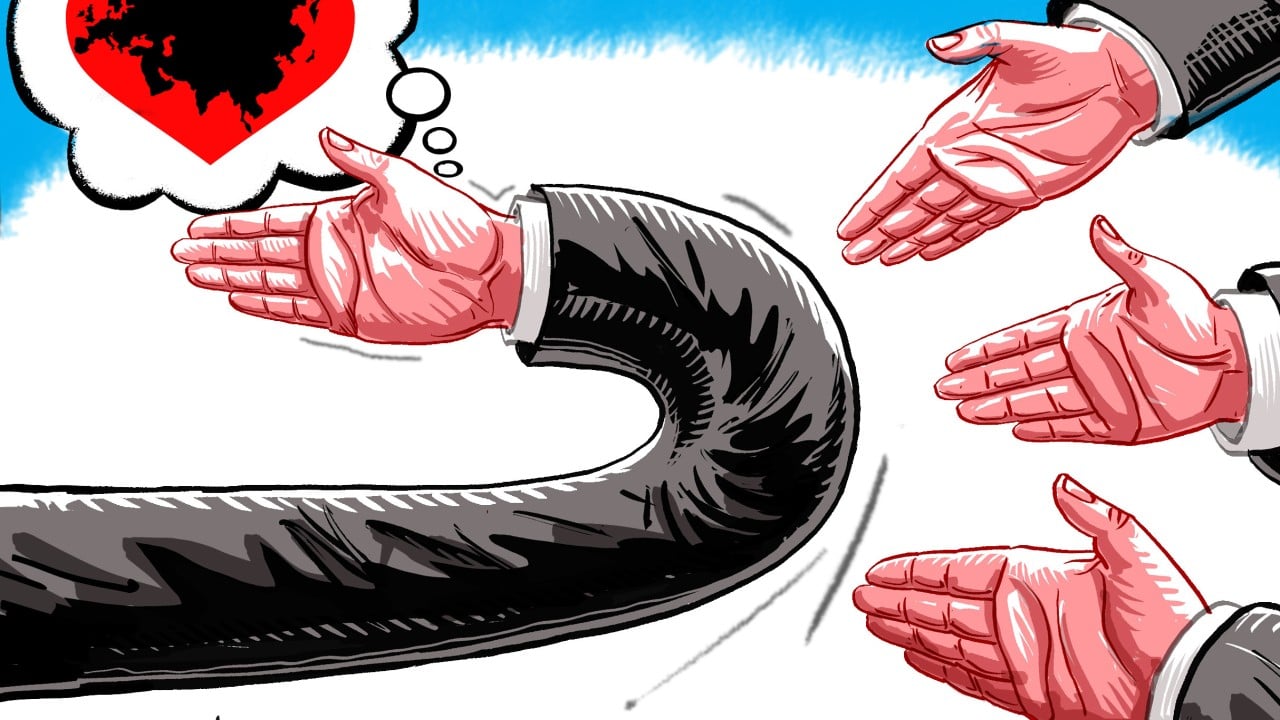
- Ad-hoc Coalitions: Security will be handled on a case-by-case basis. There won't be a "Pacific NATO." There will just be a series of messy, overlapping handshakes.
The real test won't be whether Washington can force these countries back into a tidy line. It will be whether the US can learn to lead a group of partners who no longer feel like they owe America anything. If you want to understand where the region is headed, stop looking at the treaties and start looking at the trade balances. That’s where the real power—and the real weakness—lives.
Keep your eye on the upcoming elections in South Korea and the next round of Philippine-US base negotiations. Those are the moments where the cracks will either be patched or turn into canyons. Forget the rhetoric about "ironclad" bonds. In 2026, the only thing that’s ironclad is self-interest.
Stop looking for a unified front. It’s gone. Start preparing for a region where every ally is playing its own game. Your strategy needs to account for a world where "ally" is just another word for "someone we’re currently negotiating with."