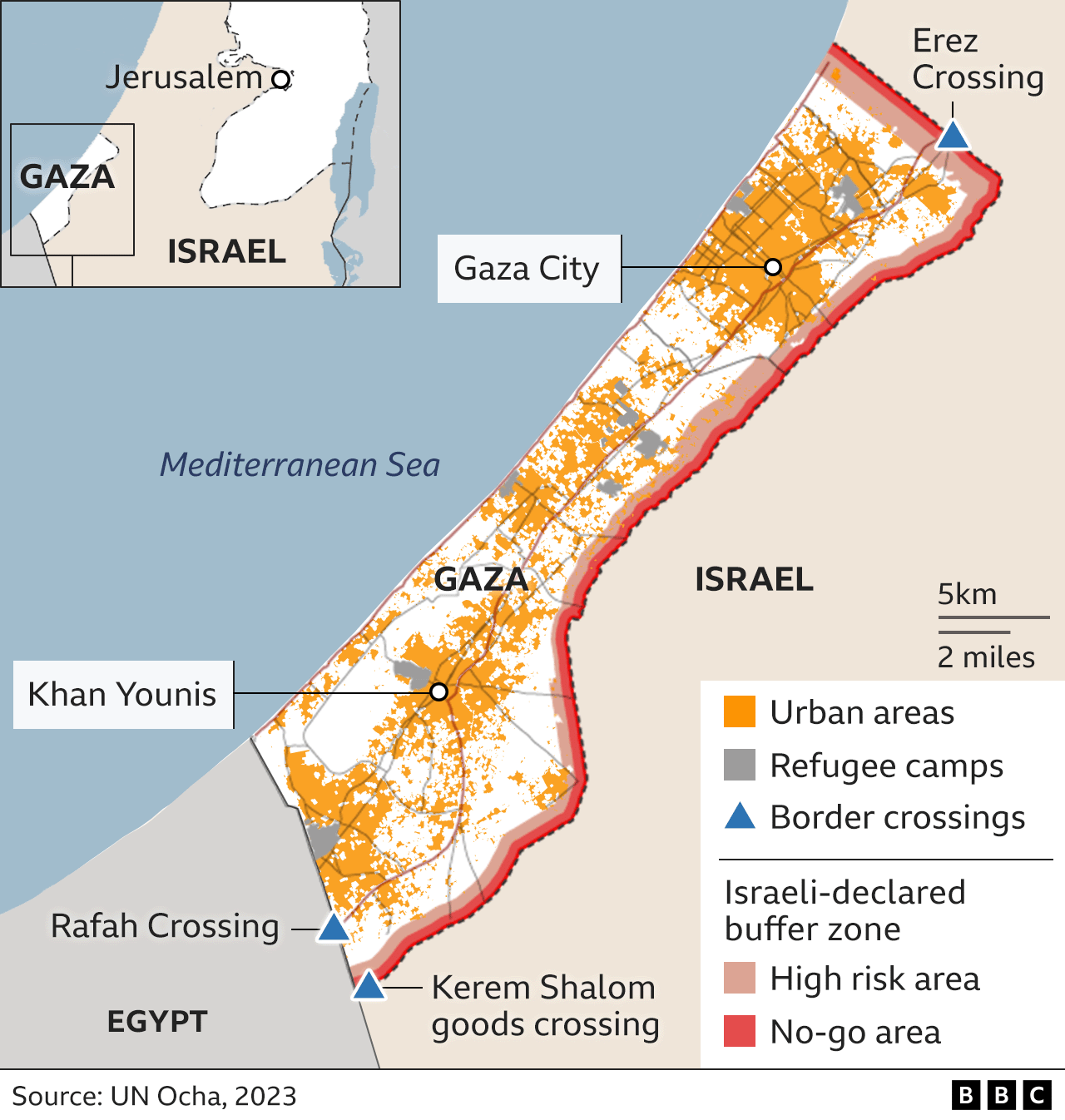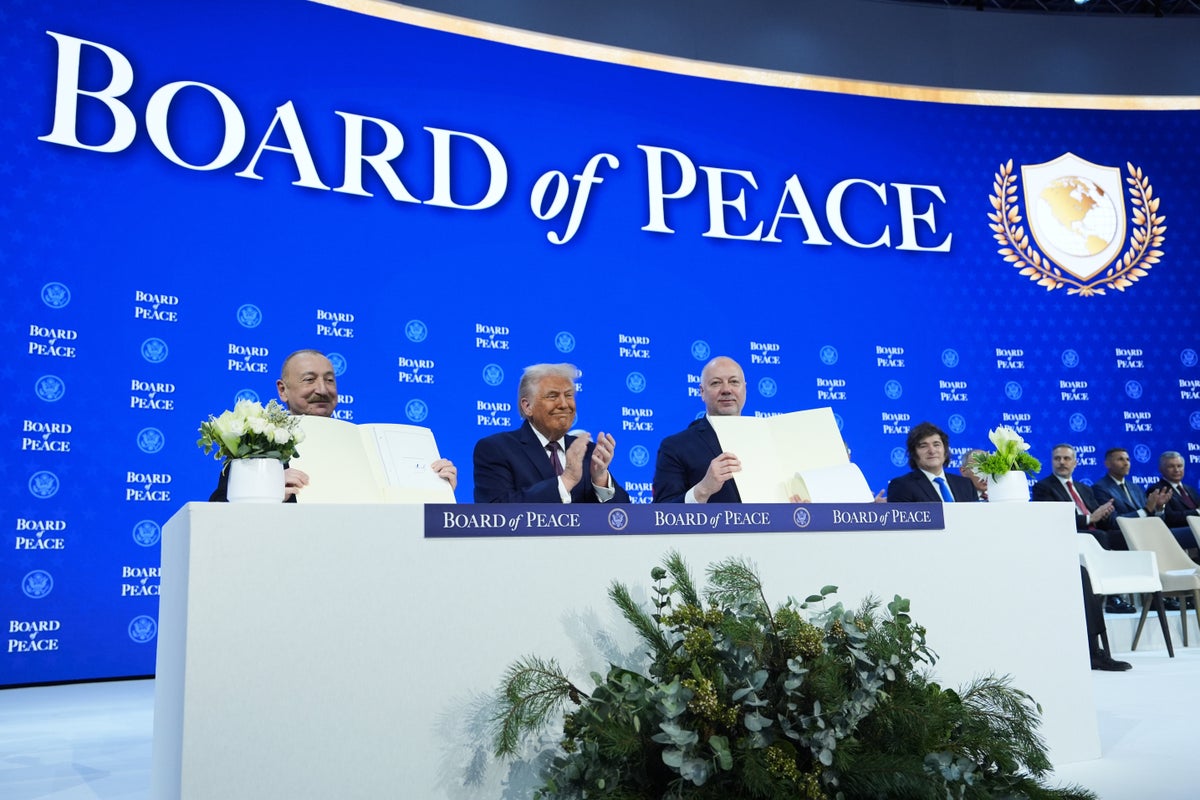
The "Board of Peace" wants the United Nations Security Council to press Hamas to disarm.
It sounds noble. It sounds civilized. It sounds like the kind of press release drafted in a climate-conditioned room in Geneva by people who view geopolitics as a series of bureaucratic misunderstandings. You might also find this related article useful: The Gaza Aid Flotilla Illusion and the Myth of the Isolated Video Clip.
It is also completely disconnected from the mechanics of modern warfare.
To ask a non-state militant group to voluntarily hand over its arsenal via diplomatic pressure is to misunderstand why that arsenal exists in the first place. This is the lazy consensus of international diplomacy: the belief that every conflict can be solved if we just find the right combination of strongly worded resolutions and economic leverage. As highlighted in recent articles by The Guardian, the implications are widespread.
I have spent years analyzing regional security dynamics and the failure of international interventions. I can tell you exactly why this approach is dead on arrival. Militant groups do not disarm because a committee asks them to. They disarm only when maintaining arms becomes an existential threat to their survival, or when they are utterly destroyed.
The Board of Peace is asking the wrong question. They are asking how to initiate disarmament. The real question is why any rational asymmetric actor would ever agree to it.
The Asymmetric Equation: Why Disarmament Means Death
International relations theorists often fall into the trap of treating non-state actors like traditional governments. They are not. A state has a geographic territory, a recognized population, and a seat at the table. A group like Hamas derives its entire leverage, internal legitimacy, and survival from its capacity for violence.
Take away the rockets, and Hamas becomes an administrative entity managing a devastated enclave with no economic viability.
The Cost-Benefit Illusion
The assumption behind the UN Security Council pressure strategy relies on a flawed cost-benefit model:
- The Bureaucratic Myth: If the UN applies enough diplomatic isolation and sanctions, the leadership will realize the cost of holding weapons is too high.
- The Reality: For an ideological militant group, the cost of losing the weapons is absolute irrelevance or elimination.
Imagine a scenario where a corporate monopoly is told by a non-binding arbitration panel to give away its core proprietary technology for free to ensure "market harmony." The monopoly would laugh the panel out of the room. In the theater of asymmetric conflict, the stakes are not market share; they are physical survival.
The Failed Track Record of Institutional Leverage
Let us look at actual history, not institutional wishful thinking. The UN Security Council has passed dozens of resolutions demanding the disarmament of non-state militias.
Look at Hezbollah in Lebanon. UN Security Council Resolution 1701, passed in 2006, explicitly called for the disarmament of all armed groups in Lebanon. Twenty years later, Hezbollah possesses an arsenal that rivals many mid-sized European militaries. The presence of UN peacekeepers (UNIFIL) did nothing to halt the flow of advanced weaponry.
Why? Because international bodies lack the enforcement mechanism to back up their demands without triggering the exact large-scale war they are trying to avoid.
UN Resolution Passed -> No Enforcement Mechanism -> Militia Ignores Mandate -> Status Quo Maintained
When the Board of Peace asks for UN intervention, they are asking a body defined by gridlock and vetoes to enforce a mandate it has failed to enforce anywhere else in the world. Russia and China routinely use their veto power to block Western-led security initiatives, while the United States protects its own strategic interests. The idea that a cohesive, unified message will emerge from the Security Council to effectively squeeze a militant group into submission ignores the reality of great power competition.
The Dangerous Fallacy of the Neutral Arbiter
The underlying flaw in the competitor's premise is the belief that the UN is viewed as a neutral, authoritative arbiter by all parties.
In conflict zones, international institutions are viewed as political actors. Hamas views the UN infrastructure through a lens of utility, using its humanitarian arms for survival while ignoring its political branches. When the Security Council issues a demand, it does not carry moral weight in the tunnels of Gaza; it carries the weight of a political maneuver by adversarial powers.
If you want to dismantle an armed faction, you do not send diplomats with briefcases. You change the ground-level incentives that make violence the most profitable option.
The Real Drivers of Disarmament
History shows that militias only disarm under three specific conditions:
- Total Military Defeat: The complete physical destruction of the group's command structure and supply lines (e.g., the Tamil Tigers in Sri Lanka).
- Political Integration with Guarantees: The group transitions into a political party because they achieved their primary goals or received ironclad security guarantees (e.g., the IRA in Northern Ireland or FARC in Colombia).
- Loss of State Sponsorship: The foreign power funding and arming the group cuts off the supply chain entirely.
The Board of Peace proposal addresses none of these. It does not offer a realistic political path that Hamas would accept, it cannot enforce a military defeat through a resolution, and it cannot force Iran to stop the flow of capital and technology.
The Unintended Consequences of Empty Rhetoric
There is a distinct danger to these performative diplomatic gestures. When organizations push for unachievable goals like "voluntary disarmament via UN pressure," they suck the oxygen out of the room for pragmatic, incremental steps.
Instead of focusing on realistic objectives—such as maritime smuggling interdiction, tighter border controls on dual-use materials, or targeting the specific financial networks feeding the conflict—diplomats waste months debating the wording of a resolution that will be ignored the moment the ink dries.
It gives the public the illusion of action while the structural drivers of the conflict remain completely untouched. It is security theater at its finest.
Dismantling the Premise
The common question asked in foreign policy circles is: How can the international community force Hamas to disarm?
This is the wrong question. The premise is broken. The international community cannot force them to disarm through institutions.
The honest, brutal answer to how disarmament actually happens in the real world involves choices that Western NGOs are too squeamish to admit. It requires either an absolute military campaign that accepts catastrophic collateral damage, or a cynical, realpolitik deal that grants legitimacy to actors currently labeled as terrorists.
There is no middle ground where everyone sits down, listens to a UN representative, and decides to hand over the keys to the armory.
If you want to change the status quo, you have to stop relying on the tools of 1945 to solve the asymmetric conflicts of the modern era. Stop asking the Security Council to pass resolutions that everyone knows are unenforceable. Stop treating armed ideological movements like misbehaved nation-states that just need a firm talking to from New York.
Until the international community accepts that violence is a rational choice for actors who have nothing to lose from instability, proposals like the Board of Peace's will remain nothing more than fiction designed to make elites feel like they are contributing to world peace.