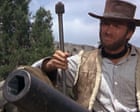
Six decades ago, Clint Eastwood stood in the dusty, sun-baked landscape of northern Spain, chomped on a cigar, and lit the fuse of a heavy artillery piece to fell a fleeing rider. That weapon, a British-made 1873 Whitworth cannon, became an indelible piece of cinematic history in Sergio Leone’s masterpiece, The Good, the Bad and the Ugly. Yet, as soon as the cameras stopped rolling in the province of Burgos, the massive 75mm weapon vanished into the labyrinthine vaults of bureaucracy. For decades, film historians assumed it was lost to the scrap heap of mid-century military reorganizations.
It was not lost. It was sitting in a free public museum in southeastern Spain, completely unrecognized by its caretakers.
The recent discovery of the cannon at the Military History Museum of Cartagena by the Sad Hill Cultural Association exposes a fascinating truth about film preservation. Major movie props—even those weighing thousands of pounds and forged from solid iron—frequently disappear not through malice or theft, but through the simple inertia of official record-keeping. The military saw a piece of surplus tactical hardware; the world saw a holy grail of cinema.
The Paper Trail of a Cinematic Arsenal
To understand how a massive iron cannon disappears, one must understand how Sergio Leone managed to film an American Civil War epic in Francoist Spain during the summer of 1966. Leone lacked the budget to build a mechanized army from scratch. The Spanish Army, however, possessed an enormous stockpile of obsolete, historical artillery and thousands of young conscripts who could be ordered to dress in Union and Confederate uniforms for pennies a day.
The Spanish military dictatorship regularly leased out its men and antique weapons to international film productions to generate foreign currency. Under strict military guard, the Army Museum in Madrid transferred a fleet of authentic 19th-century weapons to the filming locations around the Arlanza Valley. Among them was inventory item MUE-5410, a 75mm hexagonal-bore cannon manufactured by Whitworth in Manchester.
The weapon itself carried deep historical scars long before Eastwood ever laid hands on it. While it arrived too late for the American Civil War, the Spanish military deployed the weapon during the bloody Third Carlist War between 1872 and 1876. To the Spanish army officers supervising the film shoot, the gun was a relic of domestic tragedy, not Hollywood glamour.
When production wrapped, the army did exactly what any bureaucracy does. They checked the item back into storage, hauled it back to Madrid, and left it parked outside on display.
The 2010 Relocation Blindspot
The critical break in the asset's identity occurred in 2010. The main Army Museum in Madrid underwent a massive, logistically harrowing relocation to the Alcázar of Toledo. Faced with a severe shortage of physical space in the new facility, administrators decentralized their vast collection, scattering heavy artillery pieces to regional military outposts and smaller museums across the country.
The Whitworth cannon was sent to the coastal city of Cartagena. At the time, its wooden wheels were rotting, and the iron barrel was choked with decades of outdoor grime and rust. A dedicated group of retired British and Spanish volunteers forming the Friends Association of the Cartagena Museum spent months adroitly restoring the piece. They rebuilt the woodwork and cleaned the hexagonal bore, yet they remained entirely oblivious to the fact that they were polishing the exact steel Clint Eastwood used to cement his status as a global icon.
The military inventory listed its provenance from the Carlist Wars. It made absolutely no mention of Sergio Leone, Eli Wallach, or the Nameless Man.
How a Group of Volunteers Cracked the Case
The credit for solving the mystery belongs to Diego Montero, the treasurer of the Sad Hill Cultural Association. His group is famous among cinephiles for painstakingly unearthing and restoring the iconic Sad Hill Cemetery in Burgos, digging up the concentric circles of 5,000 graves that had been buried under three inches of topsoil for half a century.
While researching antique weaponry for the upcoming 60th anniversary of the movie, Montero cross-referenced production photographs from Peter J. Hanley’s definitive text, Behind the Scenes of Sergio Leone’s The Good, the Bad and the Ugly, with historical military archives.
Montero tracked the cannon’s movement from Madrid to Toledo, and finally to the regional museum in Cartagena. He contacted the museum's director, Lieutenant Colonel Ernesto Terry, requesting specific, high-resolution photographs of the top of the barrel and the stamped serial numbers. When the images arrived, the numbers matched the original 1966 military loan ledger perfectly.
The discovery has triggered an immediate surge in local tourism, catching the Cartagena municipality completely off guard. Overnight, a quiet local museum became a site of pilgrimage.
The Fragile Reality of Film Heritage
This discovery highlights a systemic vulnerability in cultural preservation. Cultural institutions and military bureaucracies operate on entirely different value systems. To an army archivist, an object's value is tied strictly to its official state deployment; its subsequent life as a myth-making tool in popular culture is viewed as trivial trivia.
This divergence explains why iconic artifacts from the golden age of cinema routinely vanish. The bridge over the Arlanza River built for the film was blown up for real by Spanish army engineers, rebuilt when the cameras failed to roll, and blown up again. The sprawling cemetery was simply abandoned to the elements.
The Sad Hill Cultural Association has confirmed that the cannon will not be traveling to Burgos for the anniversary celebrations this July. The weapon is too fragile, and its current home in Cartagena has no intention of parting with a relic that is currently driving record-breaking crowds through their doors. Instead, the discovery alters the geographical map of Spaghetti Western history, linking the rugged northern mountains of Burgos permanently to a quiet military port on the Mediterranean coast.
The search for these physical touchstones of cinema history reveals that the most valuable relics are rarely hidden in secret vaults or private, elite collections. More often than not, they are parked in plain sight, waiting for someone to care enough to read the serial numbers.
For those interested in seeing the physical legacy of this era, the volunteer efforts behind these discoveries offer a profound look into the past. You can explore the incredible scale of the restored film locations in Spain by watching this detailed architectural tour of the Sad Hill Cemetery Restoration, which showcases how film fans rescued cinema's most famous graveyard from total erasure.


