Why Twenty Million Dollars and a Relocation Offer Won't Crack Iran's Nuclear Program
Bounty posters for nuclear secrets sound dramatic. They make great headlines. They rarely crack hardened programs.
When headlines trumpet that the United States is offering up to $20 million—alongside potential relocation—for actionable intelligence on Iran's nuclear program, the lazy consensus writes itself. People assume a big paycheck plus a ticket out of country creates an instant stampede of insiders with thumb drives and blueprints.
That assumption confuses cash size with real-world risk.
In intelligence work, a headline bounty is a public signal, not a magic key. It tells potential sources what Washington wants. It does not erase surveillance, family leverage, counterintelligence traps, or the quiet cold calculus of survival inside a closed state.
Even the premise of the competitor framing—"Les Etats-Unis offrent 20 millions de dollars et « un possible déménagement » pour des informations sur le programme nucléaire iranien"—treats a high-friction counterintelligence problem like an e-commerce listing. Put up a price tag. Wait for a seller. Cash out.
Real life does not work that way.
The Lazy Consensus About Bounties and Defection
Conventional commentary treats high-value rewards as straightforward transaction multipliers. Offer $1 million, maybe nobody bites. Offer $20 million and a fresh start abroad, and surely someone with access to enrichment sites, procurement networks, or centrifuge work will step forward.
That logic misses how closed security states operate.
Intelligence professionals who have spent decades tracking proliferation networks know a harder truth: money is rarely the first reason a high-access insider risks everything. Nor is it the last obstacle they face. When someone inside a sensitive technical or security apparatus defects or leaks, money often comes second—or third—behind ideological disillusionment, career grievance, fear of purge, or protection of loved ones.
A public bounty can nudge someone who already leans toward defection. It can widen awareness among lower-level facilitators, logistics clerks, or middlemen who touch procurement or travel. What it rarely does on its own is flip a deeply compartmentalized scientist or senior program manager who already knows the state watches its own.
Imagine a scenario where a mid-level engineer at a sensitive facility sees a translated reward notice online. Even if that engineer wants out, the hardest problem is not naming a bank account. The hardest problem is surviving the first forty-eight hours between deciding to act and reaching safe hands without triggering an internal security alarm.
Cash does not buy clean tradecraft. Tradecraft buys survival.
What "Information on the Nuclear Program" Actually Means
People hear "information on the nuclear program" and picture a single smoking gun. A vault door opening. A binder labeled "Master Plan."
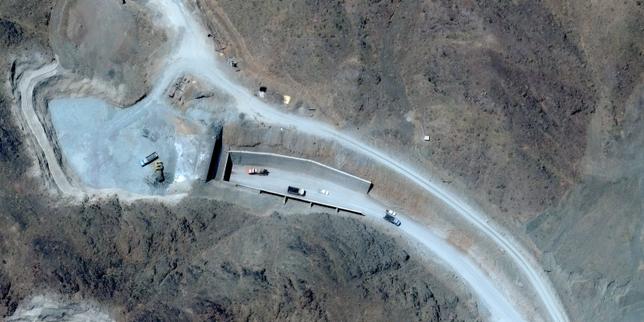
Nuclear programs—especially mature, dispersed, heavily hardened ones—do not sit on a single shelf. They span uranium mining and milling, conversion, enrichment cascades, centrifuge manufacturing, component procurement, research and development, weaponization physics or dual-use metallurgy, site security, and underground tunneling.
Information has value only when it fills a specific intelligence gap or confirms what analysts already suspect with higher confidence.
- Low-grade noise is cheap and plentiful: rumors heard in a tea house, outdated org charts, or generic news recycled with new labels.
- Tactical leads are more useful: a shell company shipping specialized valves, a contractor schedule change, or a personnel transfer at a research institute.
- High-grade crown jewels are rare: exact technical parameters, hidden facility locations, covert procurement chains, or real-time operational decisions made at the top.
A reward program advertises a top ceiling—up to $20 million. Top payouts require extraordinary, verifiable, non-public value, often delivered under severe personal risk and corroborated across multiple independent sources. Most tips never get anywhere near the ceiling because most tips are incomplete, stale, or contaminated by deception.
Why "Possible Relocation" Is Not a Guarantee
Look closely at the phrasing around relocation. "Possible" is doing heavy lifting.
Relocating a source and their family out of a tightly controlled environment is one of the hardest logistical operations in intelligence. It is not buying a plane ticket and handing over a house key. It involves vetting, identity protection, travel routing, legal authorities, watchlists, resettlement security, and long-term care.
States also have to protect themselves against walk-ins and double agents. If a hostile intelligence service pushes a controlled asset toward a reward offer to plant false leads, test U.S. collection methods, or map who makes contact, an automatic relocation promise would hand the adversary a free extraction service.
That is why relocation is conditional, vetted, and never an automatic perk for anyone who sends an email.
For a genuine insider, that conditionality creates a brutal dilemma. You are asked to take catastrophic risk today in exchange for a payout and a possible new life later. Risk-averse people do not take that trade. Desperate or reckless people sometimes do—and their information is often messy or exaggerated.
The Counterintelligence Trap Nobody Talks About
Whenever a government puts a big reward on the table, two things happen right away. Real leads show up. Fake ones show up too.
Adversarial services love high-profile bounties because they create a noisy funnel. If analysts have to sift through hundreds of fabricated tips, recycled open-source claims, or deliberate disinformation from insiders playing along under state direction, signal-to-noise ratio drops fast.
Worse still, public reward announcements can put real people in danger without producing a single usable fact. A security service seeing heightened chatter or unusual financial or travel behavior around sensitive sites does not need proof of a leak to start interrogations. Suspicion alone is plenty inside an authoritarian security system.
There is also the money problem itself. Moving large sums of money across sanctions regimes, banking restrictions, and surveillance screens is slow and heavily monitored. Nobody walks out of a high-security compound with $20 million in cash in a duffel bag. Payouts are structured, verified over time, tied to value and reliability, and handled through tightly controlled channels.
Anyone expecting a fast lottery windfall misunderstands how state-backed reward programs work in practice.
Redefining the Real Question Behind the Headline
When readers see a headline about a $20 million reward and relocation offer, they usually ask two questions: Will this bribe insiders into exposing the program? and Why doesn't the U.S. just pay whoever knows the truth?
Both questions start from the wrong place.
The better question is: What gap in intelligence collection makes a public bounty worthwhile alongside quiet, traditional espionage?
Public rewards are a broad net, not a surgical scalpel. Classical human intelligence relies on patient recruitment, long-term access, psychological leverage, and secure handling over months or years. A public reward casts a wide net across people who may never be reached by traditional case officers—contractors, middlemen, technicians, or peripheral figures who sit near the edges of procurement and logistics.
Even if 99 percent of tips fail, the 1 percent that points to a hidden front company, a route, or a facility detail can save years of guesswork.
"People Also Ask" — Dismantled and Answered Straight
Does $20 million guarantee someone high up will talk?
No. Senior figures with deep technical or strategic access usually weigh ideology, legacy, family safety, and survival far more heavily than a cash payout. Money helps most at the margins and with mid-level facilitators, not as a standalone lever on true inner-circle leaders.
Is relocation easy if a source comes forward?
Not even close. Exfiltration and resettlement are slow, high-risk, and heavily vetted. Anyone promising frictionless escape is selling spy fiction, not reality.
Why advertise the reward publicly instead of keeping it quiet?
Secrecy protects sources, while publicity creates awareness. A public announcement reaches people who have no direct contact with foreign intelligence services and would never know a channel exists otherwise. The trade-off is extra noise and counterintelligence risk.
Could a source get scammed or exposed trying to claim it?
Yes. Amateur attempts to make contact without proper operational security are dangerous. Security services monitor communications, travel, and financial anomalies closely. Most people who get caught do not get caught by a Hollywood sting; they get caught by basic mistakes in how they reach out or talk.
Actionable Reality Check for Anyone Reading Threat Headlines
If you follow geopolitical security, defense, or sanctions policy, treat bounty headlines the right way.
- Separate publicity from capability. A reward announcement shows intent and collection priorities. It does not prove an intelligence breakthrough has already happened.
- Track procurement and logistics, not just headlines. Nuclear and missile programs leave footprints in supply chains, dual-use hardware, front companies, and shipping routes. Those clues often matter more than dramatic defection stories.
- Watch for verification, not volume. One verified lead worth $500,000 beats fifty flashy claims worth zero. In intelligence, credibility is the entire currency.
- Expect long timelines. Even when a real source emerges, corroborating information, building trust, and turning a lead into actionable insight takes time.
Where This Contrarian Take Can Go Wrong
Being contrarian does not mean being right by default. There are real ways this skepticism could understate what happens next.
A severe economic shock, internal political fracture, or intense pressure on program personnel could shift the risk calculus inside Iran faster than outside observers expect. When insiders feel the ground moving beneath their feet or fear being made scapegoats for setbacks, people who once stayed quiet sometimes look for an exit.
A high-profile reward could also act as a catalyst at the exact moment an insider is already looking for a way out. It might not create the motive from scratch, yet it could tip the balance for someone already halfway out the door.
Still, betting the house on a public reward poster to crack a hardened nuclear program is wishful thinking dressed up as tough talk.
Money talks, sure. Fear talks louder. Tradecraft decides who survives.