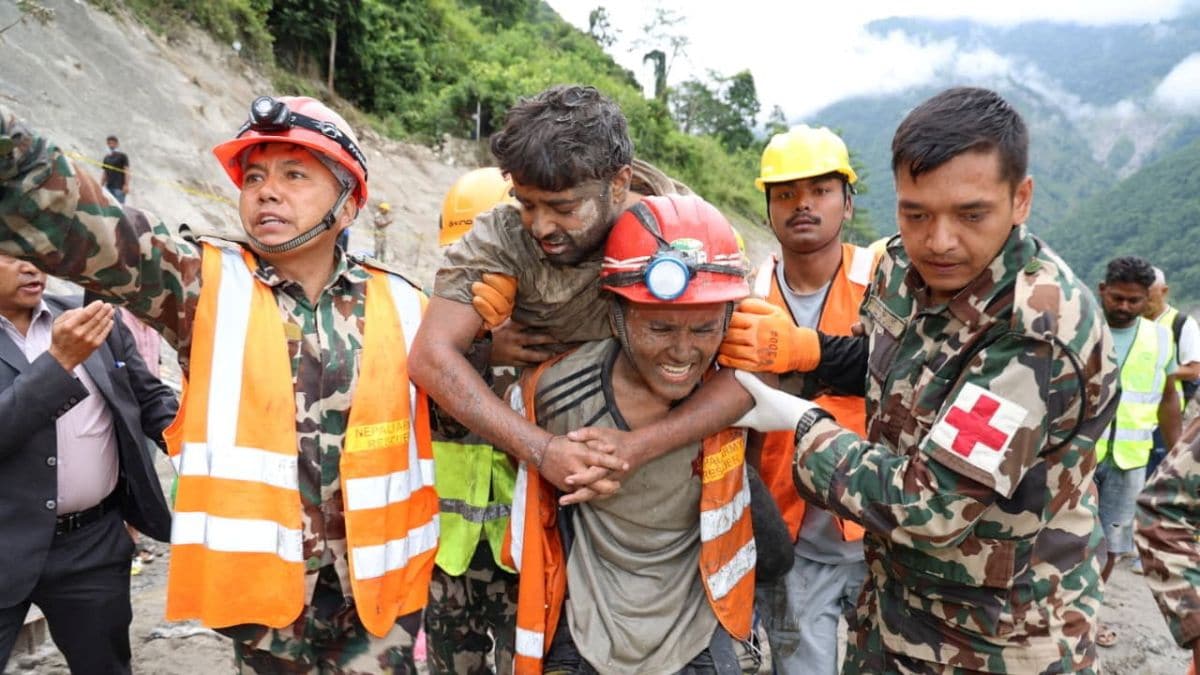
Every time a hydropower tunnel collapses in the Himalayas, the media runs the exact same script. They gasp at the primitive conditions. They broadcast the desperate tapping of trapped workers communicating through steel pipes with coded noises. They demand more advanced drills, better radar, and high-tech sensors.
It is a comforting narrative. It frames structural engineering disasters as technical hurdles waiting for a software patch or a heavier machine.
The lazy consensus is that engineers simply need smarter gear to pull men out of crushed rock faster.
That premise is entirely backwards. I have watched corporations and state ministries burn millions of dollars on imported subterranean mapping tools while basic maintenance logs sat unread in filing cabinets. The bottleneck in tunnel extraction operations is never a lack of technology. It is a suffocating layer of institutional hesitation, jurisdictional turf wars, and compliance theater that turns hours into days.
When a worker in a remote Himalayan diversion tunnel taps out an SOS using a rock against a pneumatic pipe, the public thinks of survival against nature. The reality is much uglier. That worker is paying the price for a procurement cycle that prioritized cost-cutting over ground-support monitoring three years before the first explosive charge was ever set.
The Engineering Illusion
Let us dispense with the fiction that subterranean excavation is an exact science. Tunnelling through the young, fragile strata of the Himalayan range is an exercise in managed uncertainty. The rock does not care about your ISO certifications.
When a collapse occurs, the standard playbook demands an immediate geological assessment, stabilization of the portal, and micro-seismic monitoring. But high-altitude project sites rarely operate like Swiss laboratories. They are chaotic outposts managed by tiered contracting arrangements where accountability evaporates the moment a fault line shears.
Main contractors pass risk down to sub-contractors. Sub-contractors hire local laborers on daily wages with zero underground safety orientation. When the crown of the tunnel gives way, the immediate crisis response is paralyzed because nobody wants to admit liability. The delay in making the first phone call to state disaster management cells has killed more men than the initial rockfall ever did.
Focusing on the noise from the pipes misses the structural rot. The tapping means the air pocket is holding. It means someone is alive. It also means the ventilation system failed the moment the power grid clipped.
Why Better Gadgets Fail
Imagine a scenario where a multi-million-dollar thermal imaging drone is flown into a collapsed adit to locate trapped personnel. Sounds cutting-edge, right?
In practice, high-altitude dust chokes the optics. Residual humidity fouls the sensors. The narrow, debris-choked geometry of a diversion tunnel renders aerial telemetry useless within twenty meters of the face. The machine gets stuck, creating a secondary obstruction that rescue crews now have to clear manually.
Technology without institutional velocity is just expensive lawn ornaments.
The industry loves to talk about remote-controlled robotic crawlers entering unstable voids. Yet, basic pneumatic shoring jacks frequently sit rusted in supply sheds because the site manager lacked the petty cash authorization to replace broken seals.
The Regulatory Blind Spot
Regulatory bodies inspect projects based on paper compliance. They check if safety manuals are printed in three languages. They look at sign-off sheets for morning safety briefings. They rarely check if the geologist on site has the authority to halt excavation when water ingress rates spike.
Water is the silent killer in hydro-tunnelling. A sudden surge through a shear zone lubricates clay infills, turning a stable heading into liquid mud in seconds. When workers report hearing strange groaning noises or noticing accelerated spalling days before a collapse, project managers routinely override them to keep the boring schedule on track.
Financial penalties for missing milestone deadlines dwarf the theoretical fines for safety violations. That is the dirty economic equation driving underground disasters. The incentive structure rewards speed over structural conservatism.
When a collapse happens, the corporate communication machine shifts into crisis management mode. They emphasize the bravery of the rescue teams—who are indeed heroic, often working without adequate breathing apparatus or proper shoring equipment—while deflecting attention from the preliminary engineering choices that invited the disaster.
What Actually Works
If we want to stop treating tunnel collapses like recurring tragedies of fate, we have to abandon the hardware obsession.
First, enforce mandatory independent geotechnical overrides. The person holding the drill must have the absolute legal right to walk away from a face without losing a day's pay, backed by third-party inspectors who answer to national safety boards, not the project developer's finance committee.
Second, redesign communication redundancies. Relying on makeshift pipe tapping is medieval. Every subterranean heading requires hard-wired, fiber-optic survival nodes encased in crush-proof titanium housing, independent of the main site grid.
Third, stop treating remote mountain projects as out-of-sight, out-of-mind extraction zones. If a company cannot prove it maintains continuous, real-time stress monitoring on rock bolts and convergence meters, strip their operating license before they cut the first portal.
The workers trapped in those tunnels are not victims of bad luck or unpredictable mountain gods. They are casualties of a system that calculates human lives as a manageable line item against the cost of delays. Until we penalize the boardroom decisions that precede the rockfall, those pipes will keep ringing with desperate, preventable noise.