History rarely stays buried in the Middle East. Sometimes, it takes a fragile diplomatic channel and a handful of civilian detainees to drag decades-old ghosts back into the light.
Israel recently released five Lebanese civilians detained during recent border conflicts. The catch? The swap is tied directly to a dark chapter from decades ago: the disappearance of Lebanese Jewish community leaders during the country's brutal civil war.
Most headlines treated this as a minor humanitarian gesture. They missed the bigger picture. This trade represents a rare transactional bridge built across an active conflict zone, mediated by the United States, proving that even bitter enemies can strike bargains when the currency is history itself.
Unpacking the Prisoner Deal
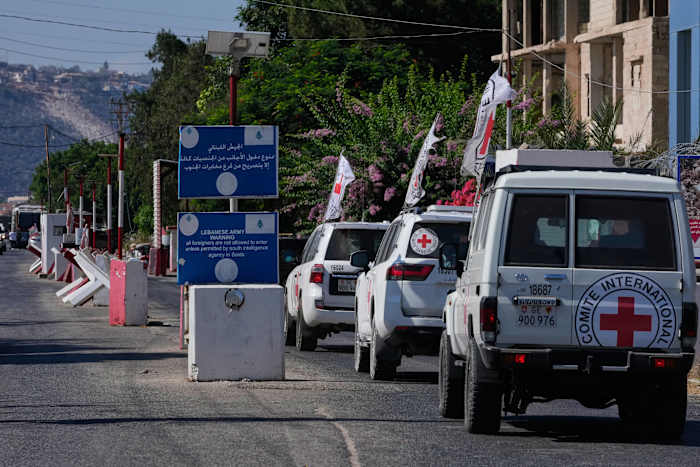
The release happened in stages. The International Committee of the Red Cross (ICRC) transferred four Lebanese prisoners on a Friday, following the release of the first detainee, Malek Ghazi, earlier in the week. Families waited anxiously at checkpoints south of Tyre. Relatives of men like Hussein Ayash and fisherman Mohammed Juheir finally got answers after months of detention.
The Israeli Prime Minister's office didn't hide the motivation. The government agreed to let these civilians go because Lebanese authorities stepped up efforts to locate the remains of the "12 Royal Martyrs"—Jewish community leaders abducted and murdered by various militant groups in the mid-1980s.
Israel provided maps, photographs, and intelligence files detailing potential burial sites, including locations around Beirut's Christian quarters. In exchange, civilians with no proven ties to Hezbollah walked free.
Why the 1980s Still Haunt Beirut and Tel Aviv
You can't understand modern negotiations between Lebanon and Israel without looking at the scars of the Lebanese Civil War (1975–1990). During that era, Lebanon's ancient Jewish community—once numbering in the thousands—was systematically targeted, kidnapped, and murdered.
For decades, families of those victims searched for closure. Israel's insistence on embedding Clause 13 into recent diplomatic frameworks shows that missing persons files from forty years ago carry immense political and emotional weight.
It is deeply unusual for a state engaged in active border skirmishes with Hezbollah to trade living detainees for the bones of citizens lost half a century prior. Yet, it highlights a fundamental truth about asymmetric warfare and diplomacy: closure for families is often the only coin both sides can mint without losing political face.
The Broader Diplomatic Puzzle
This prisoner exchange doesn't mean peace is around the corner. Direct negotiations between Lebanon and Israel remain precarious. Triggered by the wider regional conflict that escalated sharply, both nations are still miles apart on fundamental security questions.
A U.S.-mediated framework signed earlier outlined a mutual roadmap: Israeli forces withdrawing from southern southern villages in exchange for Hezbollah's disarmament north of the Litani River. Implementation has stalled. Hezbollah refuses to disarm, and Israeli officials refuse to pull back entirely until that disarmament happens.
Against this gridlock, the civilian swap stands out as a pragmatic transaction. It proves that low-level, high-sentiment deals can bypass the heavy ideological roadblocks erected by militant factions who aren't even sitting at the official negotiating table.
Watch the upcoming diplomatic talks in Rome. While grand bargains over border security and militant weapons grab the headlines, the real momentum often hides in these quiet, grim trades where past ghosts buy freedom for the living.