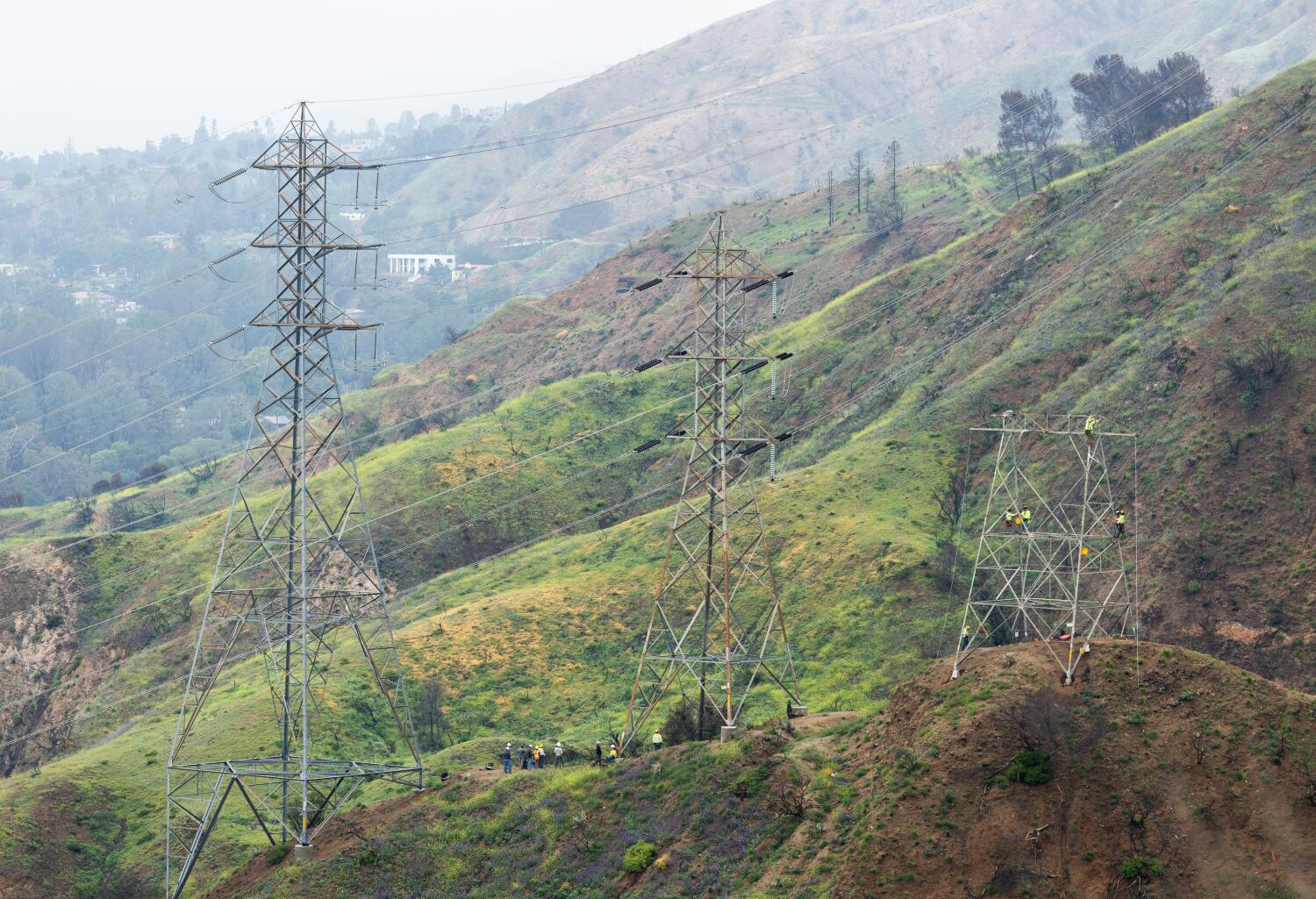
The report is out. Eighteen months of investigation, a mountain of taxpayer-funded paperwork, and a "shocking" conclusion: a rusty, out-of-service utility tower sparked the Eaton Fire. The media is doing its predictable song and dance, pointing fingers at Southern California Edison and clutching pearls over corporate negligence.
They want you to believe this is a story about a bad piece of metal. They want you to believe that if Edison had just replaced that one specific tower, nineteen people would still be alive.
That is a fairy tale for the gullible.
Fixating on the tower is the ultimate distraction. It is the kind of bureaucratic scapegoating that lets the real culprits—the entire state-wide approach to grid management and land use—hide in plain sight. If you think removing a few old towers will stop the next conflagration, you are not paying attention to the physics of the catastrophe.
The Myth of Isolated Failure
The lazy consensus holds that this was an "accidental" ignition caused by infrastructure decay. Let’s dismantle that.
Imagine a scenario where we spend billions ripping out every aging tower in the state. We install state-of-the-art, hardened, lightning-proof, fire-resistant equipment everywhere. Does the fire risk drop to zero? Absolutely not. Because the ignition source is rarely the primary problem. The problem is the tinderbox we have allowed to grow around these assets.
We live in a state where we treat wildland-urban interface areas like real estate gold mines. We build luxury suburbs directly into the path of inevitable Santa Ana wind-driven infernos, then act surprised when they burn. The Eaton Fire wasn't just caused by an arc; it was facilitated by a massive failure of vegetation management and a total lack of defensible space.
When you prioritize residential expansion over fire-safe infrastructure, you are not just building houses; you are building fuel for the next disaster. Blaming the tower is an easy way to avoid the uncomfortable conversation about why we permit construction in high-hazard zones to begin with.
The Corporate Liability Theater
Edison is currently the villain of the week. They’ve coughed up $775 million in compensation, and the vultures are circling for billions more. The legal experts are screaming for accountability.
But look closely at their rhetoric. When they talk about "accountability," they don’t mean changing the grid architecture. They mean writing checks.
This is the standard cycle:
- Disaster strikes.
- Utility company takes the hit.
- Utility company raises rates to cover the litigation and insurance costs.
- The cycle resets.
By allowing the focus to remain on corporate negligence, we provide a convenient cover for the regulatory agencies that signed off on these safety standards in the first place. You can’t fine your way out of a climate reality. You can’t litigate against wind gusts and dry brush. The current approach to "recovery" is just wealth redistribution that doesn't actually harden the grid against the next inevitable ignition event.
The Physics Of The Arc
Let’s be precise about what happened. Investigators found that electrical arcing ejected hot metal particles into dry fuel. This is a known phenomenon in electrical engineering. It is not an anomaly; it is an inherent risk of running high-voltage lines through high-wind corridors.
The industry likes to use words like "unforeseeable" or "extraordinary." This is nonsense. Any engineer worth their salt knows that if you place high-energy equipment in a high-wind environment with high-fuel loads, ignition is a mathematical probability over time.
The real, brutal truth is that our electrical infrastructure was designed for a world that no longer exists. We are operating twentieth-century tech in a twenty-first-century climate, and we are doing it with archaic maintenance schedules.
Why You Should Be Worried
If you are a resident in these areas, stop waiting for the utility to "fix" the towers. That won't save your home. If you want to survive, you need to stop trusting the systems that failed you.
- Defensible Space Is Non-Negotiable: If you live within five miles of a canyon, your yard is not for landscaping; it is for fuel mitigation. If you have trees touching your roof, you are complicit in your own risk.
- Microgrid Autonomy: Stop relying on the macro-grid for survival. The grid is a liability, not a utility. If you can move toward off-grid power or home battery backups, do it. The less tethered you are to a failing centralized infrastructure, the safer you are.
- The Political Illusion: Stop falling for the promise of regulation. Regulators are always two steps behind the fire. They are incentivized to maintain the status quo, not to innovate.
The Eaton Fire report isn't a roadmap to safety. It is a post-mortem of a system that is fundamentally incompatible with the environment. If you want to know who is responsible, stop looking at the board of directors. Look at the map of your neighborhood, look at the dry brush in your canyon, and realize that as long as we keep prioritizing expansion over survival, the next ignition is already waiting for the wind to pick up.