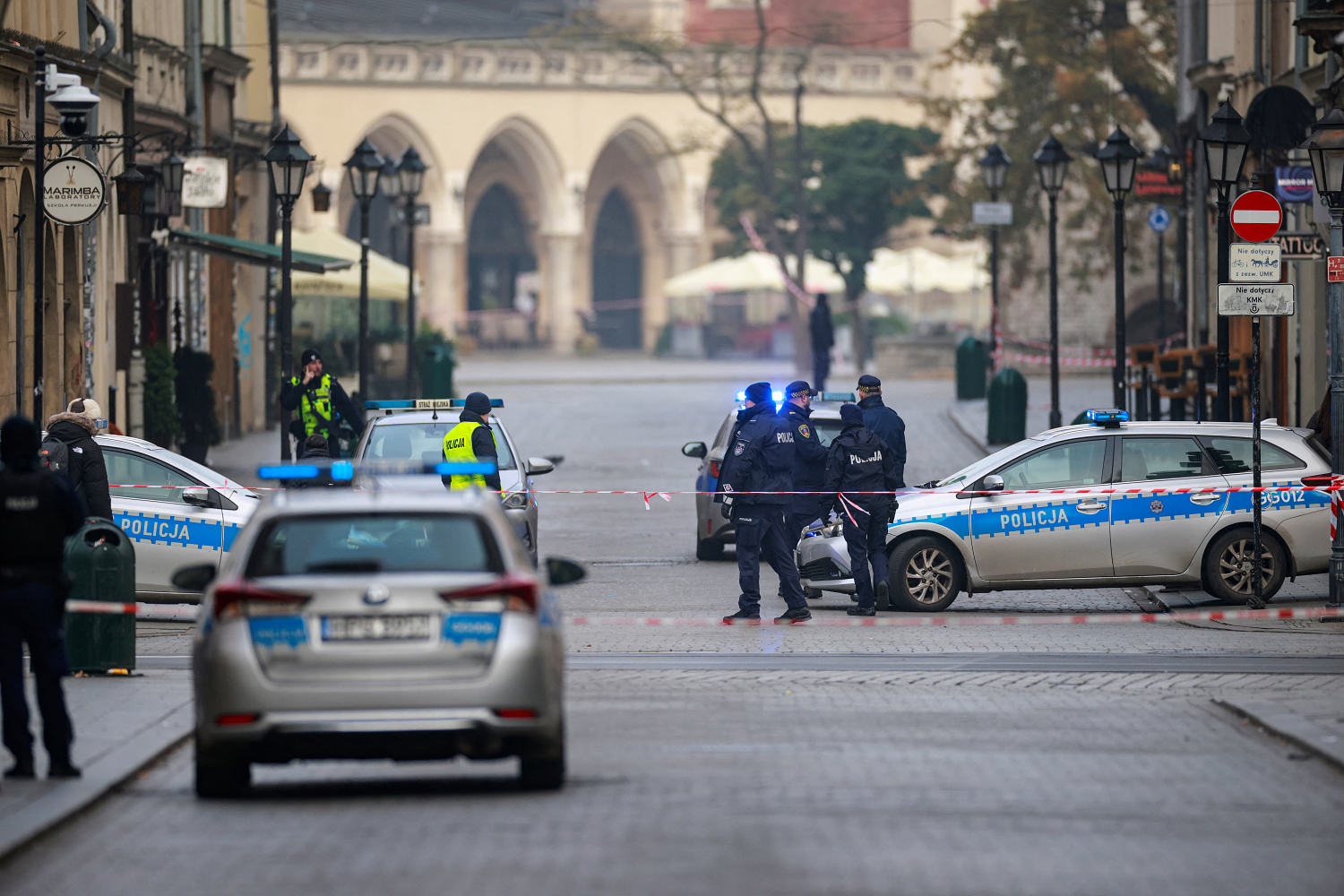
Two trains smash into each other near Cairo, four people die, and within twenty-four hours the script writes itself.
Prosecutors arrest a train driver. Officials announce an urgent investigation into signal operator negligence. Media outlets run the exact same copy-pasted casualty tally, mourn the tragic loss of life, and quietly move on until the next collision six months later.
That narrative is lazy, predictable, and entirely wrong.
When a passenger train rear-ends another near Cairo—or derails in the Nile Delta, or collides at a junction in Upper Egypt—putting a low-level signalman in handcuffs does not solve the problem. It protects the system that guaranteed the crash would happen in the first place. The mainstream coverage of Egyptian rail disasters treats systemic infrastructure failure as an isolated lapse in human concentration. It focuses on the spark while ignoring the fact that the entire room has been soaked in gasoline for forty years.
If you want to understand why Egypt’s railways keep killing people, stop looking at the cab of the locomotive. Look at the economics of state-subsidized transit, the physics of legacy mechanical interlocking, and the brutal reality of deferred maintenance.
The Lie of the Rogue Operator
Every major rail transport board in the world—from the National Transportation Safety Board in the United States to the European Union Agency for Railways—operates on a foundational principle of modern safety engineering: human error is a symptom, not a root cause.
Human beings get tired. They get distracted. They misread gauges at 3:00 AM. A competent rail network is specifically designed so that a single mistake by a driver or a dispatcher cannot result in two multi-ton steel tubes occupying the exact same stretch of track at the exact same time.
In standard railway engineering, this protection is handled by Automatic Train Protection (ATP) and interlocking systems.
- Interlocking is a physical or electronic arrangement of signals and track switches that prevents conflicting movements. If a switch is set for Train A to occupy Block 4, the system physically locks the signal for Train B at red.
- Automatic Train Protection takes it a step further. If a driver blows past that red signal—whether due to a heart attack, drowsiness, or outright recklessness—trackside transponders communicate directly with the locomotive's onboard computer and trigger the emergency brakes automatically.
When a collision happens on a line lacking functioning ATP, blaming the driver is like removing the brakes from a bus, handing the keys to an exhausted employee, and charging him with manslaughter when he hits a wall at the bottom of a hill.
I have sat in post-incident review rooms across emerging-market transit authorities where executives proudly point to disciplinary action against frontline staff as proof of "accountability." It is theater. Firing or jailing a dispatcher costs nothing. Overhauling hundreds of kilometers of nineteenth-century signaling architecture costs billions. Guess which option gets chosen when the cameras are rolling?
Why Modernizing a Live Railway Is Harder Than Building a New One
Critics outside the rail sector love to ask why Egypt hasn't simply upgraded its signals already, especially given the billions of dollars poured into transport infrastructure over the past decade.
The answer lies in a brutal operational paradox that anyone who has ever managed heavy civil infrastructure knows firsthand: upgrading a live, high-density railway is infinitely harder than laying track across empty desert.
Egypt’s rail network is one of the oldest in the world, dating back to the 1850s. Its main spine—running from Alexandria through Cairo down to Aswan—carries hundreds of millions of passengers every year. The tracks run straight through dense urban centers, informal settlements, and agricultural choke points.
Imagine a scenario where you need to replace the entire nervous system of a patient while they are running a marathon. That is what re-signaling the Cairo-Alexandria or Cairo-Aswan corridors requires.
To install modern European Train Control System (ETCS) signaling, engineers cannot just swap out a few lightbulbs. They have to:
- Excavate cable trenches alongside active tracks without severing existing copper lines that keep current trains moving.
- Install axle counters and track circuits across thousands of switches.
- Retrofit aging rolling stock—some of it decades old—with compatible onboard computers and braking interfaces.
- Shut down major rail arteries for extended maintenance windows, which triggers immediate public backlash from millions of commuters who have no affordable alternative.
Because shutting down the main lines is politically toxic, contractors are forced to work in fragmented, three-hour nighttime windows. Progress slows to a crawl. Temporary workarounds—where old mechanical signals meet half-installed electronic blocks—create dangerous transition zones. Ironically, the very period during which a railway is being modernized is often when its risk profile spikes the highest.
The Economics of Cheap Tickets and Deferred Maintenance
Here is the uncomfortable truth nobody in the daily news cycle wants to touch: you cannot run a first-world safety regime on a third-world farebox.
For decades, passenger rail tickets in Egypt have been heavily subsidized as an informal social safety net. Millions of workers, students, and low-income families rely on dirt-cheap fares to commute into Cairo and travel between governorates. Raising ticket prices to reflect the actual cost of operation sparks immediate political unrest.
Yet physics does not care about populist pricing. Steel wheels grinding against steel rails wear down. Ballast degrades. Hydraulic braking systems leak. Signaling relays corrode in dust and extreme heat.
When a state-owned railway operator is forced to sell tickets below cost while facing chronic currency devaluation—which makes imported spare parts, locomotives, and signaling electronics exponentially more expensive—the financial math breaks down. Management has to cut somewhere. They cannot cut fuel, or the trains stop running tomorrow. They cannot easily cut payroll in a massive public-sector employer.
So they cut preventative maintenance.
In rail operations, deferring maintenance is a silent killer. You can skip a track geometry inspection this month and nothing happens. You can stretch the overhaul interval on a locomotive's air brakes by ten thousand kilometers and the train still arrives at Ramses Station on time. You pocket the short-term savings, keep the trains moving, and build up an invisible mountain of technical debt.
Eventually, the bill comes due. It comes due on a Tuesday afternoon outside Cairo when a worn switch fails to throw properly, or a degraded braking system takes three hundred meters longer to stop than the timetable assumed.
New Mega-Projects Versus Legacy Survival
Look closely at where infrastructure capital goes in modern mega-cities, and you will see a glaring strategic bias. Governments and international lenders love ribbon-cuttings for brand-new monorails, high-speed electric lines, and shiny metro extensions.
Greenfield projects are clean. They offer predictable timelines, pristine engineering environments, and spectacular photo opportunities.
Legacy heavy rail is the exact opposite. It is messy, unglamorous, and politically thankless. You can spend $2 billion upgrading track beds, drainage, and electronic interlocking on an existing commuter line, and to the average voter, the train looks identical to the one they rode ten years ago. The only difference is that fewer people die.
This creates a two-tier transit reality: gleaming, automated rapid transit systems connecting new administrative districts and affluent suburbs, operating alongside an overburdened, under-capitalized legacy network carrying the working class.
To be fair, the Egyptian Ministry of Transport has acknowledged this gap, pouring massive state funds and World Bank financing into new locomotives, carriage refurbishments, and signaling contracts with international giants like Siemens, Thales, and Alstom. Nobody can claim the state is ignoring the rail sector entirely.
The flaw is not total inaction; it is the mismatch between fleet expansion and operational discipline. Buying brand-new, high-horsepower locomotives and putting them onto tracks governed by incomplete signaling upgrades and strained maintenance depots does not automatically make a network safer. Faster trains on compromised infrastructure simply increase the kinetic energy of the impact when something goes wrong.
What People Actually Get Wrong About Rail Safety
When news of a collision breaks, public search queries immediately spike around three predictable questions. Every single one of them misses the mark.
Are trains in Egypt safe to ride?
Statistically, per passenger-kilometer traveled, traveling by train in Egypt remains significantly safer than traveling on Egypt’s highways. Road traffic fatalities claim thousands of lives annually in the country, mostly in ones and twos that never make international headlines. Rail crashes are visceral because they concentrate casualties into a single, horrific event. The real question isn't whether the train is safer than a microbus on the agricultural road—it is why a closed, guided-track system is experiencing collisions that basic 1980s automation eliminated elsewhere.
Why didn't the train driver see the other train on the tracks?
Because trains do not operate by line of sight. A heavy passenger train traveling at 90 or 100 kilometers per hour requires roughly 800 to 1,200 meters to come to a complete emergency stop. By the time a driver sees a stalled train or an improperly aligned switch around a bend or through morning haze, the physics are already locked in. Even if the driver slams the brake handle into emergency the millisecond an obstacle enters their field of vision, steel on steel has nowhere near the friction coefficient of rubber on asphalt. Relying on a driver's eyesight to prevent a collision is a failure of system design before the train ever leaves the station.
Will arresting the people responsible stop the next crash?
No. In fact, aggressive criminal prosecution of frontline rail workers actively makes railways more dangerous.
Aviation figured this out forty years ago. When pilots, air traffic controllers, and mechanics know that reporting a near-miss or a procedural mistake will land them in a prison cell, they stop reporting mistakes. They hide faulty equipment logs. They cover up close calls. They bypass broken safety protocols informally just to keep schedules moving and avoid getting blamed for delays.
A "just culture" in transportation engineering separates willful sabotage from human error induced by a broken system. Until rail operators protect workers who report hazards—and hold senior planners accountable for unaddressed infrastructure risks—every near-miss remains hidden until it becomes a fatality count.
The Uncomfortable Fix Nobody Wants to Pay For
There is no quick software patch for a legacy railway. Anyone promising an overnight turnaround after a fatal crash is selling political cover.
If a transit authority actually wants to drop collision rates to near zero, it has to make three deeply unpopular decisions:
- Enforce strict operational speed caps on un-signaled blocks. If a stretch of track does not have active, verified Automatic Train Protection, trains should not be permitted to run at full line speed—period. That means longer journey times, missed connections, and furious commuters. You accept the schedule degradation until the signaling hardware is commissioned and tested.
- Ring-fence maintenance budgets from political fare freezes. If the state insists on keeping tickets heavily subsidized for social stability, the treasury must automatically bridge the gap directly into dedicated maintenance escrow accounts—not general operating funds that get raided to pay salaries or fuel bills.
- Establish a genuinely independent accident investigation board. An investigation run by the same ministry or prosecutor's office tasked with protecting state agencies will always default to blaming individual operators. True safety requires an independent body with subpoena power over procurement records, maintenance backlogs, and executive waivers—not just the cab recordings of a terrified driver.
Of course, implementing those three steps comes with a massive political price tag. Slower trains trigger public anger. Higher subsidies strain an already battered national budget. Independent investigators embarrass powerful officials.
So the cycle continues. Another headline. Four more families shattered. Another signalman led away in handcuffs while the real culprits—deferred maintenance, fragmented signaling, and political cowardice—keep riding the rails untouched.