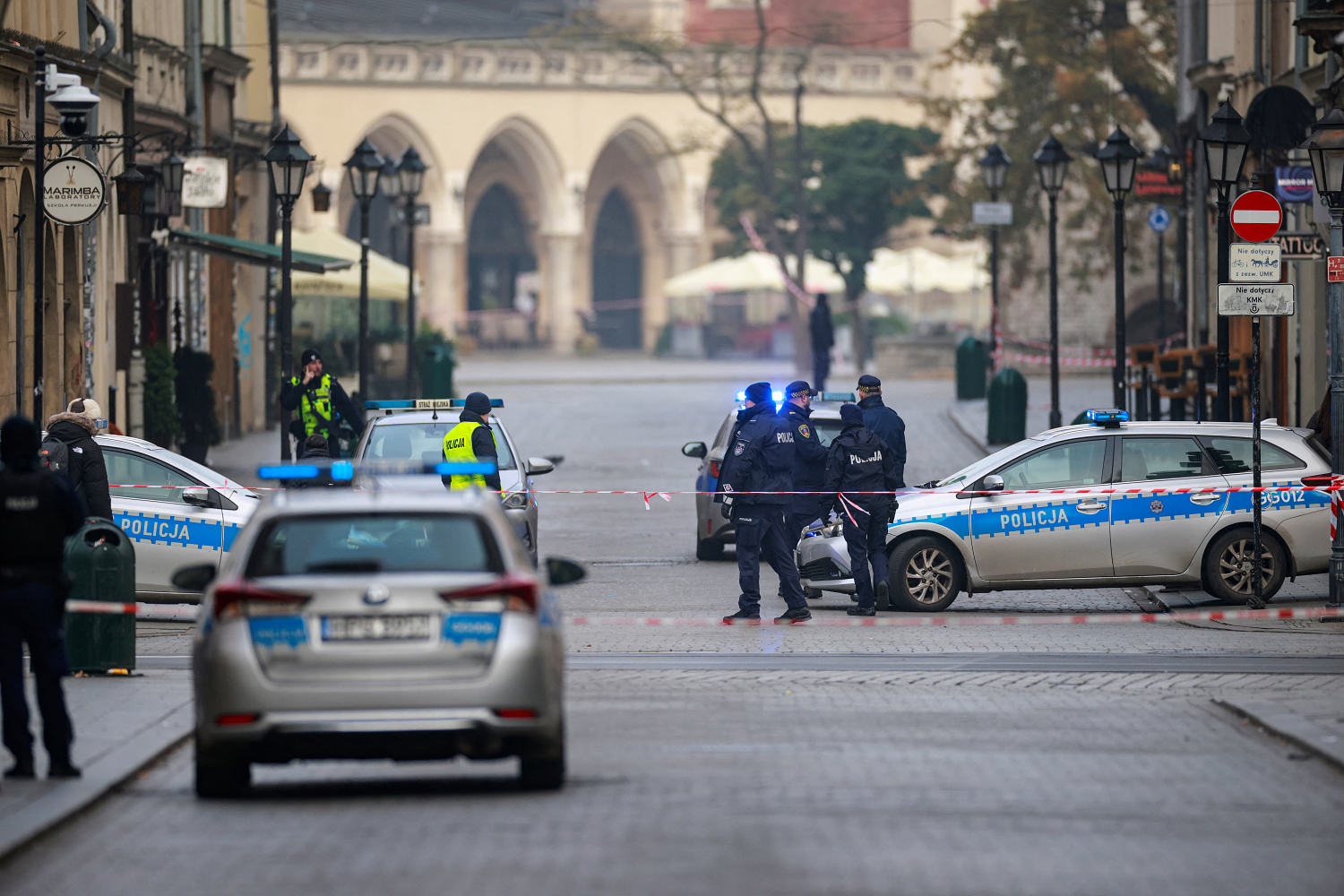
Mass shootings in Poland are almost unheard of. Yet when a gunman killed six people in Kraków, investigators quickly pointed to a dark ideological trigger behind the bloodshed.
Authorities confirmed the attack was motivated by far-right views. That single admission shifts the conversation from an isolated criminal act to a broader European security problem. People searching for details about this tragedy aren't just looking for a body count. They want to know how an extremist attack happened in one of Central Europe's safest cities, what led police to classify it as ideologically driven, and what it means for counter-terrorism across the region.
Let's break down what we actually know, strip away the online rumor mill, and look at the hard realities of domestic extremism in Poland today.
How Polish Investigators Identified the Far-Right Motive
Law enforcement agencies don't throw around terms like "far-right motivation" lightly, especially in Poland where political rhetoric around nationalism is already charged. When prosecutors and police officials publicly link a mass shooting that killed six people to extremist ideology, they're relying on specific, verifiable evidence gathered during the initial sweep.
In cases handled by Poland's Internal Security Agency (ABW) and the National Prosecutor's Office, establishing an ideological motive comes down to a digital and physical paper trail. Investigators examine encrypted messaging logs, manifesto-style writings, browser histories, and physical paraphernalia seized from the suspect's residence.
Here is what separates an ordinary violent crime from an ideologically motivated attack in the eyes of European prosecutors:
- Pre-attack communications: Digital footprints left on fringe forums, Telegram channels, or imageboards where accelerationist and white supremacist ideas circulate freely.
- Target selection: Whether the victims or the specific location in Kraków held symbolic value tied to grievance narratives, minority groups, or political institutions.
- Tactical preparation: Evidence of paramilitary training, illegal weapons acquisition, or manifestos modeled after previous European and North American attackers.
Honestly, the public often expects an instant, neat explanation within hours of a shooting. Real forensic work doesn't move at social media speed. Investigators have to rule out personal vendettas, mental health crises devoid of political intent, and organized crime disputes before making an official declaration about extremism.
Why Poland's Strict Gun Laws Didn't Stop the Attack
If you talk to anyone outside Central Europe, the first question they ask is simple. How did someone get a firearm capable of killing six people in a country with some of the strictest gun control laws in the European Union?
Poland has one of the lowest rates of civilian gun ownership in Europe. According to data from the Small Arms Survey, Poland sits near the bottom of European rankings, with roughly 2.5 firearms per 100 residents. Getting a legal permit requires psychological evaluations, criminal background checks, medical exams, and a documented reason like sport shooting or hunting.
Yet strict laws create a blind spot. They regulate the legal market while leaving cracks in three distinct areas:
- Black market spillover: Eastern Europe has dealt with illicit weapons trafficking for decades, and ongoing regional conflicts near Poland's eastern border have heightened concerns among Europol analysts about smuggled firearms entering the Schengen Area.
- Converted blank-firing guns: Across Europe, criminals frequently buy legal acoustic or alarm pistols from neighboring countries with looser rules and drill out the barrels to fire live ammunition.
- 3D-printed and homemade components: Right-wing extremist networks online actively share blueprints for hybrid firearms, bypassing traditional serial-number tracking altogether.
Gun control works remarkably well at preventing impulse crimes. It struggles against someone who spends months planning an ideological attack and knows where to look in the shadows.
The Reality of Far-Right Extremism in Central Europe
Most Western media coverage treats far-right violence in Central Europe like a sudden, mysterious flare-up. That's a mistake. Security researchers who track European extremism have warned for years that the threat profile has mutated.
Ten years ago, extremism looked like organized street movements. Skinheads, ultranationalist football hooligans, and rigid hierarchical groups marched in public squares. Police knew who the leaders were. Intelligence agencies could infiltrate those organizations because they had physical headquarters, meetings, and membership rolls.
Today, that model is basically dead.
Modern right-wing extremism operates through what counter-terrorism experts call leaderless resistance and stochastic terrorism. Radicalization happens alone in a bedroom at 2 AM. Young men fall down algorithmic rabbit holes on mainstream platforms before migrating to unmoderated encrypted apps. There's no commander giving orders. Instead, anonymous accounts glorify past mass shooters as "saints" and encourage isolated individuals to act on their own.
What People Get Wrong About Kraków and Polish Security
Kraków is Poland's cultural crown jewel. Millions of tourists walk through the Main Market Square and the historic Kazimierz district every year without giving violent crime a second thought. Because the city feels safe, locals and visitors alike often assume extremist violence is a Western European or American problem.
That assumption is dangerous.
In my experience analyzing European security trends, low baseline crime rates often lull local institutions into complacency. When a city rarely sees gun violence, first responders, local municipalities, and community leaders aren't primed to spot the early warning signs of lone-actor radicalization. Neighbors dismiss alarming behavior as harmless online trolling or edgy political opinions until someone buys a weapon.
At the same time, we shouldn't fall into the trap of painting Poland as a hotbed of constant terror. Statistically, Poland remains dramatically safer from violent gun crime than the United States, France, or Sweden. Acknowledging that far-right views drove the Kraków shooting doesn't mean the streets are suddenly lawless. It means online radicalization knows zero geographic borders.
How Authorities Track Lone-Actor Threats Before They Strike
When a tragedy like the Kraków shooting kills six people, politicians inevitably promise tougher laws and bigger budgets. Tougher laws rarely catch lone actors. What actually stops these attacks is boring, methodical intelligence work and community reporting.
Consider how European intelligence services like Poland's ABW have foiled previous plots. In several documented cases over the past few years, arrests happened not because of mass surveillance, but because an individual slipped up during weapons procurement or bragged to an undercover informant in a closed chat group.
Still, intelligence agencies face massive legal and practical hurdles:
- Encryption limits: End-to-end encryption protects everyday citizens' privacy, which is good, but it also blinds security services to private group chats where plots are hatched.
- Free speech boundaries: Expressing hateful, xenophobic, or extreme nationalist views online isn't always a crime until it crosses into direct incitement to violence. Police can't arrest thousands of angry internet commenters.
- Resource bottlenecks: Monitoring a single high-risk suspect around the clock requires dozens of surveillance officers, vehicles, and analysts. Agencies have to triage who gets watched.
Because state agencies can't watch everyone, the front line of prevention usually ends up being family members, coworkers, and local police officers who take threats seriously instead of brushing them off.
What You Should Pay Attention to as This Investigation Unfolds
The official statement confirming a far-right motive is only the opening chapter of the legal process. Over the coming months, Polish prosecutors will release more granular details as the case moves toward indictment or formal closure.
If you want to follow this story without getting misled by partisan spin or sensationalist headlines, keep your eye on three specific developments:
- Official statements from the National Prosecutor's Office (Prokuratura Krajowa): Ignore anonymous "insider" leaks on social media. Wait for formal charges, which will specify whether the suspect is charged under terrorism statutes or standard homicide laws.
- The origin of the firearm: Watch for details on how the shooter obtained the weapon. Whether it was legally registered, smuggled across a border, or modified will tell you immediately whether Poland faces a regulatory loophole or an illicit trafficking problem.
- Links to transnational networks: Pay close attention to whether the ABW announces related arrests in Poland or neighboring EU countries. If Europol gets involved, it signals the shooter wasn't entirely alone.
Tragedies like the Kraków shooting test a society's ability to look clearly at uncomfortable truths. Verify your sources, question simplistic political narratives from every side, and pay attention to the concrete evidence prosecutors put on the record.