The Distance Between A Pronouncement And A Fire
There is a specific kind of silence that settles over the streets of Tehran right after a speech broadcast from thousands of miles away. It is not the quiet of peace. It is the held breath of a city waiting to see if words will turn into metal.
When a former president steps behind a podium in Florida and issues a warning about impending strikes, the geopolitical shockwaves are immediate. Cable news segments churn. Stock tickers flutter. Pundits dissect syntax for hidden meanings. But thousands of miles away from the television studios, the impact lands differently. It hits the kitchen tables of people who have spent decades calculating the exact distance between political rhetoric and a collapsing ceiling.
Let us be entirely clear about the mechanics of modern escalation. When leaders threaten disproportionate force, they are operating in a calculus of deterrence. The theory goes that if you make the threat large enough, terrifying enough, and absolute enough, the other side blinks. History, however, offers a much grimmer reading of this dynamic. Deterrence frequently fails because both sides believe the other is bluffing until the first missile leaves its silo.
Consider a hypothetical shopkeeper in the central district of Tehran, someone who wakes up before dawn to sweep the concrete outside a small bakery. He does not control the uranium enrichment facilities at Natanz. He does not command the Islamic Revolutionary Guard Corps. He does not formulate regional proxy strategies in Yemen, Lebanon, or Syria. Yet, his life is the currency spent when the rhetoric escalates.
When Donald Trump warns of strikes that will hit harder than ever before, the immediate consequence for that baker is not a strategic realignment of Middle Eastern foreign policy. It is the immediate, visceral spike in the price of flour, the sudden hoarding of medicine, and the quiet, crushing anxiety of wondering if his children will be able to finish school before the lights go out.
We talk about foreign policy as if it were a game of chess played by men in suits moving heavy wooden pieces across a polished board. It is not. It is an avalanche rolling down a mountain, crushing whatever happens to be in its path, regardless of fault or affiliation.
The Anatomy Of An Ultimatum
To understand why these threats carry such immense weight, we have to look past the bluster and examine the track record. This is not the first time the architecture of diplomacy has been treated like a negotiable suggestion.
During his first term, the withdrawal from the Joint Comprehensive Plan of Action—commonly known as the Iran nuclear deal—marked a structural break. The argument from the administration at the time was simple: maximum pressure would force Tehran back to the table on better terms, choking off the regime's oil revenue until it capitulated.
Did it force capitulation? No. Instead, it did something far more dangerous. It drove the regime inward, stripping away the moderates who had staked their political credibility on international engagement. It accelerated nuclear advancement. When you back a cornered animal into a tight space and take away its exit, it does not surrender. It bares its teeth.
Now, looking toward a potential return to the Oval Office, the threats have not softened. They have sharpened. The language of conditional negotiation has been replaced by the absolute decree of overwhelming destruction.
Let me be vulnerable here: trying to parse the internal logic of these threats can feel maddening. Sometimes, political science models assume rational actors who want to survive above all else. But history is littered with the wreckage of rational models crashing against human ego, pride, and domestic political survival. When an American politician threatens total annihilation, hardliners in Iran use those exact quotes as proof that compromise is suicide. The rhetoric feeds the very extremism it claims it wants to eradicate.
The Invisible Stakes Beyond The Headlines
Step back for a moment from the grand theater of international relations and look at the ground level. What are the actual stakes of a renewed campaign of strikes against Iranian infrastructure?
Military analysts will tell you about command-and-control nodes, air defense batteries, and drone factories. They speak in clean, clinical acronyms. They talk about surgical precision and degraded capabilities. But war is inherently messy, chaotic, and blind.
Surgical strikes rarely leave the patient untouched. A missile strike on a military installation situated near an urban center means shattered glass miles away, hospitals suddenly flooded with trauma cases, and power grids failing in neighborhoods where old people rely on oxygen concentrators.
Furthermore, Iran is not isolated in a vacuum. It sits at the center of a sprawling web of regional alliances and proxy networks that stretch from the alleys of Baghdad to the hills of southern Lebanon and the coast of the Red Sea. If a major American strike lands on Iranian soil, the response will not be contained within borders.
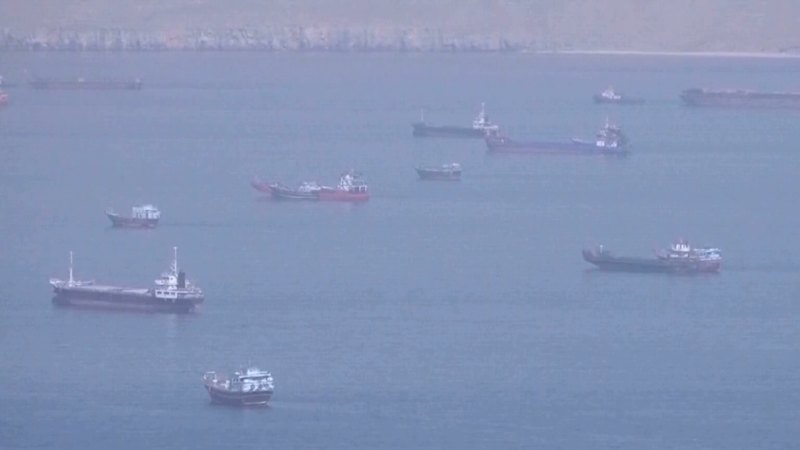
Oil tankers in the Strait of Hormuz—through which a massive percentage of the world's petroleum flows—will become targets. Cyberattacks will cripple financial institutions and infrastructure across the West. Regional militias will launch waves of coordinated assaults on American bases and allies.
The ripple effect does not care about political boundaries. It reaches the gas pump in Ohio. It reaches the shipping container stranded in a global supply bottleneck. It touches everyone, even those who believe foreign wars are things that happen on television screens before fading to commercial break.
The Weight Of Words
Words matter. When a leader of a global superpower speaks, the world adjusts its posture. Allies tighten their helmets. Adversaries dig their trenches deeper.
The tragedy of the current moment is the profound lack of imagination regarding peace. We are trapped in a loop where the only two options presented are total capitulation or catastrophic violence. We swing wildly between appeasement and annihilation, as if there were no other tools in the human toolkit.
The baker in Tehran sweeps his porch. Across the sea, a politician adjusts his microphone and delivers another line designed to cut through a crowded media cycle. Between the two of them lies an ocean of potential catastrophe, fueled by the dangerous assumption that words are weightless.
They are not. They are the kindling. And the fire, once lit, does not ask who struck the match.