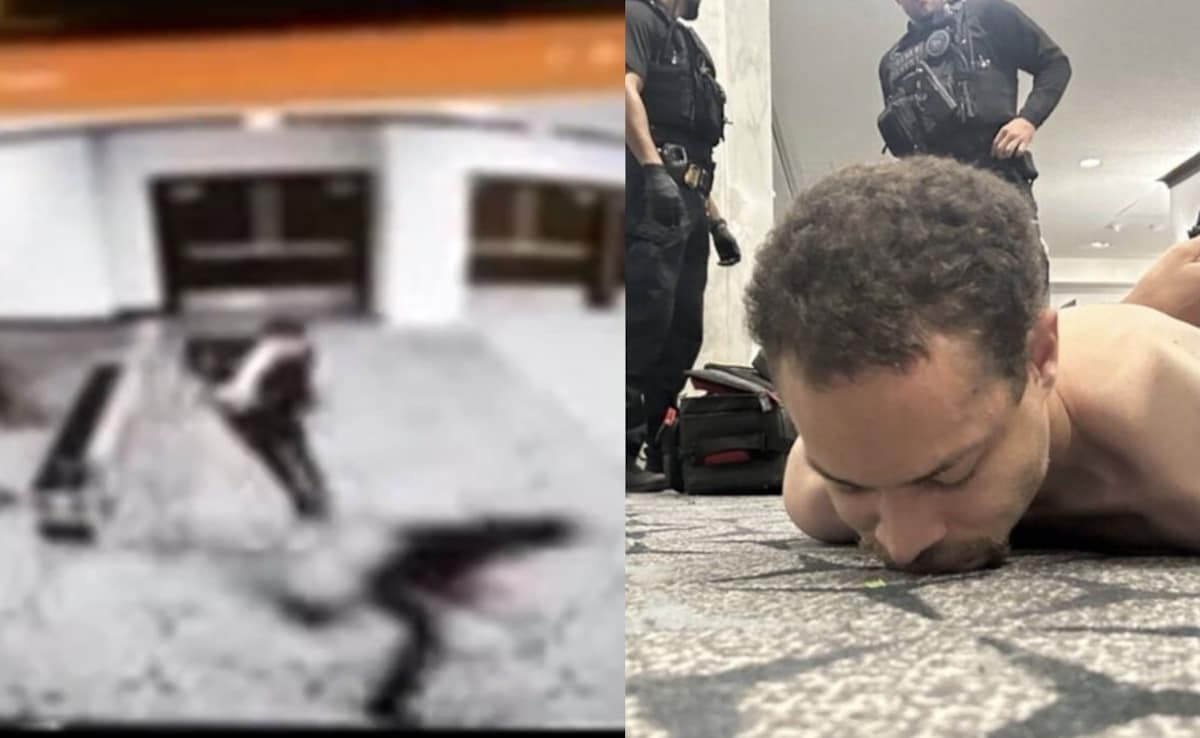
The standard media timeline of the Butler, Pennsylvania shooting reads like a tragic comedy of errors. They track the minutes. They count the shots. They map the rooflines. They focus on the "chaos" as if chaos is an unpredictable act of God. It isn't. Chaos is what happens when a $3 billion agency forgets that its primary product isn't "security theater" or "risk management," but the cold, hard physics of a line of sight.
The narrative you’re being fed is that this was a "security lapse." That is a sanitized, corporate euphemism. A lapse is forgetting your keys. Leaving a high-ground rooftop within 150 yards of a presidential candidate unoccupied is an institutional lobotomy.
If you want to understand why a 20-year-old with a budget rifle nearly changed the course of history, stop looking at the "timeline of events" and start looking at the rot of institutional complacency.
The Myth of the "Inpenetrable Bubble"
The public lives under the delusion that VIPs move inside a high-tech, impenetrable shield. The media reinforces this by filming the black SUVs and the earpieces. In reality, protection is nothing more than a series of concentric circles designed to manage probability.
In Butler, the Secret Service didn't just fail to manage probability; they ignored geometry.
- The Perimeter Fallacy: The agency delegated the "outer perimeter" to local law enforcement. This is standard protocol, and it is fundamentally broken. When you delegate the most critical tactical high ground to local assets who aren't trained in specialized counter-sniper observation, you aren't "leveraging resources." You are creating a blind spot.
- The Line-of-Sight Violation: Any entry-level private security contractor knows the "Rule of Zero." If there is a line of sight to the asset from a distance of under 300 yards, that point must be physically occupied or under constant technical surveillance.
The AGR International building wasn't hidden. It wasn't a "difficult" vantage point. It was a textbook sniper position. The fact that it was "outside the perimeter" is irrelevant. Ballistics do not respect your bureaucratic boundaries. If a bullet can travel from Point A to Point B, Point A is your problem. Period.
The Tech Gap: Why Drones Weren't Flying
We live in an era where $500 consumer drones can track a mountain biker through a dense forest autonomously. Yet, the premier protection agency in the world claims they didn't have the "resources" or "clearance" to maintain a persistent overhead persistent surveillance (PSS) loop over a flat, open-air rally.
This is where the "lazy consensus" of the media fails you. They ask, "How did he get on the roof?" The real question is: "Why was the roof not being monitored by a thermal-imaging UAV in real-time?"
- The Bureaucratic Friction: The Secret Service often clashes with local FAA regulations or their own internal red tape regarding drone deployment.
- The Signal Noise: In high-density crowds, agencies often struggle with RF interference, but that’s a solved engineering problem.
- The Human Factor: They relied on "looking up." Human eyes are terrible at scanning 360-degree horizons for stationary threats.
Imagine a scenario where the tactical lead spent $10,000 on off-the-shelf thermal drones instead of relying on a "local sweep" of a building. The shooter would have been a glowing heat signature on a tablet five minutes before he ever reached the ridge of the roof. We are using 1980s manpower solutions for 2020s threats.
Stop Asking "How" and Start Asking "Who Benefits from Incompetence"
I’ve seen organizations—from Fortune 500s to federal agencies—devolve into a state of "checklist excellence." They check every box. They fill out every form. They hold every briefing. And because they followed the process, they believe they are safe.
The Secret Service has become a checklist agency.
They performed the site survey. They coordinated with the locals. They set up the magnetometers. They did everything "by the book." But the book is outdated, written by people who haven't had to think like an insurgent in twenty years. The shooter didn't need a sophisticated plan. He just needed to find the one spot where the checklist ended.
The Counter-Sniper Paradox
Let’s talk about the counter-sniper teams. The media praises their "quick response." They killed the shooter in seconds.
That is a failure, not a success.
The job of a counter-sniper isn't to win a gunfight; it's to prevent one. If the counter-sniper team is pulling the trigger, the primary mission—protection—has already failed. The moment a round was discharged toward the podium, the "bubble" was popped.
The delay in taking out the shooter—despite reports that he was spotted by civilians minutes prior—points to a catastrophic breakdown in the "sensor-to-shooter" pipeline. In a functional high-stakes environment, the path from "civilian sees guy with gun" to "tactical team neutralizes threat" should be measured in heartbeats. In Butler, it was lost in the static of fragmented radio channels and "chain of command" hesitation.
The Cost of "Good Enough" Security
The "Secret Service Chase" and "Chaos" headlines make it sound like a movie. It wasn't. It was a failure of basic spatial awareness.
We are obsessed with the optics of security. We like the suits. We like the stern faces. We like the dogs. But we have neglected the hard science of ballistics and the reality of the modern threat profile.
- Physicality over Optics: A single person standing on that roof with a radio would have been more effective than fifty agents standing around the stage with sunglasses.
- Decentralized Intelligence: Why was there no way for a witness to instantly alert the security detail? In an age of instant communication, we still rely on a witness telling a local cop, who tells a sergeant, who tells a liaison, who tells the command center, who tells the detail. By then, the trigger has been pulled.
The Brutal Truth
The Secret Service doesn't need more money. It doesn't need "better coordination." It needs to be stripped of its ego.
It needs to admit that its current model of "perimeter-based protection" is a relic of a pre-digital, pre-drone, pre-long-range-precision world. The shooter in Butler proved that a single motivated individual can exploit the gaps between agencies as easily as they can exploit a gap in a fence.
The "chaos" wasn't an accident. It was the inevitable result of an agency that has prioritized its own internal protocols over the raw reality of the terrain. They were so busy protecting the process that they forgot to protect the person.
If you’re waiting for the official report to tell you how to "fix" this, don’t bother. The report will recommend more funding, more personnel, and more checklists. It will double down on the very things that failed.
True security isn't about more. It’s about the ruthless elimination of blind spots. And right now, the biggest blind spot is the belief that the "experts" know what they’re doing just because they’re wearing the badge.
Stop looking at the timeline. Start looking at the map. The map never lies, but the bureaucrats always do.