The announcement of a fresh 125 million dollar military supply agreement between Washington and Seoul triggered the standard predictable condemnation from Pyongyang, yet beneath the familiar rhetoric lies a fundamental shift in how the Korean Peninsula handles its perpetual state of escalation. State media outlets in North Korea quickly characterized the transaction as a grave provocation that demands a powerful kinetic response, framing standard defense procurement as an existential threat. But looking past the blustering language reveals an industrial and strategic realignment that has very little to do with this specific batch of hardware and everything to do with how long-term deterrence is breaking down across East Asia.
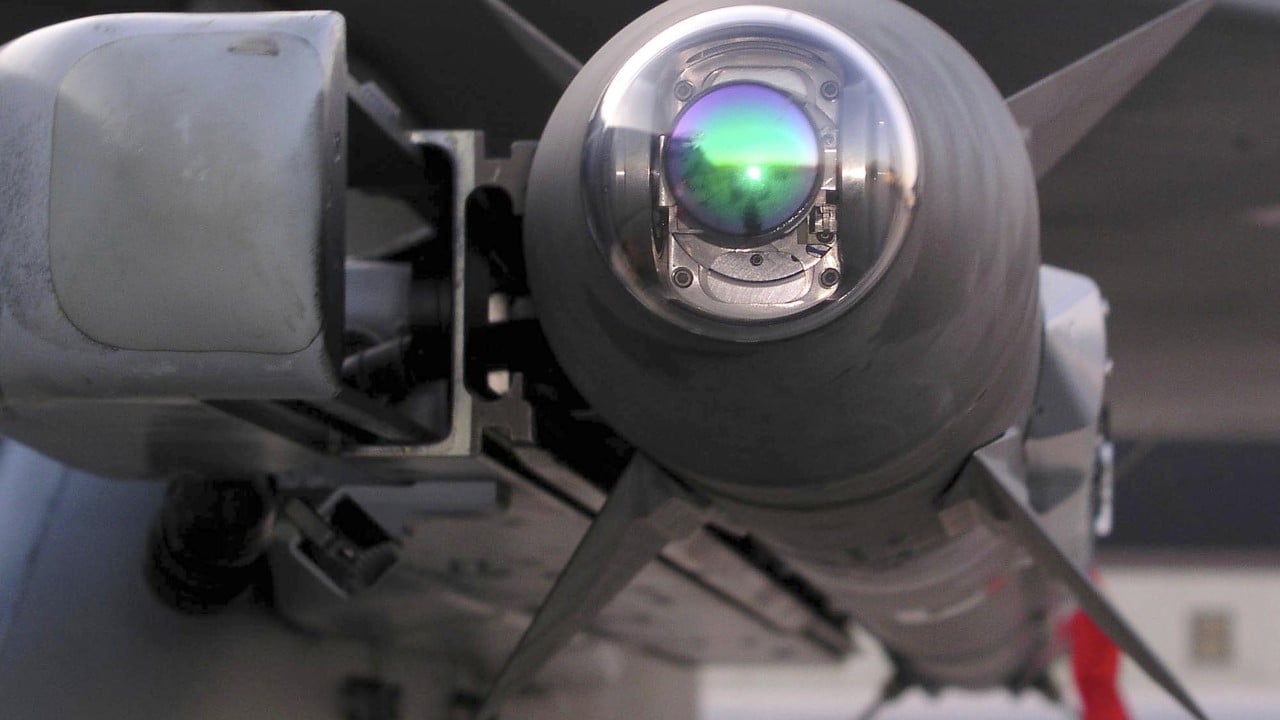
Military analysts tend to treat every arms package as a separate flashpoint. That approach misses the broader economic and technological evolution currently altering the balance of power. When South Korea finalizes acquisitions involving advanced guidance systems, precision munitions, or surveillance upgrades, the cumulative effect is not merely an incremental bump in defensive readiness. It alters the operational calculus for a northern regime that relies increasingly on asymmetric capabilities to compensate for conventional inferiority.
The Economics Behind the Escalation
We need to talk about the money trail. Defense modernization programs of this scale are rarely simple buyer-seller transactions. They represent deeply embedded industrial partnerships and multi-year maintenance commitments that lock allied forces into standardized logistics chains.
- The 125 million dollar price tag covers specialized maintenance hardware and targeting software upgrades.
- Supply chain integration ensures operational compatibility between United States forces stationed in the region and South Korean military branches.
- Long-term servicing contracts guarantee that defense spending remains insulated from short-term political shifts in either capital.
For decades, the standard assumption was that North Korea would respond to any allied military purchase with matching conventional outlays. That model stopped working around the time Pyongyang realized it could never outspend a combined economy that dwarfs its own by orders of magnitude. Instead of trying to maintain parity in tank divisions or fighter squadrons, the leadership redirected its scarce foreign currency reserves into cyber warfare units, ballistic missile diversification, and tactical nuclear miniaturization.
Every time Washington approves a major components sale to Seoul, it justifies the northern regime's continued austerity measures to its domestic population. The narrative machine in Pyongyang depends on external threats to explain why consumer goods remain scarce while military installations expand.
Shifting Alliances Beyond the Peninsula
The geopolitical chessboard has grown vastly more complex than it was during previous decades of inter-Korean friction. It is no longer just a bilateral standoff backed by distant superpowers. Pyongyang has secured a vital economic and diplomatic lifeline through its renewed strategic alignment with Moscow, trading conventional artillery shells and ballistic testing data for aerospace technology and raw energy imports.
This transactional relationship changes the pressure points. In the past, economic sanctions imposed by the United Nations Security Council carried sharp teeth because North Korea lacked alternative trading partners. Today, the enforcement of those sanctions has fractured. Major global players look the other way as maritime transfers bypass restrictions under the cover of night.
- Direct transfers of military technology have accelerated northern missile development cycles.
- Shared intelligence protocols give regional actors unprecedented visibility into allied tracking systems.
- Energy subsidies from external partners cushion the domestic economy against internal collapse.
When a regional defense deal is signed in Seoul, its ripples are felt immediately in industrial cities thousands of miles away where military factories operate around the clock to supply European and Asian partners simultaneously. The global defense manufacturing base is currently experiencing a historic backlog. Every missile battery or guidance package diverted to the Asia-Pacific theater competes directly with procurement needs elsewhere.
The Danger of Calculated Miscalculation
The most concerning aspect of the current security environment is not the volume of hardware changing hands, but the compression of warning times. Modern defense systems operate at speeds that human decision-makers struggle to process effectively. When automated defense networks and hypersonic delivery systems enter the equation, the margin for error shrinks to mere minutes.
Decades ago, military planners could rely on hours of deliberation time during a crisis. Intelligence agencies monitored troop movements across fixed border corridors, providing ample opportunity for diplomatic off-ramps. That luxury has vanished.
Consider the operational reality of modern coastal batteries and mobile missile launchers. They can be fueled, targeted, and fired within a fraction of the time it took twenty years ago. If either side misinterprets a routine training exercise as the precursor to a first strike, the automated response protocols could initiate before senior leadership has a chance to verify the intelligence feeds.
Diplomatic communication channels between North Korea and the outside world remain dangerously thin. The old hotline infrastructure has fallen into disrepair, replaced by public statements issued through state media or defiant pronouncements at international forums. Without confidential backchannels to defuse accidental escalations, both sides are flying blind through a thickening fog of mutual suspicion.
Where the Breaking Point Lies
Governments love to frame defense acquisitions as symbols of unwavering strength and deterrence. They project certainty to domestic voters and allies alike. Yet the structural reality of the Korean Peninsula points toward a grinding, permanent state of high-stakes anxiety where a single mismanaged border incident could cascade into a wider conflict before anyone realizes the threshold has been crossed.
The latest multi-million dollar defense package will clear customs, the maintenance crews will integrate the new software, and the commentary cycle will eventually move on to the next political headline. But the underlying architecture of confrontation remains intact, hardening into something permanent. We are past the point where diplomatic overtures or incremental arms controls can reverse decades of built-up hostility. The system keeps running on its own momentum because stopping now would require admitting that forty years of deterrence theory left both sides trapped in a permanent security dilemma.