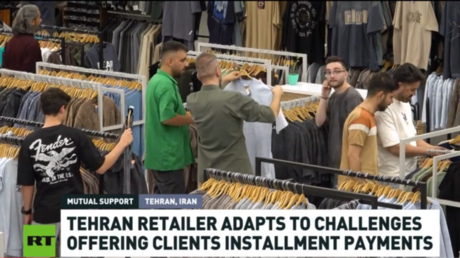
Walk down any busy avenue in Tehran, and you will see crowded cafes, bustling fruit stalls, and shoppers sorting through racks of clothes with actual grins on their faces. Mainstream reports love to spin this as a heartwarming triumph of the human spirit. They point to the vibrant street life and declare that economic blockades simply fail to break the everyday rhythm of a resilient population.
That narrative is comforting. It is also completely wrong.
Those smiling faces do not mean sanctions are failing. They mean sanctions have fundamentally failed at their stated objective while succeeding wildly at something much darker. The lazy consensus says that a busy market equals an unbothered economy. I have spent years tracking macroeconomic fallout in isolated states, and I can tell you that a crowded marketplace under severe financial isolation is not a sign of health. It is a symptom of extreme monetary distortion.
The Great Illusion of High Street Resilience
Let us dispense with the amateur hour economics. When a nation gets cut off from international banking systems, foreign direct investment drops to zero, and the local currency plummets, capital has nowhere to go. In a normal, integrated economy, excess savings flow into global markets, sovereign bonds, or productive industrial infrastructure.
When your borders are locked down and your central bank is frozen out of SWIFT, those options evaporate.
What happens to surplus cash when it cannot leave the country? It stays domestic. It floods local asset classes. It chases real estate, stocks on the local exchange, and consumer goods. People spend compulsively because holding cash is a losing game against runaway inflation. You do not shop with a smile because you are wealthy; you shop with urgency because your paper currency is rotting in your pocket.
I have watched companies blow millions trying to model consumer behavior in sanctioned territories using standard Western metrics. They look at retail foot traffic and assume consumer confidence is high. That is a rookie mistake. High velocity of money in a closed loop does not indicate prosperity. It indicates panic.
"A busy market in a blockaded state is not proof of economic strength. It is the monetary equivalent of a sugar rush before a crash."
Dismantling the Autarky Trap
Let us address the common query floating around geopolitical forums: Why do local manufacturing sectors boom when foreign imports are banned?
This is the classic autarky trap. When external trade is choked off, domestic entrepreneurs rush to fill the vacuum. Suddenly, local factories start producing knock-off appliances, generic pharmaceuticals, and substitute food items. On paper, domestic industrial output diversifies. Politicians point to these domestic factories as proof that trade restrictions forced healthy self-reliance.
This logic ignores the crushing cost of capital and technological stagnation. Local substitutes are almost always more expensive and lower quality than what the global market provides. By forcing domestic industries to reinvent the wheel behind a tariff and sanction wall, you lock the entire economy into technological obsolescence.
Consumers might buy the locally made refrigerator because import taxes and currency depreciation make foreign alternatives mathematically impossible to acquire, but they are paying triple the price for half the lifespan. That is not an economic victory. That is a hidden tax on every single household, paid in the currency of lost efficiency.
The Smuggler Elite and the Underground Winners
Sanctions do not starve regimes; they empower middlemen.
When you outlaw official channels of commerce, you do not stop trade. You merely criminalize it and hand a monopoly to the most ruthless operators willing to run the blockade. The real beneficiaries of economic isolation are never ordinary citizens, nor are they the ideological hardliners who claim to despise Western capitalism.
The winners are the black-market brokers, the shell-company networks operating out of neighboring transshipment hubs, and the well-connected bureaucratic cartels that control import licenses. They buy goods at global market prices, smuggle them across porous borders, and sell them to those smiling shoppers at exorbitant markups.
Sanctions create a structural incentive for corruption. If an ordinary merchant cannot legally import raw materials, they must bribe their way through three layers of bureaucracy or rely on a shadow network run by political elites. The economy becomes a mafia-style rent-seeking machine. The shopkeeper smiling at the storefront might be making enough rials to cover rent today, but the real margin is being skimmed upstream by people who hold the monopoly on exception permits.
Why the West Misunderstands the Leverage Equation
Washington and Brussels keep tweaking sanction packages as if fine-tuning a stereo knob. Add a shipping company here, blacklist a petrochemical executive there, tighten the oil export cap by five percent.
It is bureaucratic theater.
The fundamental flaw in modern economic warfare is the assumption that financial isolation leads to political compliance. History demonstrates the exact opposite. When you squeeze an entire population, you destroy the independent middle class—the very demographic most likely to push for organic political reform—and force everyone into a state-dependent survival mode.
When people must spend ninety percent of their cognitive and financial energy simply securing basic consumer goods through grey markets, they have zero bandwidth for political agitation. The regime does not need to win hearts and minds. The sanctions do the heavy lifting of keeping the populace too exhausted and distracted by daily survival to mount a sustained challenge.
Stop measuring the success of foreign policy by whether people in a closed market are still buying groceries. Start measuring it by the systemic decay of their long-term productive capacity. The smile in the marketplace is a survival reflex, not an endorsement of the status quo.


