Every few days, another headline screams that the U.S. is about to bomb Iran on Sunday or sign a historic peace deal by Monday morning. Stop falling for the noise.
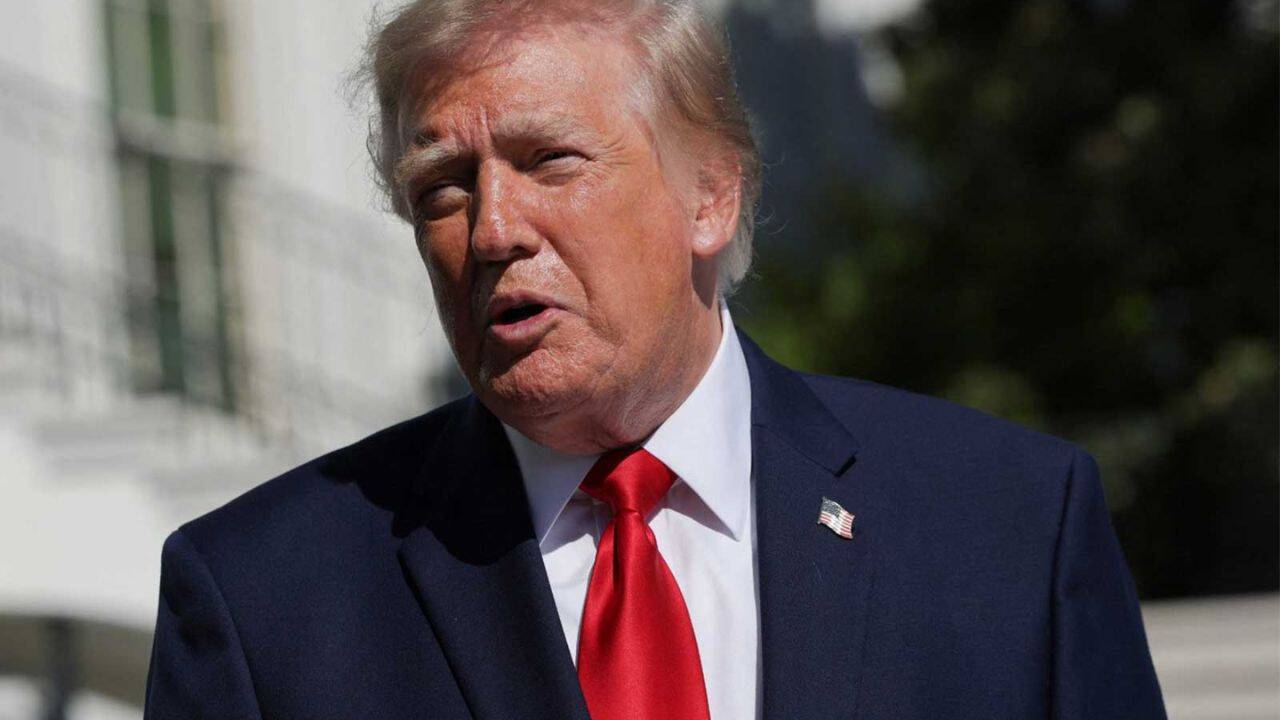
If you've been refreshing live updates on the U.S.-Iran conflict, you've probably noticed a pattern. President Donald Trump hints at massive, imminent military action—or claims a deal is right around the corner—and then the weekend passes with a few intercepted drones over Bahrain and another round of stagnant talks in Doha. Most coverage treats every offhand remark from the White House like a ticking time bomb. That misses the actual mechanics of this war.
We are nine months into a conflict that began in late February with joint U.S.-Israeli strikes. The reality on the ground isn't a binary choice between an all-out Sunday blitz and a signed treaty. It's a grinding war of attrition mixed with calculated political theater.
Why the Sunday Attack or Deal Narrative Keeps Repeating
Cable news loves a deadline. Traders love a deadline even more. Whenever Trump says the war will be "put away very soon, one way or the other," algorithms and pundits immediately circle the upcoming weekend on their calendars.
I've watched Washington's messaging cycles closely since the February strikes began, and the playbook is remarkably consistent. Strategic ambiguity is Trump's favorite tool. By keeping both an imminent strike and a sudden diplomatic breakthrough in the headlines at the exact same time, the administration forces Tehran to guess while trying to calm nervous energy markets back home.
Look at what happened just this week. On Thursday, Trump told an Israeli television network that he is "not rushing" and might wait until 2027 to decide his next major move. Yet almost simultaneously, leaks from U.S. and Israeli officials suggested Washington and Jerusalem are actively weighing a fresh four-to-seven-day bombing campaign. Both things can't be true in the literal sense, yet both serve a purpose. One buys time after a rough midterm election. The other keeps pressure on Iranian negotiators.
The Problem With Live Blog Journalism
Standard live updates do a terrible job separating signal from static. When a news outlet runs a minute-by-minute ticker on "Trump hints at Sunday attack or deal," every minor skirmish gets inflated into World War III.
Take the recent drone strikes on U.S. radar sites in Bahrain. Iran launched one-way attack drones three times in five days, including on a Sunday. Iranian state media claimed massive hits. U.S. Central Command (CENTCOM) confirmed the launches and noted that air defenses intercepted them with zero injuries or equipment damage. The U.S. responded with limited strikes on Iranian naval and communication targets on Qeshm Island.
Is that dangerous? Yes. Does it mean full-scale invasion starts at dawn? No. It's the established rhythm of a contained, simmering conflict.
What Is Actually Happening Behind the Scenes
To understand whether a major attack or a deal is genuinely close, you have to ignore the press conferences and look at three hard realities: military hardware, uranium stockpiles, and domestic politics.
1. The Third Aircraft Carrier Isn't Just for Show
Words are cheap, especially in an election year. Aircraft carriers aren't.
The Pentagon recently moved the USS Theodore Roosevelt carrier strike group into the region. It joins the USS George H.W. Bush and the USS George Washington. That gives the U.S. Navy more combined firepower and missile interception capacity in the Middle East than it had when the war kicked off in February.
You don't deploy three carrier strike groups just to bluff. That hardware is there for two reasons:
- Maintaining the naval blockade that is choking off Iran's crude oil exports.
- Providing immediate offensive punch if Israeli Prime Minister Benjamin Netanyahu convinces Trump to greenlight strikes on Iran's rebuilt missile factories.
2. Why Diplomatic Talks Keep Stalling in Doha
Qatari mediators have been working overtime in Doha to bridge the gap between Washington and Tehran. Iranian Foreign Minister Abbas Araqchi insists Tehran wants a "fair solution" and guarantees against future attacks. Meanwhile, Trump claims Iran wants a deal but refuses to accept his terms.
Here's the ugly truth nobody in Washington wants to admit out loud: neither side can politically survive the other's minimum demands.
The White House wants Iran to surrender its enriched uranium stockpile and allow intrusive international inspections. Just last week, the head of Iran's Supreme National Security Council vowed that Tehran won't allow "even a single particle of enriched nuclear material" to leave the country. At the same time, Iran has issued seven preconditions for formal talks—conditions Secretary of State Marco Rubio flatly called "unacceptable."
When both sides draw red lines in permanent marker, a sudden Sunday peace treaty isn't realistic. You don't go from rejecting basic preconditions on Thursday to signing a historic accord 72 hours later.
3. The New Chemical and Biological Weapons Allegations
If you want to know why hawks in Washington and Tel Aviv are pushing for another round of strikes, pay attention to the shift in rhetoric.
Trump recently told Fox News that Iran might be working on chemical or biological weapons. Iran's foreign ministry immediately fired back, accusing the U.S. of recycling the exact same intelligence playbook used before the 2003 Iraq invasion. Even inside the Trump administration, officials are reportedly divided over how solid this new intelligence actually is.
When an administration starts floating unverified WMD claims while intelligence agencies argue behind closed doors, they are usually building a public justification for military action—or trying to scare an adversary back to the negotiating table.
The Domestic Trap Holding Washington Back
There is a massive elephant in the Situation Room that most foreign policy analysts gloss over: the November 3 midterm elections.
Voters just handed Republicans sweeping losses in both the House and the Senate. Exit polling and political analysts widely viewed the results as a direct rebuke of a war that was supposed to last a few weeks but has instead dragged toward its ninth month and kept global oil prices roughly 40% higher than pre-war levels.
Yes, Senate Republicans just blocked a War Powers Resolution in a 48-51 vote on Thursday. Trump still has a free hand legally until the new Democratic majorities are seated in January.
Politically, though, launching a massive new bombing campaign right after voters punished your party for endless Middle East entanglement is a huge gamble. If a Sunday strike spirals out of control and Iran successfully mines the Strait of Hormuz—something the IRGC already claims to be doing to merchant tankers—gas prices in the U.S. will spike overnight. Trump knows that. Rubio knows that too, which is why the Secretary of State recently argued there's "no need" to restart major combat operations while sanctions are already crushing Iran's economy.
What Tehran Is Actually Calculating
We tend to view this crisis entirely through what Trump might do next. That's a mistake. Tehran has agency here, and its math is changing.
For two months over the late summer and early fall, Iran largely absorbed pressure and kept its head down. That lull ended when Iranian drones started targeting U.S. assets in Bahrain again. As Hamidreza Azizi, a senior Iran analyst at the International Crisis Group, pointed out recently, Iranian leaders are weighing a brutal question: Is breaking the U.S. naval blockade through military escalation less costly than slowly suffocating under it?
If Tehran decides that waiting around means economic collapse, they won't wait for Trump's Sunday deadline. They'll escalate on their own schedule.
How to Read the Next 72 Hours Without Getting Played
If you're tracking this conflict for your business, your investments, or just to stay informed, stop reacting to every breathless headline about secret ultimatums. Watch the concrete indicators instead:
- Track Tanker Insurance and Strait of Hormuz Transits. CENTCOM says over 1.7 billion barrels of crude have moved through the strait under U.S. naval protection, keeping Gulf exports near pre-war levels. If commercial shipping companies suddenly halt transits or maritime insurance rates double overnight, real escalation is happening.
- Watch Diplomatic Flight Logs in Doha and Muscat. Real peace deals don't happen via social media posts. If high-level American envoys—not just low-level technical teams—fly into Qatar for unannounced meetings with senior Iranian officials, diplomacy is actually moving.
- Monitor U.S. Force Posture in the UK and Gulf. Earlier this month, the U.S. quietly shifted aircraft away from a second British airbase following security threats. Defensive dispersals of high-value bombers and tankers usually precede offensive strikes by 48 to 72 hours.
- Ignore Single-Source Weekend Rumors. Unless Pentagon correspondents confirm emergency troop movements or airspace closures over Iraq and Jordan, treat "Sunday attack" chatter as psychological warfare aimed at Tehran.
Keep your eye on the naval blockade and the oil tankers, not the rhetoric. Until one side blinks on enriched uranium or Iran tries to close the Strait of Hormuz by force, this war stays trapped in the exact same dangerous limbo it's been in all autumn.