The smell of roasted peanuts and cheap nacho cheese usually lingers in the humid Florida air long after the final whistle blows.
You know that specific evening atmosphere. It is the collective exhale of a Saturday night where the biggest worry on anyone’s mind is whether the offense can convert a third-and-long, or where the minivan is parked in the sprawling asphalt sea outside the gates. Parents carry sleeping toddlers over their shoulders. Teenagers laugh in clusters, their faces lit by the blue glow of phone screens as they replay the highlight reel from twenty minutes ago. It is a ritual of pure, unadulterated community.
Then, the sound changes.
It does not start like a movie. In cinema, gunfire has a deep, cinematic bass that rattles your ribcage and announces itself with dramatic clarity. In reality, near a crowded stadium concourse or along the busy perimeter streets of a university campus, the first pop sounds remarkably like a dropped metal tray, a misfiring exhaust pipe, or a leftover firework from a tailgate party that started too early.
Confusion.
That single, suffocating second of hesitation is where tragedy lives. Before the brain can translate the acoustic snap into lethal danger, the second pop comes. And the third. Suddenly, the easy rhythm of a departing crowd fractures into a frantic, terrifying stampede.
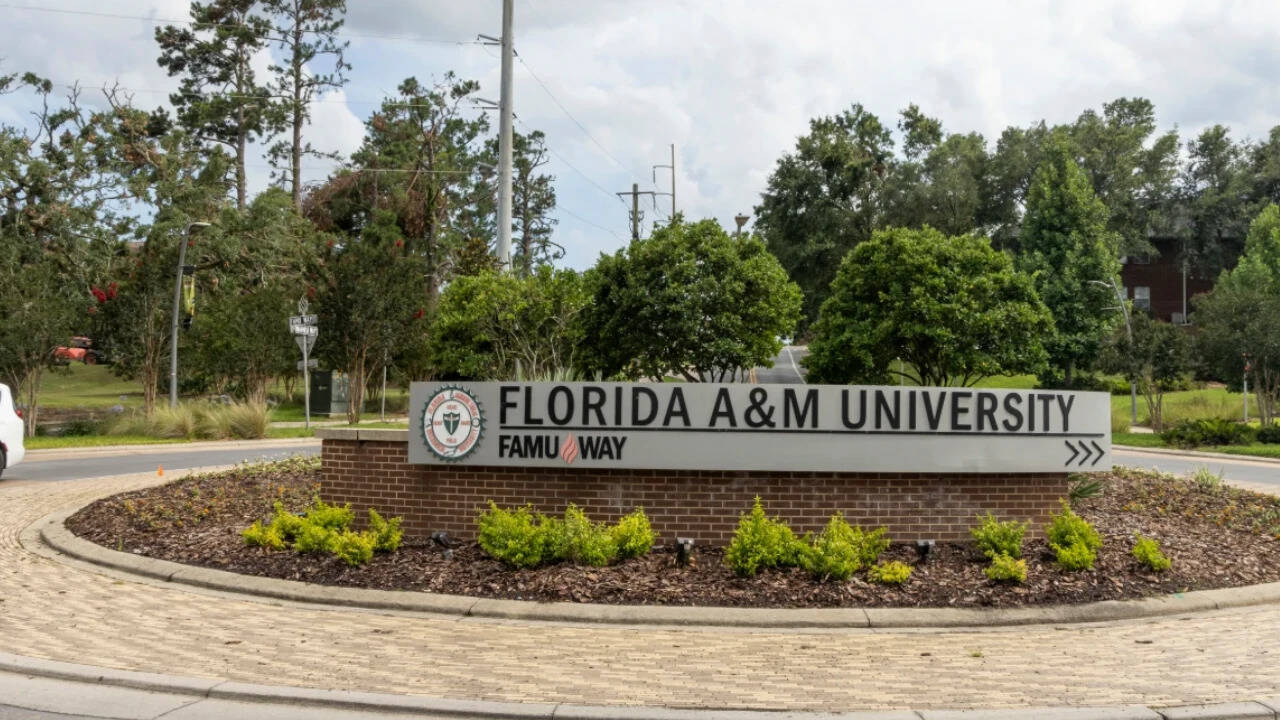
Twelve people were struck when bullets tore through the air near a Florida university stadium. Six of them were children.
Read those numbers again, not as a sterile police blotter statistic, but as a physical reality. Twelve human beings who woke up that morning thinking about jersey colors, sunscreen, and post-game ice cream ended their night under the harsh, unforgiving fluorescent lights of a trauma bay. Half of them had not even reached adulthood.
The Anatomy of a Shattered Sanctuary
To understand why a shooting near a college stadium hits a uniquely raw nerve in the American psyche, you have to understand what these spaces represent. College towns are built on an unspoken social contract. On game days, the stadium becomes the living room of the entire region. Alumni return to relive their youth; local families bring their kids to catch a glimpse of heroes in shoulder pads; high schoolers walk the quad dreaming of their own futures.
Consider a hypothetical family—let us call them the Millers—to see how easily the ordinary collapses into the unthinkable. Imagine a father holding his eight-year-old son’s hand as they walk toward the perimeter parking lot, debating whether the quarterback threw off his back foot in the fourth quarter. Twenty yards away, an argument erupts between two young men who have no connection to the game, the university, or the community. Pride flares. A concealed weapon is drawn.
Within three seconds, the Millers’ debate about football mechanics is replaced by the primal scream of a parent trying to shield a child’s fragile body with their own.
This is not an isolated aberration; it is a recurring nightmare playing out across the country at the exact edges of our public gatherings. Notice the phrasing in the official reports: near the stadium. Rarely do these incidents breach the metal detectors and bag checks of the inner sanctum. Instead, they fester in the gray zones—the tailgate lots, the crosswalks, the unmonitored streets where campus jurisdiction bleeds into municipal reality.
Security experts often compare stadium perimeter defense to a medieval castle with a high stone wall and an unguarded village right outside the drawbridge. Inside the gates, every water bottle is inspected, every bag is clear plastic, and armed officers stand at every portal. Step fifty feet beyond the ticket scanner, however, and you are back in the wild, exposed to every grievance, every impulsive act of violence, and every easily accessible firearm circulating in the surrounding neighborhood.
What Happens When Six Children Enter a Trauma Bay
I have spent enough time listening to emergency room physicians and trauma nurses in Florida to know that the arrival of multiple pediatric gunshot victims changes the molecular structure of a hospital floor.
Adults are built with a certain biological resilience; their organs are tucked behind denser muscle, wider ribcages, and thicker bone. Children have none of that armor. When a high-velocity round strikes a small frame, the physics are brutal. The cavity created by the bullet’s kinetic energy does not just pierce; it devastates everything in its path.
A trauma surgeon once explained the difference to me using an analogy I have never been able to shake: treating an adult gunshot wound is like repairing a damaged engine where the parts are large enough to grip with your hands, while operating on a child is like trying to fix a shattered pocket watch while the gears are still spinning.
When six children arrive simultaneously, the hospital’s entire ecosystem is pushed to the brink. Blood banks are drained. Pediatric specialists are pulled from their beds at midnight. And out in the waiting room, a different kind of hemorrhage takes place—the quiet, agonizing bleed of parents staring at scuffed linoleum floors, bargaining with God while trying to wash someone else’s blood off their knuckles.
The Invisible Casualties Beyond the Tape
The news cycle has a notoriously short attention span. Within forty-eight hours, the yellow crime scene tape is rolled up, the pressure washers scrub the concrete outside the university gates, and the headlines move on to the next political scandal or weather system.
For the twelve injured, the story has barely begun.
We talk endlessly about survival rates, celebrating when a bulletin announces that all twelve victims are in stable condition or expected to recover. "Expected to recover" is one of the most misleading phrases in modern journalism. It measures only the heartbeat, ignoring the wreckage left behind in the mind and the nervous system.
What does recovery look like for a ten-year-old who spent a Saturday night hiding behind the bumper of a Honda Civic while bullets ricocheted off the asphalt?
It looks like flinching every time a heavy textbook drops on a classroom floor. It looks like refusing to walk past the windows at night without checking the shadows first. It looks like a sudden, inexplicable terror of crowds, fireworks, and loud music—the very things that define the joy of childhood. Pediatric psychologists have documented for years that surviving community gun violence rewires a developing brain, locking it into a chronic state of hypervigilance that can derail education, sleep, and emotional growth for decades.
And what of the university community itself? Students who chose a campus expecting late-night study sessions and carefree weekends suddenly find themselves navigating active-shooter alerts and heavy police patrols before they even reach midterms. The innocence of the college experience evaporates, replaced by a cynical calculation of exit routes every time they step out to grab late-night food.
Why We Keep Missing the Root of the Crisis
Whenever gunfire erupts near a public venue, the public debate immediately retreats into its predictable, exhausting trenches. One side demands more police, higher fences, and stricter curfews. The other points to the sheer saturation of firearms in public spaces and the ease with which minor disputes escalate into mass casualty events.
Both arguments miss a critical truth about how these tragedies actually unfold.
If you look closely at the data surrounding shootings near sporting events, block parties, and campus perimeters across the Southeast, a stark pattern emerges. These are rarely calculated, ideological attacks. They are almost always impulsive explosions of interpersonal conflict—arguments over spilled drinks, perceived disrespect, or neighborhood rivalries—supercharged by the presence of lethal weapons in crowded environments.
Think about that distinction. You cannot deter an impulsive act with a harsher prison sentence, because the person pulling the trigger is not thinking about tomorrow. They are trapped in a five-second storm of rage and adrenaline.
Solving this requires attacking the problem from two entirely different angles at the exact same time. First, municipalities and universities must stop treating the perimeter of a stadium as someone else’s responsibility. Smart urban design—better lighting, controlled traffic flows, dedicated pedestrian corridors, and visible community violence interrupters trained to de-escalate arguments before metal is drawn—can dramatically shrink the opportunity for chaos.
Second, we have to confront the cultural normalization of carrying lethal force into environments built for recreation and alcohol. Bringing a firearm to a crowded tailgate or a college street party is like tossing a lit match into a room soaked in gasoline; you might get lucky a hundred times, until the night the wind blows the wrong way.
The Silence After the Crowd Goes Home
I still think about the shoes left behind at these scenes.
If you ever look at photographs taken in the aftermath of a mass shooting at a public event, the most haunting detail is never the shell casings marked by yellow evidence tents. It is the abandoned personal items scattered across the pavement. A single child’s sneaker that slipped off during a sprint for cover. A dropped cup of melted ice. A canvas tote bag lying open beside a curb.
Those objects tell the real story of what happened near that Florida stadium. They remind us that the victims were not combatants in a war zone. They were neighbors, students, parents, and kids who simply showed up to share a night under the lights.
Until we decide that a child’s right to walk safely from a stadium to their family car outweighs our tolerance for endless, preventable bloodshed, those yellow evidence markers will keep appearing on our streets. And somewhere in the dark, another parent will hold their breath, praying that the sound they just heard was only a firework.