Every time a limpet mine blows a hole in a hull near the Strait of Hormuz, financial newsrooms hit the panic button. Wire services push out breathless roundups: Iran says three oil tankers struck mines, and other Mideast news. Retail traders frantically bid up Brent crude futures. Cable pundits dust off maps of the Persian Gulf and warn of imminent global supply collapse.
They are all looking at the wrong target.
If you are basing your energy thesis, supply chain strategy, or market positioning on kinetic maritime incidents in the Gulf, you are playing a game that ended a decade ago. The lazy consensus treats every damaged Very Large Crude Carrier (VLCC) as a prelude to a 1973-style oil embargo. That consensus ignores maritime insurance mechanics, modern pipeline bypass capacity, and the cold, hard math of global refining bottlenecks.
Here is what actually moves the needle when steel meets explosives in Middle Eastern waters—and why the mainstream coverage gets the risk profile entirely backward.
The Myth of the Instant Supply Crunch
When wire reports aggregate maritime incidents alongside routine regional diplomatic chatter, they create a false equivalence: explosions equal physical scarcity.
They do not. A damaged tanker is a localized logistical headache, not a global supply shock.
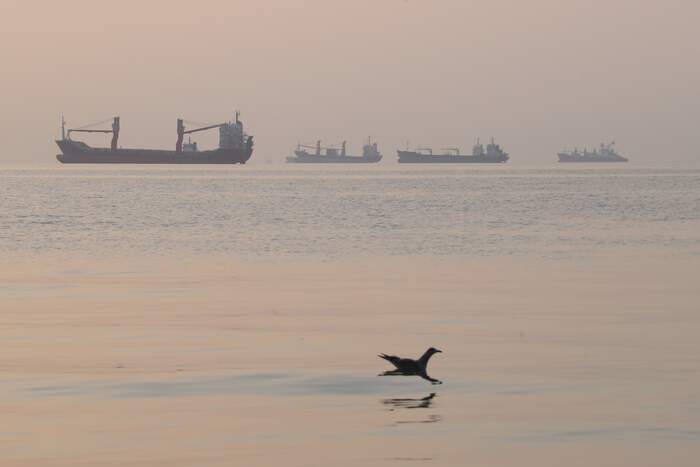
Let’s look at the actual physics and economics of crude transit. Roughly 20 to 21 million barrels per day (bpd) of petroleum liquids transit the Strait of Hormuz, according to U.S. Energy Information Administration (EIA) baseline data. When three tankers take damage—whether from contact mines, drifting ordnance, or covert naval operations—the immediate physical loss to the global market is often zero. Modern double-hulled tankers rarely sink from localized hull breaches. Their cargo is lightering-transferred to another vessel, and the crude still reaches Asian or European refineries, albeit ten days late.
Yet the market reacts as if three million barrels per day just vanished from the earth. Why? Because financial algorithms trade headlines, not maritime salvage reports.
I have watched institutional desks blow millions of dollars chasing headline-driven crude spikes over the past fifteen years. In June 2019, after attacks on the Front Altair and Kokuka Courageous in the Gulf of Oman, Brent crude jumped over 4% in hours. Traders who bought the peak expecting a sustained blockade got obliterated within two weeks when physical oversupply reasserted itself and prices drifted right back down.
The physical market does not care about your cable news chyron. It cares about net export capacity and contango structures in the futures curve. Unless an incident physically blocks the shipping channel—which requires sinking multiple super-tankers in the narrowest navigable lanes, a massive military undertaking—crude keeps flowing.
Insurance Actuaries Control the Strait, Not Admirals
If you want to know whether Middle East tanker strikes actually matter, stop listening to defense analysts and start reading circulars from the Joint War Committee (JWC) in London.
The real weapon in maritime chokepoints is not the naval mine. It is the Additional War Risk Premium (AWRP).
Commercial shipping operates on razor-thin margins. When the JWC—which represents underwriting interests from both the Lloyd’s Market Association and the International Underwriting Association—designates waters like the Persian Gulf, Gulf of Oman, or Red Sea as "Listed Areas," shipowners must notify their insurers before entering and pay an extra premium calculated as a percentage of the vessel’s hull and machinery value.
Consider the math on a $100 million VLCC:
- During calm periods, war risk premiums are a rounding error—often around 0.01% to 0.02% of hull value per transit.
- Following confirmed mine strikes or drone attacks, underwriters routinely hike AWRP to 0.5% or even 1.0% for a seven-day transit window.
- That single adjustment instantly adds $500,000 to $1,000,000 to the cost of a single voyage.
This is where the mainstream wire reports fail you. By burying tanker strikes inside a generic "and other Mideast news" digest, traditional reporting treats the event as a geopolitical curiosity rather than a balance-sheet shock for freight operators.
When AWRP spikes, charterers do not stop buying Middle Eastern oil; they simply pass the freight surcharge down the chain, distorting regional crude differentials. Asian refiners—who absorb roughly 80% of Hormuz crude exports—suddenly find West African or U.S. Gulf Coast grades like WTI Midland more economically attractive on a delivered basis. The disruption isn't a shortage of molecules; it is a violent, overnight repricing of freight arbitrage.
Dismantling the "Strait Closure" Fallacy
Whenever tanker strikes hit the news cycle, the most common question searched online is predictable: What happens if Iran closes the Strait of Hormuz?
The premise of this question is fundamentally flawed. It assumes the Strait is a light switch that can be flipped off indefinitely without triggering immediate, suicidal economic self-harm for the state flipping it.
First, geography cuts both ways. Iran relies on the exact same waterway to export its own crude—primarily from Kharg Island—and to import refined fuel, industrial components, and food staples. Mining the channel indiscriminately destroys Iranian revenue alongside Saudi, Emirati, and Iraqi exports. Furthermore, China—the single largest buyer of Iranian crude—has zero tolerance for a prolonged closure that starves its own coastal refineries.
Second, the "closure" narrative ignores decades of infrastructure specifically built to neuter the Strait's leverage.
- Saudi Arabia’s East-West Pipeline (Petroline): Runs from Abqaiq to the Red Sea port of Yanbu, carrying up to 5 million bpd completely outside the Persian Gulf.
- The UAE’s Habshan-Fujairah Pipeline: Connects Abu Dhabi’s onshore fields directly to the Gulf of Oman, bypassing Hormuz entirely with a capacity of 1.5 million to 1.8 million bpd.
Are these bypasses enough to replace all 20 million bpd if a full-scale regional war erupts? No. About 13 to 14 million bpd would still be trapped. But against low-grade attrition—three tankers hitting mines, sporadic harassment, asymmetric gray-zone warfare—these pipelines act as a massive pressure relief valve. They turn a potential existential crisis into a manageable logistical reroute.
The Gray-Zone Trap: Why Ambiguity Is the Whole Point
Notice the phrasing in the standard wire headline: "Iran says 3 oil tankers struck mines..."
That attribution structure is deliberate, and it points to the true strategic objective of gray-zone maritime warfare. In conventional military doctrine, you attack an enemy to destroy their capability. In asymmetric naval operations, you attack commercial shipping to manufacture plausible deniability and chronic friction.
Think about the mechanics of a drifting mine or an unattributed limpet strike:
- No clear smoking gun: Unlike a ballistic missile launch tracked by overhead infrared satellites, a mine strike leaves investigators arguing over metallurgy, explosive residue, and currents for months.
- Paralysis of deterrence: Western naval coalitions—whether the U.S. Fifth Fleet or European maritime missions—cannot launch massive retaliatory strikes against sovereign infrastructure based on ambiguous forensic evidence without risking full-scale regional escalation.
- Asymmetric cost-exchange ratio: A naval contact mine or basic limpet device costs a few thousand dollars to manufacture and deploy. Responding to that threat requires deploying $2 billion guided-missile destroyers, mine countermeasures vessels, and P-8 Poseidon surveillance aircraft costing tens of thousands of dollars per flight hour.
Mainstream news coverage plays right into this strategy. By lumping confirmed maritime strikes together with routine diplomatic statements and minor regional skirmishes under a broad "Mideast news" umbrella, editors normalize low-level maritime attrition while simultaneously amplifying retail fear.
What You Should Actually Watch Instead of Tanker Headlines
If you are trying to read the real tea leaves of Middle Eastern energy risk, stop refreshing general news wires. They are lagging indicators designed for clicks, not clarity.
Track these four primary signals instead:
1. AIS Transponder Anomalies and Floating Storage
Before a real supply disruption hits the news, it shows up in Automatic Identification System (AIS) shipping data. Watch for sudden clusters of VLCCs anchoring outside Fujairah or dropping off AIS tracking near Kharg Island. If charterers genuinely believe waters are too hot to transit, tankers stop booking fixtures, and floating storage builds up rapidly. If ships keep transiting at 12 knots right past the blast zone, the market knows the threat is theater.
2. The Brent-Dubai EFS (Exchange of Futures for Swaps)
This is the purest barometer of Middle East physical risk. Brent prices Atlantic Basin sweet crude; Dubai prices Middle East sour crude. When tanker strikes threaten Gulf exports, the spread between Brent and Dubai narrows sharply—or even flips—because Asian refiners scramble to lock in Middle Eastern barrels while simultaneously bidding up Atlantic alternatives. If three tankers hit mines and the Brent-Dubai EFS barely twitches, institutional traders are calling the bluff.
3. Time Spreads Over Flat Price
Amateur traders watch the flat price of oil (e.g., $75 vs. $80 a barrel). Professionals watch time spreads—the price difference between oil delivered next month versus six months from now. A genuine physical supply crunch forces the market into steep backwardation, where prompt barrels trade at a massive premium to future barrels. If flat prices spike on tanker news while prompt time spreads remain flat or in contango, you are looking at pure speculative froth. Sell into it.
4. Spare Capacity Concentration
Risk is never evaluated in a vacuum; it is evaluated against global buffers. When OPEC+ holds 4 to 5 million bpd of idle spare capacity—mostly concentrated in Saudi Arabia and the UAE—the market can absorb localized shipping shocks easily. When global spare capacity drops below 2 million bpd, even a minor mine incident becomes systemic because there is no physical cushion left to call upon.
The Uncomfortable Flaw in the Contrarian View
Intellectual honesty requires admitting where a contrarian thesis breaks down. Treating maritime strikes as mere noise works brilliantly right up until the exact moment gray-zone friction miscalculates into conventional war.
The danger of asymmetric harassment is not the individual mine; it is the escalation spiral. Every covert strike forces naval commanders to tighten rules of engagement. One misidentified radar signature, one stray projectile hitting a civilian bridge crew with heavy casualties, or one mine sinking a loaded super-tanker in a shallow shipping lane instantly invalidates historical insurance models and pipeline bypass math.
Furthermore, modern refining infrastructure is far less flexible than pundits assume. You cannot simply swap heavy sour Middle Eastern crude for light sweet U.S. shale oil without slashing diesel and jet fuel yields. Even if global barrel counts look balanced on a spreadsheet, severe regional grade mismatches can trigger localized fuel shortages—especially in middle distillates like marine gasoil and aviation fuel—long before crude runs dry.
Stop Trading the Noise
The next time a headline flashes across your screen announcing that tankers have struck mines in the Middle East, resist the urge to react to the drama.
Check the war risk premiums out of London. Look at the Brent-Dubai spread. Verify whether VLCC fixtures are actually halting or merely passing surcharges along to buyers.
Until physical loading terminals burn or underwater pipelines rupture, maritime mine strikes are an insurance tax, not an oil embargo. Let the retail crowd panic over the wire summaries while you trade the actual mechanics of global freight.