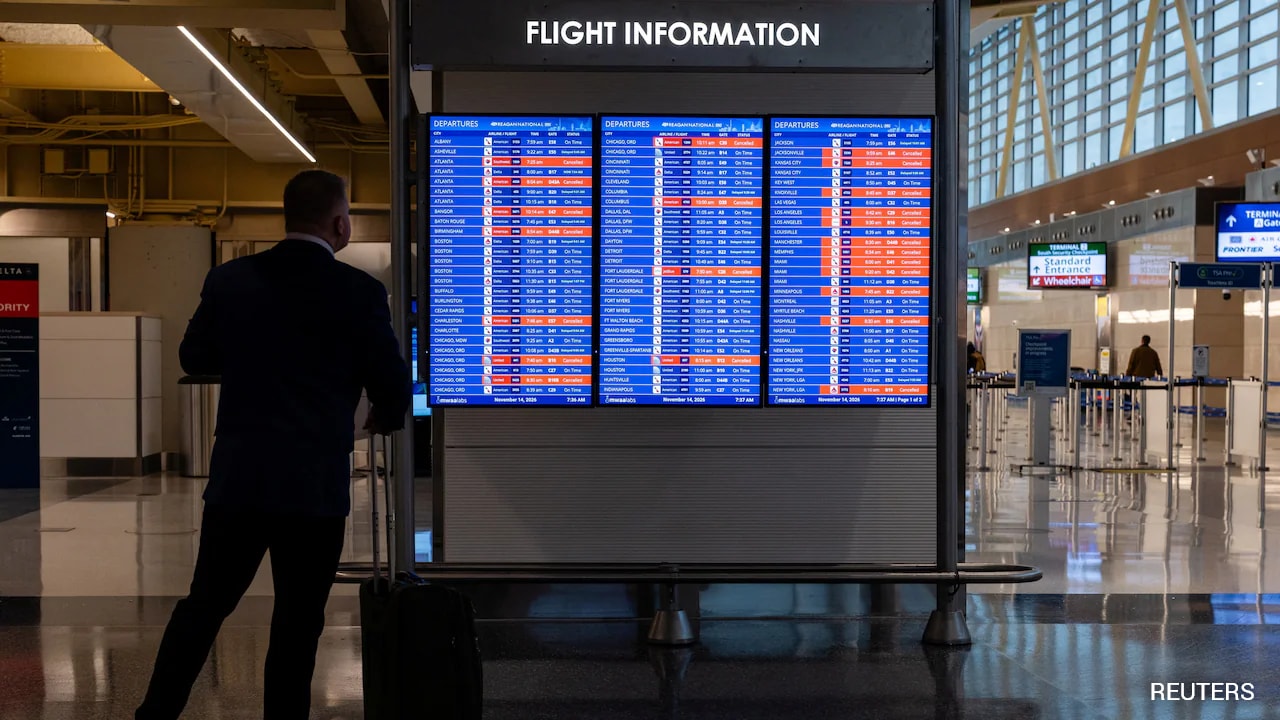
Replacing the United States air traffic control infrastructure is not a standard capital expenditure; it is a live-heart transplant performed on a patient running a marathon. While political rhetoric focuses on the multi-billion-dollar price tag required to retire 50-year-old Federal Aviation Administration (FAA) hardware, the actual constraint is architectural debt. The National Airspace System (NAS) operates as a patchwork of legacy analog systems, bespoke mainframe code, and partially deployed satellite protocols that must maintain 99.999% uptime while absorbing record commercial and uncrewed flight volumes. Solving this requires decoupling hardware replacement from operational continuity, restructuring federal procurement cycles, and resolving severe human-capital bottlenecks before a single new radar array or server rack goes online.
The Anatomy of Technical Debt in the National Airspace System
To understand why modernization budgets routinely balloon into the tens of billions of dollars, one must first isolate the specific layers of infrastructure failing simultaneously. The legacy system is not a single monolithic computer; it is a three-tiered stack where each layer constrains the performance of the layers above it. Building on this topic, you can also read: Inside Sarvam AI and India’s High-Stakes Bet on Sovereign Intelligence.
The Surveillance Layer (Primary and Secondary Radar)
Legacy ground-based radar installations rely on rotating mechanical antennas and aging vacuum-tube or early solid-state transmitters. These systems sweep the sky every 4 to 12 seconds, creating a latency gap between an aircraft’s actual position and its rendered position on a controller’s scope. Because radar relies on line-of-sight radio waves, terrain masking creates blind spots at low altitudes, forcing controllers to enforce wide separation buffers—often five nautical miles horizontally—to guarantee safety margins.The Communications Layer (Analog VHF and Copper Networks)
Voice communications between pilots and Air Route Traffic Control Centers (ARTCCs) still depend heavily on analog Very High Frequency (VHF) radio channels. VHF operates on a push-to-talk, half-duplex model: only one party can transmit on a frequency at a time. When frequency congestion occurs during severe weather reroutes, instructions queue up, introducing human reaction delays. Behind the scenes, these radio towers connect to regional facilities via legacy Time-Division Multiplexing (TDM) copper circuits that telecommunications carriers are actively decommissioning, driving up maintenance costs for obsolete hardware. Analysts at Ars Technica have provided expertise on this situation.The Automation and Compute Layer (ERAM and STARS)
Terminal Radar Approach Control (TRACON) facilities and en-route centers process flight data through systems like En Route Automation Modernization (ERAM) and Standard Terminal Automation Replacement System (STARS). While these platforms replaced 1970s-era IBM mainframes, they still run on rigid, localized architectures. They lack native cloud elasticity, making software updates slow, localized, and expensive to validate against FAA safety-critical assurance standards.
The core operational failure of this stack is capacity throttling. When weather disrupts a major hub like Newark or Atlanta, the legacy system cannot dynamically reallocate airspace sectors or ingest real-time trajectory data from aircraft flight management computers. Instead, traffic managers default to Ground Delay Programs, holding planes at departure gates and costing airlines billions in burned fuel, missed connections, and crew overtime.
Deconstructing the Modernization Cost Function
When policymakers estimate that replacing the aging air traffic system requires tens of billions of dollars, that capital is not merely buying off-the-shelf servers. The cost function of aviation modernization is governed by four non-negotiable variables:
- Parallel Operations (The Dual-Run Penalty): You cannot shut down the US airspace for a weekend to migrate databases. Every new digital communication link, cloud-hosted flight data processor, or satellite surveillance feed must run in parallel with the legacy system for months or years during shadow testing. Taxpayers effectively fund two complete air traffic control infrastructures simultaneously during transition windows.
- DO-178C and Safety-Critical Certification: Commercial software ships with the expectation that patches will fix bugs post-deployment. Aviation software operates under deterministic safety standards where the probability of a catastrophic failure must be less than $10^{-9}$ per flight hour. Proving that a line of code cannot fail under edge-case inputs requires exhaustive formal verification, driving software engineering costs up by an order of magnitude compared to enterprise IT.
- Site-Specific Civil Engineering: Upgrading the FAA’s 20+ en-route centers and hundreds of control towers involves physical remediation. Many facilities contain asbestos, outdated HVAC systems incapable of cooling modern high-density server blades, and uninterruptible power supplies (UPS) designed for 1970s electrical loads. Replacing the computers requires rebuilding the buildings housing them.
- Equipage Synchronization: Ground infrastructure upgrades yield zero return on investment unless the commercial and general aviation fleets install matching avionics. If the FAA deploys digital Data Comm (Controller-Pilot Data Link Communications) to replace voice commands, the efficiency gains only materialize when the majority of aircraft in that sector carry compliant transceivers.
Why Previous Modernization Programs Stalled
The push by incoming administrations to inject massive capital into FAA infrastructure follows a two-decade pattern of partial execution. The Next Generation Air Transportation System (NextGen), launched in the mid-2000s, successfully transitioned the NAS from ground radar to Automatic Dependent Surveillance-Broadcast (ADS-B), which uses GPS satellites to broadcast aircraft positions every second.
Yet NextGen fell short of its systemic goals due to three structural flaws in federal execution:
First, annualized appropriations destroyed multi-year engineering schedules. Large-scale systems integration requires predictable capital commitments over five-to-ten-year horizons. When Congress relies on Continuing Resolutions (CRs) to fund the government, the FAA cannot initiate new capital contracts, forcing prime contractors to pause engineering teams, renegotiate subcontracts, and absorb inflation penalties that erode purchasing power.
Second, procurement followed a waterfall specification model. By the time the FAA drafted requirements, solicited bids, awarded a contract, and completed safety testing, the underlying commercial hardware was often nearing end-of-life. The agency bought bespoke solutions tailored to internal operational quirks rather than adapting its operational procedures to fit commercial off-the-shelf (COTS) architectures.
Third, incentives between airlines and the regulator were misaligned. Airlines hesitated to spend hundreds of millions of dollars retrofitting older aircraft with next-generation avionics without a binding guarantee that the FAA would have the ground infrastructure ready on schedule. Conversely, the FAA struggled to justify ground spending for capabilities that the fleet could not yet utilize. This created a classic collective action problem where both sides waited for the other to absorb the upfront capital risk.
The Human Capital Bottleneck
Capital injections alone cannot fix the National Airspace System because hardware modernization is inextricably tied to controller staffing and training pipelines. The FAA operates with a chronic deficit of Certified Professional Controllers (CPCs) at critical facilities, particularly in high-density corridors like the New York TRACON (N90).
Introducing new automation tools creates a short-term productivity dip—a phenomenon known in operations management as the J-curve effect. Experienced controllers who have spent twenty years mastering legacy interfaces must be pulled off active sectors to train on new human-machine interfaces (HMIs). During this transition, facility capacity actually drops because senior staff are split between training simulators and live traffic, while trainees require intensive one-on-one supervision.
Furthermore, the FAA Academy in Oklahoma City acts as a single-point-of-failure bottleneck for onboarding. Even if Congress authorizes immediate funding for modernized workstations, the system cannot deploy them faster than the workforce can be certified to operate them without compromising separation standards. Any realistic modernization budget must allocate significant capital to high-fidelity simulation environments and decentralized training pipelines to flatten the J-curve.
Governance Models and the Privatization Debate
Whenever multi-billion-dollar funding requests for air traffic control surface in Washington, policy debates inevitably fracture along governance lines: keeping the Air Traffic Organization (ATO) inside the FAA versus spinning it off into an independent, user-fee-funded non-profit corporation, similar to Nav Canada or NATS in the United Kingdom.
Evaluating these two models requires separating operational agility from political accountability:
- The Federal Agency Model (Status Quo): Keeps safety regulation and service delivery under one roof, funded via the Airport and Airway Trust Fund (excise taxes on tickets and fuel) and general treasury transfers. Its primary advantage is direct congressional oversight and guaranteed service to low-volume rural airports that would be unprofitable under a pure commercial model. Its fatal flaw is vulnerability to government shutdowns, federal pay caps that deter top software architects, and rigid Federal Acquisition Regulation (FAR) rules.
- The Corporatized Model (Nav Canada Blueprint): Separates the regulator (FAA) from the operator. A stakeholder-governed non-profit issues long-term revenue bonds on private capital markets, allowing it to fund multi-year technology overhauls without waiting for annual congressional appropriations. However, in the United States, this faces fierce political resistance from general aviation lobbies—who fear steep user fees—and defense stakeholders, given the deep integration between civilian airspace and Department of Defense radar networks.
A third, pragmatic path avoids the political gridlock of full corporatization while curing the procurement disease: establishing a dedicated Capital Modernization Fund exempt from annual appropriations cycles, paired with Other Transaction Authority (OTA). OTAs allow federal agencies to bypass traditional FAR bureaucracy, partner directly with non-traditional defense and aerospace tech firms, and pay for iterative, milestone-based software delivery rather than cost-plus hardware contracts.
The Execution Blueprint for Modernizing the NAS
To prevent a new multi-billion-dollar allocation from repeating the cost overruns of past decades, leadership must enforce a strict architectural sequence rather than attempting a simultaneous nationwide overhaul.
Step 1: Decouple Infrastructure from Facilities via Virtualization
Stop tying airspace control to specific physical brick-and-mortar buildings. By migrating flight data processing and voice switching to a federated, secure cloud architecture, controllers at a facility in Texas can seamlessly assume control of sectors in Florida during a hurricane evacuation or equipment outage. Virtualization eliminates the need to rebuild every aging concrete bunker before upgrading the software.
Step 2: Mandate Trajectory-Based Operations (TBO)
Shift the fundamental unit of air traffic management from reactive radar vectors to four-dimensional trajectories (latitude, longitude, altitude, and time). Modern commercial aircraft already compute precise 4D paths. Enabling direct machine-to-machine negotiation between the aircraft’s Flight Management System and ground automation allows planes to fly continuous, fuel-optimal descent profiles rather than stepping down through altitude holds, immediately expanding airspace throughput without pouring new concrete runways.
Step 3: Enforce "Best-Equipped, Best-Served" Routing
Break the equipage stalemate by ending first-come, first-served airspace access in congested corridors. Grant priority routing, reduced separation minimums, and preferred altitudes exclusively to aircraft equipped with modern Data Comm and advanced ADS-B In avionics. Once airlines see a direct, measurable reduction in fuel burn and delay minutes for equipped tails, private capital will rapidly fund fleet retrofits without requiring heavy-handed federal mandates.
Step 4: Consolidate Low-Density Terminal Facilities
Redirect capital away from maintaining hundreds of standalone, low-volume radar rooms. Consolidate terminal approach functions into regional super-TRACONs connected via redundant, high-bandwidth fiber and satellite backhaul. This concentrates scarce engineering maintenance teams, reduces real estate overhead, and pools controller staffing to absorb sick leave and training absences without triggering airspace closures.
The Strategic Mandate
Throwing billions of dollars at the Federal Aviation Administration without changing how the agency buys software, certifies airspace, and trains controllers will simply purchase a more expensive version of the current bottleneck. The next five years represent a narrow window before legacy telecom circuits go dark and retirement waves hollow out the remaining institutional knowledge of the current system. Leadership must tie every dollar of new capital authorization to binding procurement reform: eliminate cost-plus contracts, mandate cloud-native virtualization over facility reconstruction, and enforce performance-based airspace access. Treat the National Airspace System not as a public works construction project, but as a real-time, distributed software network where latency is measured in lives and billions in economic output.