Military aviation operates in a high-entropy environment where the margin between nominal operation and catastrophic system failure is frequently measured in milliseconds. When a training flight ends in a fatal crash, public discourse typically oscillates between emotional response and superficial calls for safety reviews. These reactions miss the underlying mechanics. Safety in military aviation is not a static property maintained by caution; it is a dynamic equilibrium sustained by organizational redundancy, mechanical reliability, and human performance optimization under extreme cognitive load.
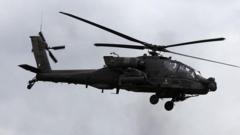
The operational reality of military flight training in domestic airspace involves a complex cost-benefit calculation. Armed forces must maintain high operational readiness through rigorous, realistic simulation of combat conditions. This requirement introduces structural risks that cannot be entirely engineered away. Understanding an incident involving a military helicopter crash in Texas requires moving past the immediate tragedy to examine the systemic variables governing flight safety, pilot decision-making loops, and mechanical maintenance cycles.
The Operational Risk Matrix of Rotary Wing Aircraft
Rotary-wing platforms differ fundamentally from fixed-wing aircraft in aerodynamic stability. A helicopter is inherently unstable, requiring continuous control inputs from the pilot or an automated stability augmentation system to maintain controlled flight. This mechanical complexity increases the vulnerability vector profile of the platform.
Mechanical Vulnerability Variables
- Dynamic Components: High-stress elements such as main rotor gearboxes, swashplate assemblies, and tail rotor drive shafts operate under extreme mechanical loads. Component fatigue failure can lead to catastrophic loss of control with minimal warning time.
- Low-Altitude Operations: Training protocols frequently dictate nap-of-the-earth flight—operating at minimal altitude to avoid radar detection and simulate tactical evasion. This profile eliminates altitude as a buffer against mechanical failure or pilot spatial disorientation.
- Power-to-Weight Ratios: Military helicopters carry heavy mission equipment, armor, and armament. Operating near maximum gross weight reduces performance margins during engine failure scenarios, particularly in high-density altitude conditions.
When a mishap occurs during routine training, investigators first isolate these mechanical variables through telemetry data, maintenance logs, and metallurgical analysis of recovered components. The engineering objective is to determine whether the failure was isolated to a single component or indicative of a systemic supply chain or design flaw across the fleet.
The Human Factor and Cognitive Load Management
Mechanical integrity represents only one half of the operational equation. The human component—specifically aircrew decision-making under stress—accounts for a significant percentage of aviation incidents.
Training environments are specifically designed to push pilots to cognitive saturation. Instructors simulate engine failures, hydraulic loss, and electrical degradation simultaneously to test procedural execution under pressure. This pressure cooker environment is necessary to build muscle memory and tactical competence, but it creates operational risks.
The Decision-Making Bottleneck
- Time-Critical Responses: During a low-altitude emergency, a pilot has seconds to diagnose the failure, verify the emergency procedure checklist from memory, and execute flight control inputs.
- Spatial Disorientation: Visual meteorological conditions can degrade rapidly, or night-vision goggle operations can restrict peripheral vision, leading to vestibular illusions where the pilot misinterprets the aircraft orientation relative to the horizon.
- Crew Resource Management Failures: In multi-crew aircraft, communication breakdowns between the pilot in command, co-pilot, and crew chiefs can delay the identification of critical flight parameter deviations.
Analyzing a crash involves mapping the timeline of the flight against the cognitive workload of the crew. Investigators evaluate whether the training scenario exceeded the safe execution boundary or if procedural drift contributed to the breakdown.
Organizational Safety Culture and Institutional Learning
Safety is maintained through institutional structures that monitor, evaluate, and mitigate risk before it manifests as a hull loss. Military aviation relies on a blameless reporting culture designed to capture near-misses and minor anomalies before they compound into fatal accidents.
The effectiveness of this safety architecture depends on data collection frequency and leadership responsiveness. When maintenance backlogs accumulate due to operational tempo demands or budgetary constraints, the safety margin erodes. A spike in operational tempo directly correlates with increased wear on mechanical systems and elevated fatigue levels among maintenance and flight personnel.
The systemic response to an incident follows a rigorous investigative protocol managed by safety centers rather than criminal investigators, unless gross negligence or criminal intent is suspected. This separation ensures that personnel can provide candid testimony regarding mechanical faults, procedural errors, or fatigue factors without fear of immediate punitive action, preserving the integrity of the data required to prevent future occurrences.
Systemic Optimization and Future Risk Mitigation
Mitigating future incidents requires shifting focus from individual error to systemic design. Modern military aviation safety relies on three primary corrective vectors:
- Predictive Maintenance Analytics: Utilizing vibration monitoring systems and oil debris analysis to detect mechanical wear before catastrophic component failure occurs.
- Advanced Simulation Integration: Shifting high-risk emergency procedure training into high-fidelity simulators where the cost of failure is zero, preserving live flight hours for tactical proficiency.
- Standardized Human Factors Training: Enhancing cockpit resource management curricula to improve situational awareness and communication under high-stress conditions.
The elimination of risk in military aviation is an economic and operational impossibility. The utility of military air arms depends on their ability to operate in austere environments under high-stress parameters. Reducing the frequency of fatal mishaps requires continuous calibration of the balance between operational readiness demands and the structural limits of both machines and human operators.