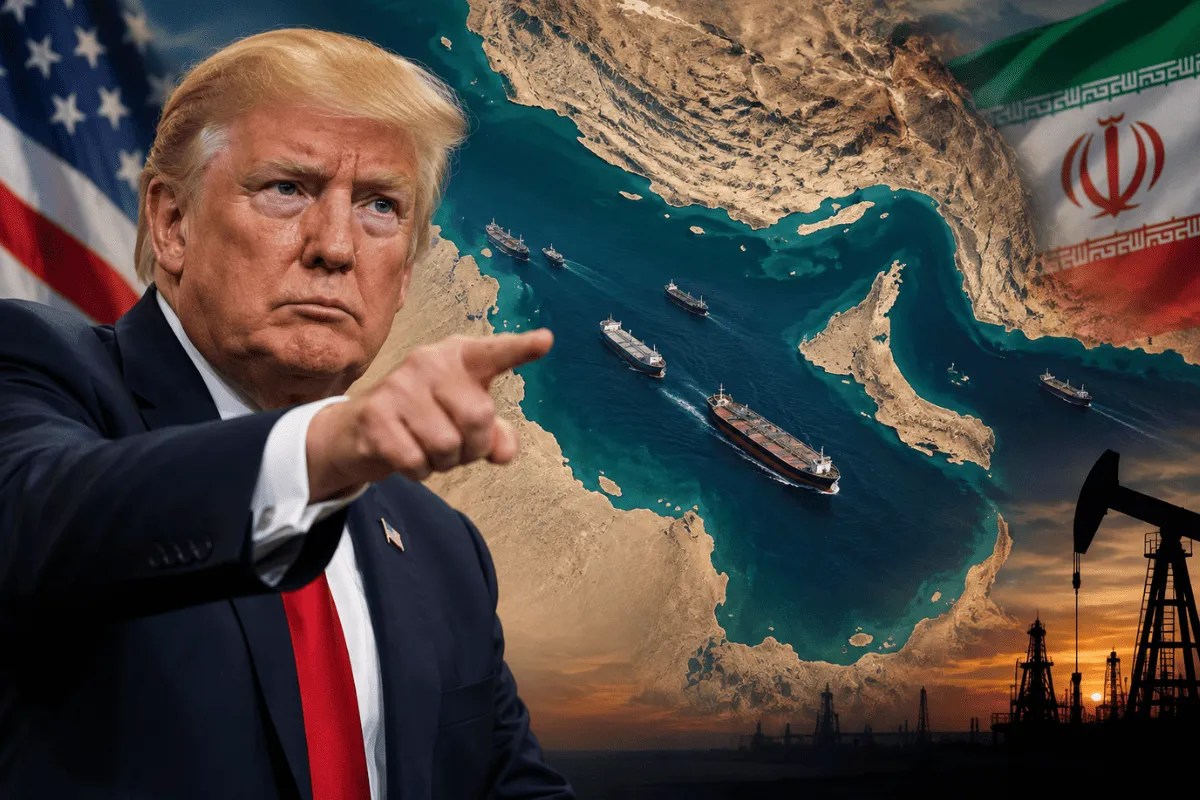
Politicians love a simple villain. When U.S. Secretary of State Marco Rubio stood beside Greek Foreign Minister Giorgos Gerapetritis in Athens in October 2026 and warned the world against "global energy dependence", the mainstream press nodded along like bobbleheads. Build more corridors. Escape conflict-prone regions. Achieve sovereign energy security.
It sounds great on a podium. It is pure poison in a boardroom.
The lazy consensus dominating Washington and financial media treats "energy dependence" as a binary switch—you are either a vulnerable hostage to foreign oil, or you are an untouchable, self-reliant fortress. That framing isn't just outdated; it is a fundamental misunderstanding of how global commodities, refining chemistry, and capital markets actually function.
I have sat across the table from industrial executives and sovereign fund managers who burned hundreds of millions of dollars chasing the mirage of "insulated" supply chains. They bought the political rhetoric, hedged against regional chokepoints like the Strait of Hormuz, and locked themselves into high-cost "friend-shored" contracts—only to watch their margins evaporate when global spot prices moved against them.
If you build your business strategy or investment thesis around Marco Rubio’s definition of energy independence, you are preparing for a war that ended in 1973.
The Fungibility Illusion
Let’s fix the vocabulary first, because politicians intentionally blur two completely different concepts: energy independence and price insulation.
Crude oil is a globally fungible commodity. Natural gas, thanks to the massive expansion of liquefied natural gas (LNG) terminals over the past decade, is rapidly becoming one too.
What does fungibility mean in practice? It means the United States can pump 13.5 million barrels of oil a day—more than any nation in history—and American drivers will still pay $4.50 a gallon at the pump if a tanker gets hit in the Persian Gulf. You cannot build a wall around a global pricing benchmark. Brent and West Texas Intermediate (WTI) trade in lockstep because arbitrageurs with supercomputers will instantly buy cheap American crude and ship it to Rotterdam or Tokyo the second a spread opens up.
Rubio’s push for "diverse energy corridors"—like routing Caspian or Eastern Mediterranean gas through Greece to bypass traditional chokepoints—solves a physical transit problem, not an economic exposure problem. Even if not a single molecule of your country's fuel passes through the Strait of Hormuz, your economy is still chained to the price set by the marginal barrel traded there.
The Refinery Mismatch Nobody Mentions
Here is the dirty secret of American "energy dominance" that never makes it into State Department press releases: We don't even refine most of the oil we pump.
The U.S. shale boom produces light, sweet crude (low density, low sulfur). However, the multi-billion-dollar refining complex along the U.S. Gulf Coast was engineered decades ago to process heavy, sour crude—the thick, high-sulfur sludge pumped out of Venezuela, Canada, and the Middle East.
Reconfiguring a complex refinery to run pure light sweet crude isn't a matter of turning a dial; it requires billions in capital expenditure and still yields a suboptimal mix of middle distillates like diesel and jet fuel. So what actually happens every single day?
- The U.S. exports millions of barrels of its own light crude to Europe and Asia.
- The U.S. imports millions of barrels of heavy sour crude from foreign producers—including those "conflict-prone regions"—to feed domestic refineries.
Even Washington’s own actions betray the rhetoric. Just weeks after warning against reliance on unstable foreign supplies, the administration was openly praising a U.S.-Russia diesel deal to cool global fuel prices. Why? Because when diesel shortages threaten freight inflation, ideological purity goes straight out the window. Physics and chemistry do not care about diplomatic speeches.
Trading One Dependence for a Worse One
Suppose we take Rubio’s advice at face value. Suppose Western nations aggressively sever ties with traditional hydrocarbon producers and sprint toward alternative corridors and green electrification to achieve true autonomy.
What happens next? You don't eliminate dependence. You just trade a flow dependence for a stock dependence—and the math on the new trade is brutally unfavorable.
Let’s look at the mechanics. In a fossil fuel system, if a supplier cuts you off, your reserves deplete over weeks or months, and you can immediately bid for replacement cargoes on the open water. In an electrified, "sovereign" energy system built on wind, solar, grid-scale batteries, and high-voltage interconnectors, your vulnerability shifts upstream to critical minerals and processing capacity.
- The Processing Chokepoint: According to the International Energy Agency (IEA), a single country—China—controls roughly 60% to 90% of the global refining and processing capacity for lithium, cobalt, graphite, and rare earth elements.
- The Capital Trap: You cannot build a new copper mine or lithium refinery in six months. Average permitting and construction timelines in North America and Europe stretch from 10 to 17 years.
- The Corridors Myth: Building new pipelines and subsea cables through places like the Eastern Mediterranean sounds heroic until you look at the insurance premiums, seabed vulnerability, and the sheer capital cost of redundant infrastructure that sits underutilized during peacetime.
I watched a mid-sized European industrial manufacturer try to "de-risk" its energy profile after the 2022 gas shock. They spent €40 million ripping out gas-fired boilers to install industrial heat pumps and on-site solar arrays, celebrating their newfound "independence." Two years later, their electricity grid tariffs spiked by 45% to pay for national transmission upgrades, and the replacement inverters for their solar array were backordered for 14 months due to a shortage of silicon carbide wafers. They didn't escape global supply chains; they just moved to a different aisle of the same store.
Dismantling the "Energy Security" Questions You're Asking
When headlines scream about geopolitical energy risks, retail investors and corporate planners usually ask the wrong questions. Let's tear down the standard talking points.
"Which countries are truly energy independent?"
The premise is broken. Outside of isolated autarkies like North Korea—whose "independence" consists of blackouts and wood-burning trucks—no modern industrial economy is energy independent. Even net exporters like Norway, Saudi Arabia, and the United States are completely dependent on global capital, specialized oilfield services (dominated by a handful of multinationals like SLB and Halliburton), and international maritime insurance markets. If Lloyd’s of London pulls war-risk coverage on tankers, oil stops moving regardless of who owns the wellhead.
"Should I buy domestic energy stocks when geopolitical tensions rise?"
Only if you enjoy buying the top. By the time a Secretary of State is holding press conferences about maritime chokepoints, the geopolitical risk premium is already priced into upstream exploration and production (E&P) equities. Worse, domestic producers face windfall profit taxes, export bans, and regulatory jawboning the exact moment prices spike. You take all the downside risk of a price crash and get capped on the upside by politicians trying to win midterm elections.
"Are new pipelines and LNG corridors the ultimate solution?"
They are an expensive insurance policy, not a cure. Redundant infrastructure—like the proposed gas interconnectors across Southeastern Europe—is vital for preventing acute physical blackouts during a crisis. However, someone has to pay for the steel in the ground. That cost is amortized directly into industrial power rates, making local manufacturing less competitive against rivals in Asia or the Middle East who buy energy at the cheapest marginal cost without paying for geopolitical redundancies.
The Contrarian Playbook: Stop Chasing Autonomy, Start Buying Optionality
If energy independence is a myth and redundant corridors eat your margins alive, what is the actual winning move?
Stop trying to isolate yourself from the global market. Instead, engineer maximum optionality into your operations and capital allocation. The winners in the next decade of energy volatility won't be the companies or nations that build walls; they will be the ones that can switch inputs faster than their competitors.
1. For Industrial Operators: Dual-Fuel Everything
In the 2010s, efficiency consultants told factories to rip out legacy fuel oil systems and go 100% natural gas or electric to save 3% on maintenance. That advice destroyed balance sheets in 2022 and is doing it again in 2026.
- The Move: Re-introduce fuel-switching capability. Modern dual-fuel industrial turbines and boilers can switch between natural gas, propane, distillate oil, and even hydrogen blends in minutes.
- The Payoff: When gas spikes because a corridor gets squeezed, you burn liquid fuel. When oil spikes, you switch back to grid power or gas. You turn geopolitical chaos into an arbitrage opportunity.
2. For Investors: Own the Tollbooths and the Traders, Not the Wells
When politicians fight over energy routes, physical friction increases. Cargoes travel longer distances—tankers rerouting around the Cape of Good Hope instead of the Red Sea, or LNG carriers crossing the Pacific instead of taking short regional hops.
- The Move: Look at midstream storage operators, specialized shipping (VLCCs and LNG carriers), and global commodity trading houses.
- The Payoff: Volatility and rerouted supply chains widen geographic price spreads. Commodity traders (like Vitol, Trafigura, and Glencore) and infrastructure owners with uncommitted storage capacity print record profits not when prices are high, but when prices are dislocated between regions.
3. For Policymakers: Fix Permitting Before Building Corridors
Diplomats love signing Memoranda of Understanding for grand international energy corridors because ribbon-cuttings make great television. Meanwhile, domestic transmission lines, nuclear uprates, and refinery upgrades rot in environmental litigation for a decade.
- The Move: Ruthlessly strip away regulatory bottlenecks on domestic base-load generation and storage capacity. Spare capacity is the only real deterrent against supply shocks.
The Price of This Approach
Let’s be brutally honest about the downside of prioritizing optionality over ideological independence: It looks terrible on paper during calm markets.
Maintaining dual-fuel infrastructure means carrying higher capital expenditures and slightly lower thermal efficiency than a single-fuel optimized plant. Holding spare storage capacity or paying for flexible off-take agreements feels like dead weight when oil is sitting quietly at $65 a barrel and ships are sailing smoothly through Hormuz. Activist investors will scream at your CFO for "inefficient capital allocation." Politicians won't give you subsidies because your strategy doesn't fit neatly into a nationalist slogan or a green-energy press release.
You will look slow, paranoid, and expensive—right up until the morning a pipeline ruptures, a strait closes, or a diplomat’s speech turns into an embargo.
While everyone else is scrambling to figure out why their "energy-independent" supply chain just ground to a halt, you flip a switch, burn the cheaper fuel, and take their market share.
For further analysis on the diplomatic messaging behind these policies, watch Marco Rubio At G20 Summit Warns Of Disruptions To Global Energy And Food Supplies to hear how the administration frames supply chain vulnerabilities directly.