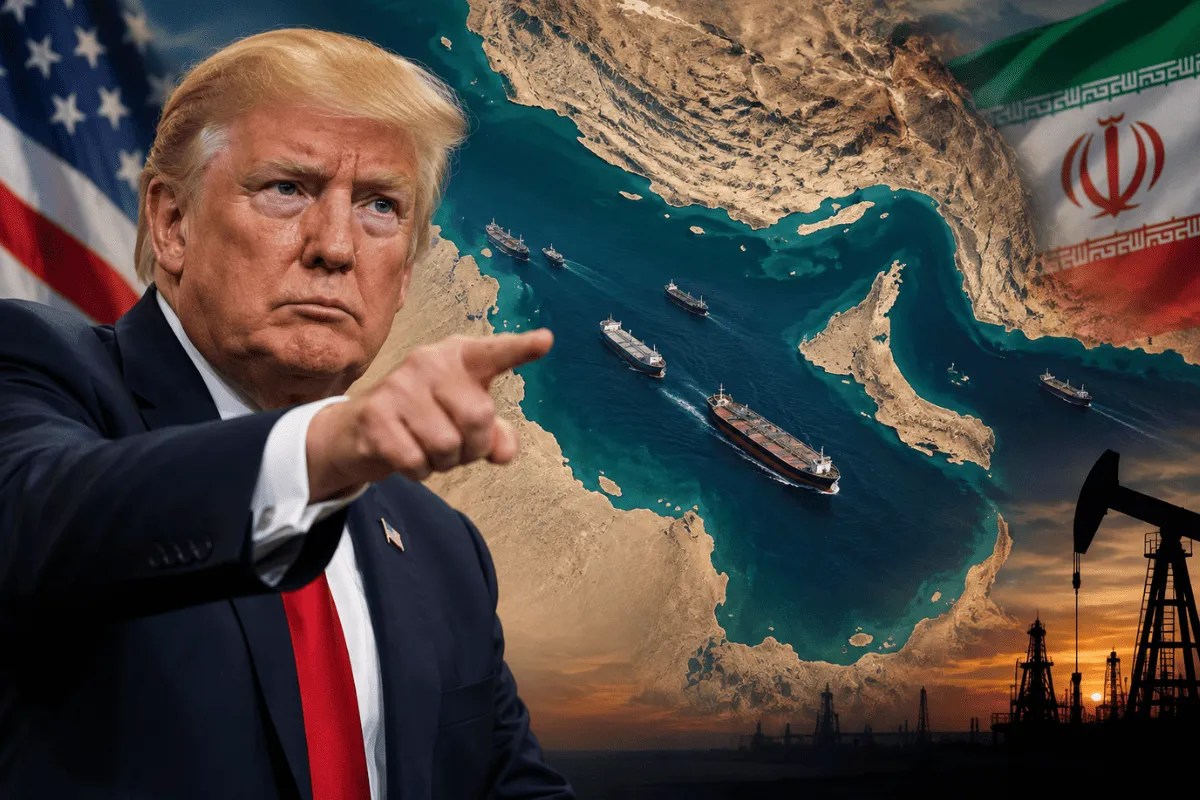
Every few years, Washington experiences a collective amnesia attack, panics over a shipping lane in the Middle East, and media outlets breathlessly repeat that global energy security is seconds away from total collapse. The latest panic cycle surrounding the Strait of Hormuz follows this exact script. US officials issue grave warnings about chokepoints, oil prices flicker upward on algorithmic anxiety, and traders with short memories price in armageddon.
It is entirely performative. Recently making waves recently: Why a Blocked Malacca Strait Is India’s Worst Nightmare.
The lazy consensus dominating current geopolitical commentary is that a disruption in Hormuz spells instantaneous economic ruin for the West and an unmanageable oil shock. This view treats global energy markets as a brittle, stagnant pipeline from the 1970s. It ignores structural shifts in production, inventory buffers, and the basic economic reality that supply chains route around friction with brutal efficiency.
I have watched desks panic over tanker traffic for a decade. The institutional panic is real, but the physical vulnerability is vastly overstated. Let us look at the mechanics of why the Hormuz alarmism falls apart under elementary scrutiny. Additional details on this are explored by Bloomberg.
The Myth of the Irreplaceable Chokepoint
Start with the geography and the mathematics. The Strait of Hormuz handles roughly a fifth of the world's petroleum liquids consumption. It is a critical artery, no doubt. But energy markets are not fragile porcelain; they are fluid networks of substitution.
When commentators hyperventilate about tanker blockades, they assume supply is inelastic and demand is immutable. Both assumptions are laughably false.
First, spare capacity exists where people refuse to look for it. Saudi Arabia and the United Arab Emirates maintain substantial pipeline bypass networks designed precisely to sidestep the Strait. The East-West Pipeline in Saudi Arabia can pump millions of barrels of crude directly to the Red Sea, completely bypassing the Persian Gulf. Abu Dhabi operates the Habshan-Fujairah oil pipeline, dumping crude straight into the Gulf of Oman outside the Hormuz bottleneck.
Second, the United States is no longer the energy hostage it was during the Carter administration. The Shale Revolution turned North America into a structural swing producer. When global prices spike due to speculative theater in the Gulf, Permian Basin drillers ramp up output with a speed that catches OPEC technocrats flat-footed. High prices cure high prices by unleashing capital into domestic extraction.
The market has built-in shock absorbers that analysts ignore because panic sells more advertising space than equilibrium.
The Strategic Misdirection of State Department Warnings
Why do Western officials sound the alarm so aggressively? Because institutional survival depends on maintaining external threats. A quiet, adaptable energy market does not justify defense budgets, naval patrols, or geopolitical leverage in the region.
When a US Secretary or high-ranking diplomat warns about Hormuz, they are engaging in risk management signaling, not economic prophecy. They must plan for the worst-case tail risk—a total, military-grade closure of the waterway. Planning for a tail risk is prudent; pricing that tail risk as the baseline probability is sheer incompetence.
Markets conflate military posturing with commercial reality. Iran understands the math of the Strait better than anyone in Washington. Closing Hormuz is an economic suicide pact for Tehran. Their own export revenue flows through those exact waters. Sinking a tanker or laying mines is not a strategic masterstroke; it is an invitation to total economic strangulation and immediate military retaliation that would vaporize their remaining infrastructure.
Rational actors do not trigger mutually assured economic destruction over localized disputes. Yet, commentators speak of Tehran as an irrational actor bent on global chaos, ignoring the pragmatic self-preservation that dictates actual foreign policy on the ground.
The Real Energy Crisis is Regulatory, Not Geographic
If you want to worry about energy security, look inward. The real threat to modern economies is not a narrow stretch of water in the Persian Gulf; it is chronic underinvestment in baseload infrastructure driven by political posturing at home.
Western governments spend billions subsidizing intermittent generation while demonizing long-cycle capital investments in hydrocarbons, refining capacity, and nuclear power. Refineries are shuttered, permitting takes a decade, and transmission grids groan under artificial constraints.
When a system is starved of redundancy by ideological design, even a minor hiccup anywhere in the world feels like a cardiac arrest. The vulnerability is self-inflicted. Blaming a Middle Eastern chokepoint is a convenient excuse for policymakers who spent twenty years choking domestic supply chains with red tape.
If energy markets were truly robust—built on diverse baseloads and unencumbered by bureaucratic paralysis—a tanker delay in Hormuz would be a blip on a Bloomberg terminal, not front-page anxiety.
Trading the Noise
How do you position yourself when the media screams about Hormuz? You do the exact opposite of the herd.
When institutional algorithms sell off equities and pile into oil futures based on threat headlines, look for oversold assets in sectors suffering from collateral damage. The initial price spike is almost always overdone because traders price in permanent disruption where temporary friction exists.
Do not hedge against an imaginary permanent blockade. Hedge against the certainty of government overreach and central bank panic responses to temporary commodity noise.
The next time a headline blares about imminent catastrophe in the Persian Gulf, check the pipeline bypass capacities, look at US shale completion rates, and remember that petroleum wants to flow. Price finds a way, and panic is always a tax on the impatient.