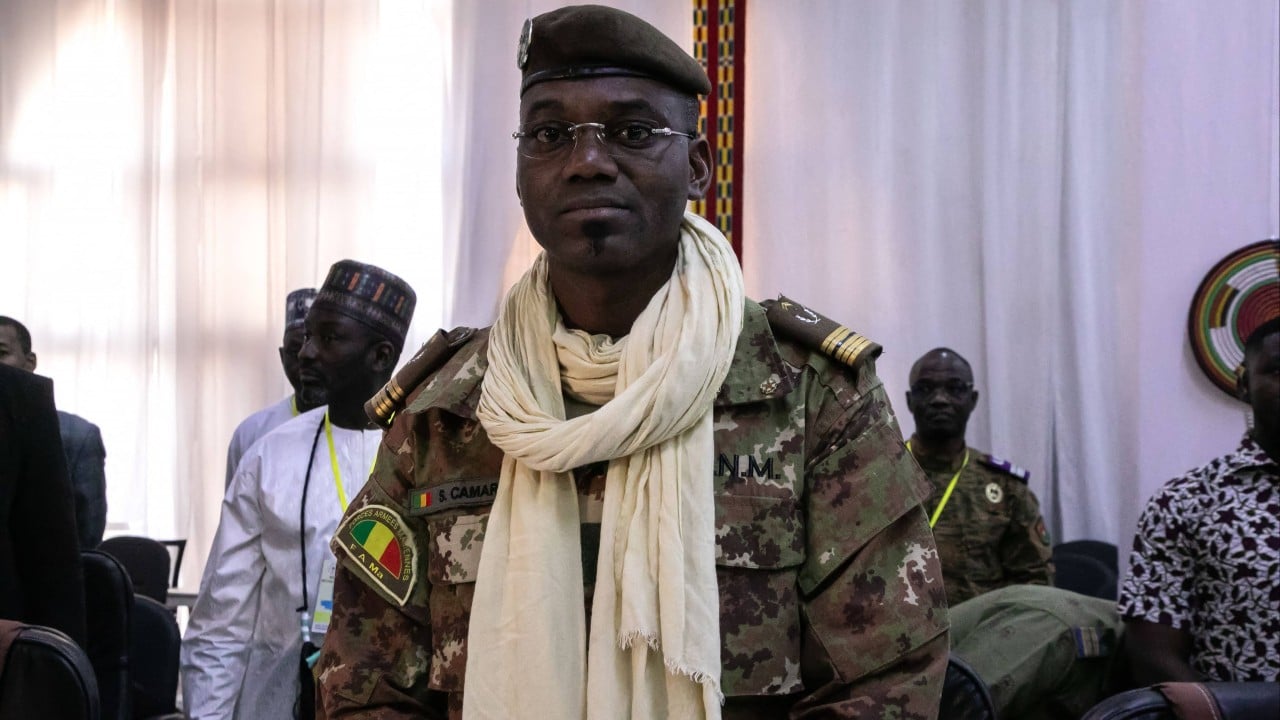
Western media is currently obsessed with a funeral. They see the death of a defense minister and the "capture" of a northern city as the beginning of the end for Colonel Assimi Goïta’s government. They call it a crisis. I call it a cleansing.
The standard narrative—pushed by outlets that haven't set foot in Bamako since the 2020 coup—is that the Malian state is a house of cards. They argue that by kicking out the French (Operation Barkhane) and inviting in Russian elements, the junta traded security for a temporary lifeline. They point to the recent loss of territory as proof of "failed sovereignty."
They are fundamentally wrong. They are measuring Malian stability using a defunct, colonial-era metric that prizes static borders over political survival. In the Sahel, territory is a liability; legitimacy is the only currency that matters.
The Mirage of Territorial Integrity
Most analysts treat African borders like they are carved in granite. They aren't. In the vast, arid expanse of northern Mali, controlling a town like Kidal or Ménaka is an expensive ego trip. For decades, the central government in Bamako bled money and manpower trying to hold onto northern outposts that provided zero economic return and constant insurgent friction.
The "loss" of these areas isn't a defeat; it’s a strategic offloading.
By retreating from indefensible positions, Goïta is doing what the French never could: he is consolidating power in the "useful" Mali. The southern agricultural and gold-mining hubs are where the GDP lives. If you stop trying to police every square inch of the Sahara, you can actually build a state that functions where people actually live.
When the media screams about "rebel gains," they ignore the fact that these rebels are now responsible for the governance, logistics, and protection of a population that hates them. The junta just outsourced its biggest headache to its enemies.
The Russian Bogeyman is a Distraction
The loudest critics focus on the presence of Russian private military companies (PMCs). They claim these "mercenaries" are destabilizing the region. This is a lazy, Eurocentric take.
The Russian presence isn't about winning a counter-insurgency war in the way the West understands it. It’s about regime insurance.
France wanted Mali to be a stable partner in a global war on terror. Russia wants Mali to be a client state that provides mineral access and diplomatic votes. From the junta's perspective, the Russian deal is infinitely better. Why? Because the Russians don't care about "democratic transitions" or "human rights reports."
I have seen governments in the Global South collapse because they tried to satisfy IMF demands and domestic security at the same time. You can't do both. Goïta chose security—specifically, the security of his own seat. By securing the capital and the gold mines with Russian muscle, he has achieved a level of internal stability that the previous "democratic" governments, backed by billions in EU aid, never touched.
Why the Death of a Defense Minister Changes Nothing
The headlines treat the assassination of a high-ranking official as a decapitation strike. In a Western bureaucracy, losing a Defense Minister is a logistical nightmare. In a military junta, it’s a job opening.
Mali’s current leadership is a collective of colonels who have spent their entire lives in a state of attrition. They are not delicate flowers. The death of one individual, even a high-ranking one, serves to galvanize the remaining leadership. It provides a martyr for the state-controlled media and a justification for a more brutal, more efficient crackdown on internal dissent.
If you think a single death triggers a collapse, you don't understand the "Coup-Proofing" 101. These men have spent years purging the ranks of anyone with a wavering hand. The current structure is built to be modular. You plug in a new colonel, you move on.
The Gold Standard of Sovereignty
Let’s talk about the money. Mali is one of Africa's top gold producers. For years, Western firms extracted the wealth while the government in Bamako begged for aid from Paris.
The junta is flipping the script. They are rewriting mining codes. They are demanding a bigger piece of the pie. This is the "crisis" that actually worries the West—not the death of a minister, but the death of cheap extraction.
- Fact: Mali recently passed a new mining code that allows the state to take up to a 30% stake in new projects.
- Fact: Gold exports have remained remarkably resilient despite sanctions.
- Fact: The junta is pivotally shifting its trade balance away from the CFA Franc (controlled by France) toward more independent economic structures.
When you have the gold, you have the guns. When you have the guns, you have the country. The "key cities" in the north don't have gold. Bamako doesn't need them to pay the soldiers.
The Failure of "People Also Ask" Logic
If you look at the common questions surrounding this conflict, you see the bias:
- "Can Mali survive without French help?"
- "When will Mali return to democracy?"
These questions are flawed. They assume French help was helping (it wasn't; the insurgency grew every year the French were there) and they assume democracy is the desired end-state.
The "unconventional advice" for anyone looking at Mali is this: Stop looking at the map and start looking at the ledger.
If the junta can keep the gold flowing and the soldiers paid, they can lose every city in the north and still be the most powerful government Mali has seen in thirty years. The "crisis" is a narrative manufactured by those who lost their influence when the planes from Paris stopped landing.
The Reality of the "captured" Key City
The city of Kidal—often cited as the crown jewel of the northern rebellion—is a graveyard for reputations. Every time a rebel group "captures" it, the international community gasps.
But what is Kidal? It’s a series of crumbling buildings surrounded by sand. It has no industry. It has no strategic depth. Holding Kidal is like holding a hot coal. You can show it off for a second, but eventually, it burns you.
The junta knows this. By letting the rebels "win" the north, they are forcing the rebels into the role of administrators. Insurgents are great at blowing things up; they are terrible at fixing sewers and paying teachers.
Watch what happens over the next six months. The rebels will start fighting amongst themselves over the meager resources of the north. The "unified front" will crumble. And the junta will be waiting in the south, rested, funded by gold, and backed by Russian logistics.
The Professionalism of Brutality
We need to stop pretending that "instability" is the same as "incompetence." The Malian junta is incredibly competent at staying in power. They have outmaneuvered the Economic Community of West African States (ECOWAS). They have stared down the UN. They have survived total diplomatic isolation.
This isn't a crisis. This is a stress test. And so far, the junta is passing.
The death of a minister is a tragedy for the family, but for the state, it is a pruning. The loss of a northern city is a tactical retreat.
The Western world wants to see a collapse because it validates their belief that "autocracy doesn't work." But in the Sahel, a strongman with a gold mine is worth more than a democrat with a foreign aid check.
Stop waiting for the fall. It’s not coming. The junta hasn't lost control; they’ve just stopped pretending they care about the parts of the country that don't matter to their survival.
The map is shrinking. The power is concentrating. The game is just beginning.