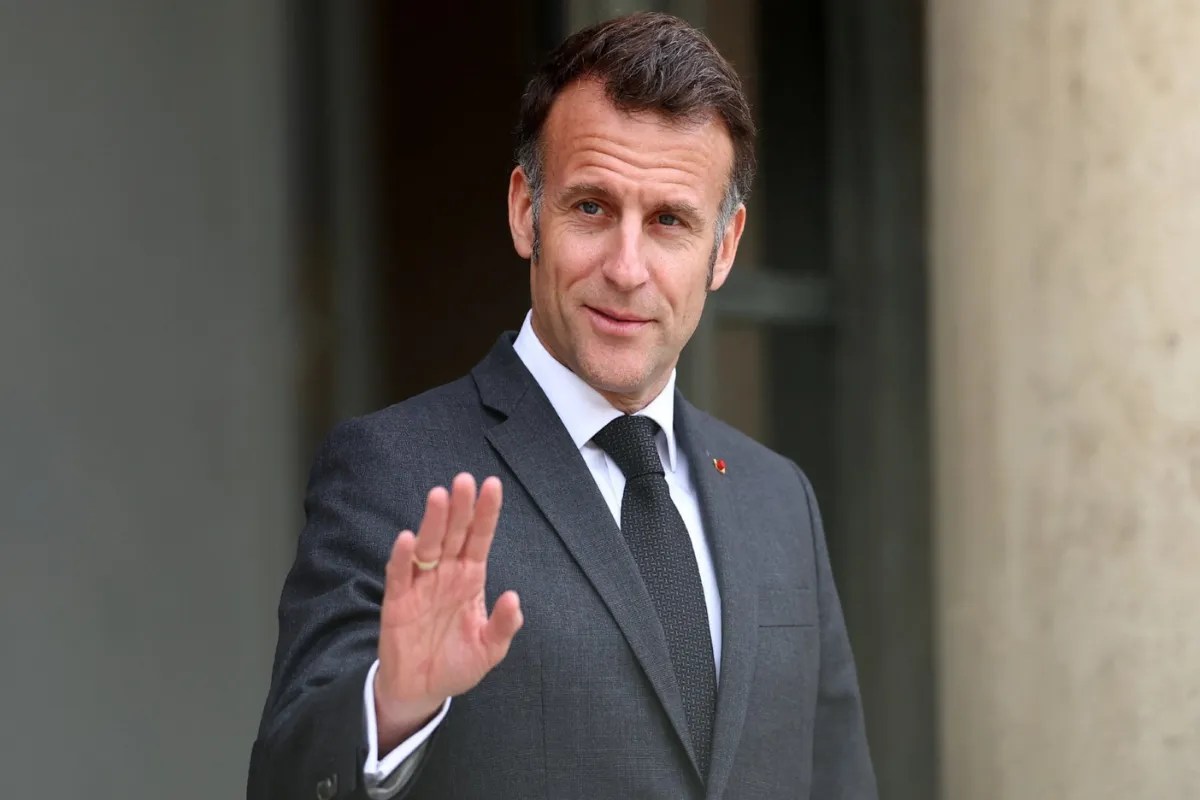
The recent security breach involving gunfire near the White House has triggered a predictable wave of diplomatic condemnation, but French President Emmanuel Macron’s response suggests a deeper anxiety within the Western alliance. When Macron declared that there is no place for violence in a democracy, he was not merely reciting a script of international etiquette. He was addressing a systemic rot that is currently destabilizing the foundations of modern governance across the Atlantic.
This incident serves as a grim reminder that the perimeter of the executive mansion is no longer just a physical boundary; it is the front line of a fractured social contract. While initial reports focus on the logistics of the firing and the immediate Secret Service response, the investigative reality points to a far more dangerous trend of normalized political aggression. Macron’s intervention highlights a specific European fear that American political volatility is becoming a contagious export, threatening the internal security of its closest allies.
The Architecture of Escalation
Political violence does not erupt in a vacuum. It is the end product of a long-term erosion of institutional trust. For decades, the White House has stood as a symbol of stable power, yet the frequency of security threats has increased in direct proportion to the rising temperature of domestic rhetoric.
The mechanism at work here is simple. When the language of conflict moves from policy debate to existential threat, the fringe elements of society feel deputized to act. We are seeing a shift from organized political movements to "lone actor" disruptions, which are significantly harder for intelligence agencies to track and neutralize. Macron’s specific focus on the "place of violence in democracy" acknowledges that if the democratic process cannot guarantee safety, the process itself loses its legitimacy.
The French Connection to American Stability
Why does a French president feel the need to weigh in so forcefully on an American security matter? The answer lies in the shared vulnerability of the neoliberal order. France has faced its own share of civil unrest, from the Yellow Vest protests to the recent riots over pension reforms. Macron knows that if the United States—the self-appointed leader of the free world—cannot secure its own seat of power, the ripple effect will embolden anti-government factions throughout Europe.
This is not about a single shooter or a specific motive. It is about the optics of vulnerability. In the world of high-stakes diplomacy, perception is reality. A bullet fired near the White House is a message to every autocrat and insurgent group that the center is not holding. Macron’s statement was an attempt to reinforce a crumbling wall, urging his peers to treat this not as an isolated criminal act, but as a symptom of a broader collapse in civic discipline.
Beyond the Security Perimeter
The technical failure that allowed a firearm to be discharged near such a high-profile target is currently under the microscope. Investigative sources suggest that the evolving nature of urban threats—drones, long-range optics, and decentralized communication—is outstripping the traditional "bubble" defense strategies.
We must look at the math of modern security. If a defense system is 99.9% effective, that 0.1% failure rate becomes an inevitability over a long enough timeline. The Secret Service is tasked with perfection in an era where the tools of disruption are cheaper and more accessible than ever before. This creates a permanent state of high-alert fatigue, which in itself is a security risk.
The Price of Open Governance
There is a fundamental tension between the desire for an "open" democracy and the requirements of modern protective details. To be a leader in a democracy, one must be seen and accessible. However, every point of access is a point of failure.
Macron’s rhetoric attempts to bridge this gap by appealing to the morality of the citizen. He is essentially arguing that the primary defense of a democracy should be the collective agreement that certain lines are never crossed. When that agreement breaks down, no amount of concrete barriers or armed guards can fully insulate a leader from a determined actor. This is the brutal truth that officials are hesitant to admit: the safety of the state relies more on the behavior of the public than the hardware of the police.
The Global Implications of a Vulnerable Washington
If the United States remains locked in a cycle of internal hostility, its ability to project power abroad is fundamentally compromised. Allies like France are watching closely because their own security architectures are tied to American intelligence and military support. A distracted or unstable America creates a power vacuum that more disciplined, authoritarian regimes are eager to fill.
The investigative trail leads back to the digital sphere, where radicalization happens in real-time without oversight. The "violence" Macron refers to often begins as a viral post before it becomes a physical threat. By the time a weapon is drawn, the battle for the individual's mind has already been lost.
Dissecting the Diplomatic Script
Standard diplomatic responses are usually designed to minimize panic. Macron’s statement did the opposite; it highlighted the gravity of the situation by framing it as a threat to the democratic concept itself. This suggests that the intelligence briefings reaching the Elysée Palace are far more pessimistic than the public-facing press releases.
There is an ongoing debate within the security community about whether publicizing these incidents encourages copycats. However, in an age of instant social media coverage, silence is no longer an option. The strategy has shifted to rapid condemnation and the reassertion of democratic values, an attempt to socially "quarantine" the perpetrator as an enemy of the people rather than a political martyr.
The Infrastructure of Discontent
To understand why this is happening now, we have to look at the socioeconomic factors that have been ignored for too long. Disenfranchisement is a powerful fuel. When people feel that the systems of power—represented by the White House—are no longer working in their interest, the symbolic value of those institutions changes. They stop being buildings to be respected and become targets to be attacked.
The "how" of this specific firing involves a breakdown in local surveillance and immediate response protocols. But the "why" involves a complex web of declining mental health, easy access to high-powered weaponry, and a media environment that rewards extreme behavior with eternal digital fame.
The Reality of Modern Counter-Terrorism
Modern protection is no longer just about standing in front of a target. It involves monitoring sentiment across the dark web, tracking the movement of illicit goods, and predicting behavioral shifts in high-risk populations. The failure at the White House suggests a gap in this holistic approach. It indicates that while we are looking for the big, organized threat, the small, erratic threat is slipping through the cracks.
Macron’s intervention is a call for a unified front in intelligence sharing. He is signaling that France and other NATO allies are ready to collaborate more deeply on domestic stability, recognizing that a threat to the American executive is a threat to the entire Western command structure.
The Cost of Inaction
If the response to this event is limited to a few arrests and a change in guard rotations, the underlying issue will continue to fester. The real work involves a painful and difficult de-escalation of the public discourse. It requires leaders to move beyond the short-term gains of divisive rhetoric and consider the long-term stability of the nation.
The security of the White House is a litmus test for the health of the Republic. If the perimeter is breached, or even threatened, it sends a signal of weakness that resonates in every capital from Moscow to Beijing. Macron’s statement is a desperate plea for the American political class to realize that their internal bickering has consequences that extend far beyond the Beltway.
We are entering a period where the traditional rules of engagement no longer apply. The "lone wolf" is now part of a global pack, connected by shared grievances and amplified by algorithms. The bullet fired near the White House was just the sound of a larger system cracking under the pressure of its own contradictions.
The future of democratic stability depends on whether we treat these incidents as anomalies or as a clear warning of a coming storm. Security is not just a tactical problem; it is a cultural one. If we cannot find a way to resolve our differences without resorting to the tools of war, the very institutions we seek to protect will become relics of a failed experiment. The choice is between a return to civil discourse or a permanent retreat behind ever-higher walls, until the leaders are totally insulated from the people they are supposed to serve. Focus on the structural integrity of the debate, or watch the architecture of the state crumble under the weight of its own hostility.bold