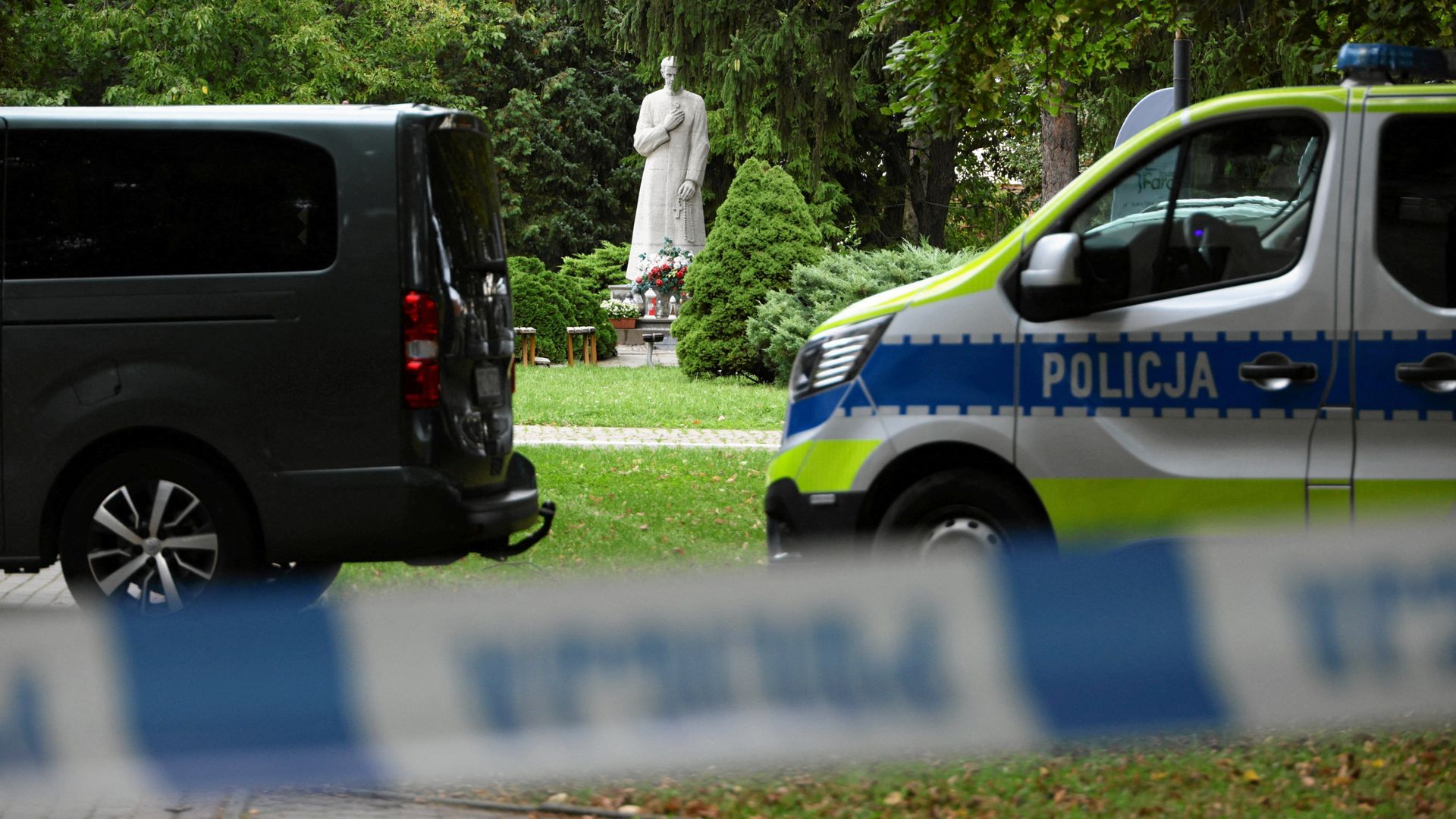
Violence rarely announces itself. It shatters the quiet, upends the ordinary, and forces communities to confront the unthinkable in a matter of seconds. On a crisp autumn morning, that brutal reality struck the historic Benedictine sisters' abbey in Jarosław, southeastern Poland. A place designed for sanctuary, prayer, and silence became the site of a horrifying rampage that left one beloved priest dead and four others wounded.
When a 31-year-old Ukrainian national walked onto the abbey grounds on September 24, 2026, nobody anticipated the nightmare that followed. Armed with a knife reportedly taken from the monastery kitchen, the assailant targeted clergy and worshippers alike just before morning Mass. Five people were stabbed—three priests and two laypeople, a man and a woman. Father Stanisław Zbojniewicz, a 67-year-old priest who had devoted four decades of his life to ministry, succumbed to his severe injuries. Other victims, including Father Adrian Mantykiewicz and Father Marek Pieńkowski, underwent emergency surgeries to survive the night.
Stabbings at religious sites are extraordinarily rare in Poland. This is a deeply Catholic nation where monasteries and abbeys function as cultural anchors of peace. The shockwave of the attack rippled instantly across the country and crossed international borders.
The Immediate Aftermath and Political Fallout
The identity of the attacker immediately complicated an already tragic narrative. Because the suspect was a Ukrainian citizen who had reportedly traveled from Germany and drifted toward the border before entering the abbey, political tensions threatened to overshadow human grief.
Public leaders moved fast to contain the narrative and prevent social fracture. Polish Prime Minister Donald Tusk issued a firm, unsparing statement on social media, promising that the perpetrator would face the absolute maximum severity of Polish law. Across the border, Ukrainian President Volodymyr Zelenskyy condemned the violence as a "horrific crime," stating bluntly that the perpetrator of such evil must bear full legal responsibility.
Local authorities in Jarosław faced an immediate operational crisis. Mayor Marcin Nazarewicz declared a period of mourning while activating crisis management teams. Crucially, local leaders reached out directly to the young Ukrainian community residing in the border town, working proactively to prevent retaliatory hostility or xenophobic backlash. They understood a fundamental truth: crimes are committed by individuals, not nationalities.
Sister Barbara Dendor, speaking on behalf of the Benedictine community, captured the raw disbelief of the local residents. She noted that their very identity had been assaulted, describing how an environment assumed to be entirely safe was violated in broad daylight. Psychologists rushed to the scene to counsel traumatized witnesses, parishioners, and children enrolled in the abbey's preschool. Candles and floral tributes quickly piled up outside the cordoned gates as mourners tried to make sense of the senseless.
The Power of Radical Forgiveness
What happened next defines the true core of this story. Most societies expect grief to harden into anger. We demand retribution. We look for someone to blame.
Just two days after surviving the knife attack that killed his peer, Father Adrian Mantykiewicz did something extraordinary. Bruised, bandaged, and bearing the physical scars of the morning he almost lost his life, he walked back up to the altar at the Benedictine abbey. He celebrated the first Mass held at the complex since the bloodshed.
He didn't use the pulpit to fan the flames of division. Instead, he offered a sermon centered squarely on forgiveness.
Standing before a shaken congregation, Father Mantykiewicz urged his listeners to pray for the attacker and ask for his conversion. He insisted that the evil which bled onto their sanctuary floor must be actively dismantled with goodness, love, and mercy. He drew a hard, necessary line between collective guilt and individual accountability, explicitly telling his parishioners not to blame the nation of Ukraine for the violent actions of one disturbed man.
"A specific person, who has his own name, his own life and is responsible for his own actions," Father Mantykiewicz told the congregation. "Other people did not do this. It was one person."
That distinction matters. In times of crisis, it is remarkably easy to weaponize tragedy against vulnerable populations. Refugees, migrants, and neighbor nations often bear the brunt of public panic when a horrific crime occurs. By refusing to let the attacker hijack the social fabric between Poland and Ukraine, the surviving clergy offered a masterclass in moral leadership. They chose solidarity over suspicion.
Confronting the Fragility of Safety
We like to believe that thick stone walls, centuries of history, and sacred architecture can shield us from the modern world's fractured state. The Jaroslaw abbey attack shattered that illusion. It reminds us that sanctuary is an ideal rather than an impenetrable barrier.
Yet, looking at how the community responded provides a different kind of lesson. Security protocols and police responses handled the immediate physical threat, arresting the suspect at the scene before further bloodshed could occur. But it was the spiritual and psychological resilience of the town that prevented a localized crime from morphing into a broader societal rift.
As funeral rites for Father Stanisław Zbojniewicz drew mourners from across the region to honor his forty years of faithful service, the community refused to let hatred dictate their future. Pain demands to be felt. Grief requires time. But vengeance solves nothing.
When tragedy knocks on your door, you ultimately get to decide whether you open it with clenched fists or an open hand. Jaroslaw chose the harder path, proving that even in the darkest moments, humanity retains the capacity to choose grace over grievance.