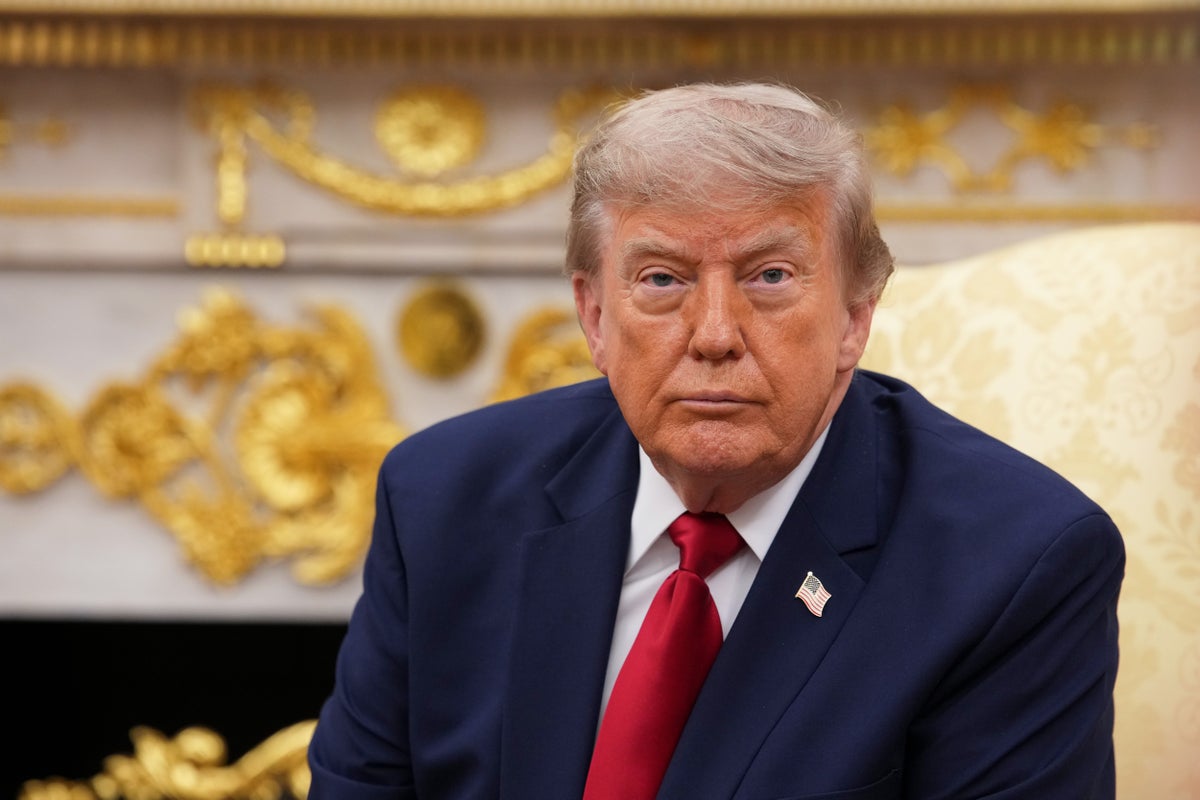
Texas Attorney General Ken Paxton has agreed to step onto a debate stage with Democratic nominee James Talarico in the state’s high-stakes U.S. Senate race. It is a stark departure from the Republican’s long-standing campaign strategy. For over a decade, Paxton has successfully ignored debates, relying instead on his deep connection to the conservative grassroots to carry him through tough elections without answering unscripted questions. But with a new poll showing him locked in a statistical tie with Talarico, the political calculations in Austin and Washington have fundamentally broken down.
Paxton’s senior adviser, Nick Maddux, confirmed that the campaign plans to debate. He dismissed Talarico as a radical who has spent his campaign deceiving Texas voters. Talarico, an Austin state representative, had challenged Paxton earlier in the day, asserting that the attorney general only answers to billionaire megadonors.
This sudden willingness to engage is not a sign of confidence. It is a symptom of a quiet panic spreading through national Republican circles. Texas has not elected a Democrat to statewide office since 1994, but the 2026 race is shaping up to be a costly, volatile exception to the rule.
The Unprecedented Retreat from the Shadows
In Texas politics, skipping debates is not just a strategy for established Republicans. It is a birthright. Paxton has raised this tactic to an art form. He did not debate his Republican primary opponents in 2022. He refused to debate his Democratic opponents in both 2014 and 2018. Even during the brutal 2026 Republican primary and runoff against four-term incumbent Senator John Cornyn, Paxton did not participate in a single debate. He did not need to. His base was solid, the Trump endorsement was secured, and the primary electorate was small and highly motivated.
But a general election is a different beast entirely.
When Paxton dispatched Cornyn by 28 percentage points in the May runoff, his supporters declared the end of the traditional, Bush-era Texas GOP. The old guard, which valued decorum and institutional dealmaking, had been decisively defeated by a brand of politics that prioritizes combativeness. Yet, the very qualities that made Paxton a hero to the grassroots have turned him into a massive liability for the general election.
A University of Texas/Texas Politics Project poll released in June showed Paxton leading Talarico by just one point, 43% to 42%. For an incumbent party that has dominated the state for three decades, a margin of error race in mid-summer is an flashing red light. Talarico is running a disciplined campaign focused on corruption and cost-of-living issues, while appealing directly to moderate Republicans who feel alienated by Paxton’s baggage.
By agreeing to debate, Paxton is acknowledging what his advisers have private-office spreadsheets to prove. He cannot win this race from the safety of friendly talk radio and closed-door rallies. He has to fight for the center.
Why Paxton Had to Say Yes
The decision to debate was forced by a cold mathematical reality. While Paxton won the runoff in a landslide, he did so because suburban and urban turnout for Cornyn collapsed, not because Paxton expanded his own coalition. In the first round of the primary, Cornyn actually outpolled Paxton. In the runoff, Cornyn’s voters simply stayed home.
Those moderate, suburban voters are now up for grabs, and Talarico is courting them aggressively.
If those traditional, business-minded Republicans in the suburbs of Dallas, Houston, and Austin decide to sit out the November election—or worse, cross the aisle to vote for Talarico—Paxton loses. By stepping onto the debate stage, Paxton’s team hopes to define Talarico before the Democrat can fully define himself to those swing voters.
The line of attack is already set. Paxton’s campaign intends to paint Talarico as a far-left ideologue who is out of step with Texas values. They will target Talarico's legislative record, specifically pointing to his past comments on transgender athletes, state income taxes, and his remarks regarding fossil fuels and Christianity. To win, Paxton must convince moderate Republicans that as much as they might dislike his personal ethics, Talarico represents a threat to their way of life.
But this strategy carries immense risk. A televised debate exposes Paxton’s legal history and personal controversies to a mass audience that may not have paid close attention to his previous trials and settlements.
The Suburban Fracture and the Ghost of John Cornyn
The core of Talarico’s general election strategy is a direct appeal to the "establishment" Republicans who supported Cornyn. Immediately after winning the Democratic nomination, Talarico began praising Cornyn’s decades of public service, contrasting the senator’s institutional respect with Paxton’s history of scandal.
It is an unusual move for a Democrat, but it is calculated. Talarico does not need to convert rural Texas. He needs to win over the suburban professionals who voted for Cornyn in March but are repulsed by Paxton’s legal issues.
The data suggests this strategy has a path to success. The June UT poll showed that while 84% of Republicans have united behind Paxton, 5% are actively supporting Talarico, and a significant portion remain undecided or are looking at third-party candidates. In a race decided by one or two percentage points, a 5% defection rate among Republicans is fatal for the GOP.
Furthermore, Talarico has built a massive lead among independent and moderate voters. The poll showed Talarico winning independents 40% to 12%. This is not a gap that can be closed by typical campaign ads. It requires a direct, unscripted confrontation on a stage where voters can compare the two candidates side-by-side.
Two Radically Different Playbooks
When the two men finally meet, the debate will be a clash of two entirely different political philosophies and styles.
Talarico, a former public school teacher, packages his progressive policies in the language of public service and ethics. He frequently speaks about the "rotting of our systems from the inside out" and frames the election as a battle against systemic corruption. He plans to press Paxton on his accumulation of personal wealth while in office, his 2023 impeachment trial, and a controversial plea deal offered by the attorney general's office in a Waco child sex abuse case. For Talarico, the debate is an opportunity to make Paxton’s character the central issue of the campaign.
Paxton’s team, conversely, wants to make the debate about national culture wars and economic anxieties. They will try to bypass the corruption charges by framing them as politically motivated attacks by the media and the establishment. Instead, they will focus on issues where the Democratic brand is weak in Texas, such as border security and progressive social policies.
The danger for Talarico is that he has a paper trail of his own. As a vocal progressive in the Texas Legislature, he has made statements on gender, identity, and religion that can be easily weaponized in a short television clip. Paxton’s team has already begun clipping what Talarico himself recently admitted were "cringey comments" regarding gender policy and theology. If Paxton can successfully shift the focus from his own integrity to Talarico’s cultural views, he can consolidate the Republican base and scare off moderate suburbanites.
The Financial Black Hole Threatening the Senate Majority
Beyond the messaging, there is a looming financial crisis for the Republican Party that explains why this debate is happening.
John Cornyn was one of the most prolific fundraisers in the history of the U.S. Senate, bringing in over $400 million for Republican candidates nationwide during his career. Paxton, by contrast, is an exceptionally weak fundraiser. His legal troubles and controversial reputation have made major national donors hesitant to write him checks.
Meanwhile, Talarico has shown a strong ability to raise money both within Texas and from national progressive networks.
Because Paxton cannot fund a massive statewide television campaign on his own, the National Republican Senatorial Committee is facing the prospect of having to dump tens of millions of dollars into Texas—a state they should theoretically win easily—just to keep Paxton afloat. Every dollar spent defending a Senate seat in Texas is a dollar that cannot be spent trying to flip seats in swing states like Ohio, Pennsylvania, or Montana.
National Republican strategists are desperate for Paxton to find a way to dispatch Talarico quickly and cheaply. A dominant debate performance could do just that, stalling Talarico’s momentum and reassuring donors that the seat is secure. But a poor performance, where Paxton is visibly rattled by questions about his legal history, will only accelerate the panic, forcing Washington to spend even more heavily to protect a candidate they never wanted in the first place.
The debate will not merely be a showcase of two competing platforms. It is a high-stakes gamble for a Republican Party that has suddenly found itself on the defensive in its most reliable stronghold.