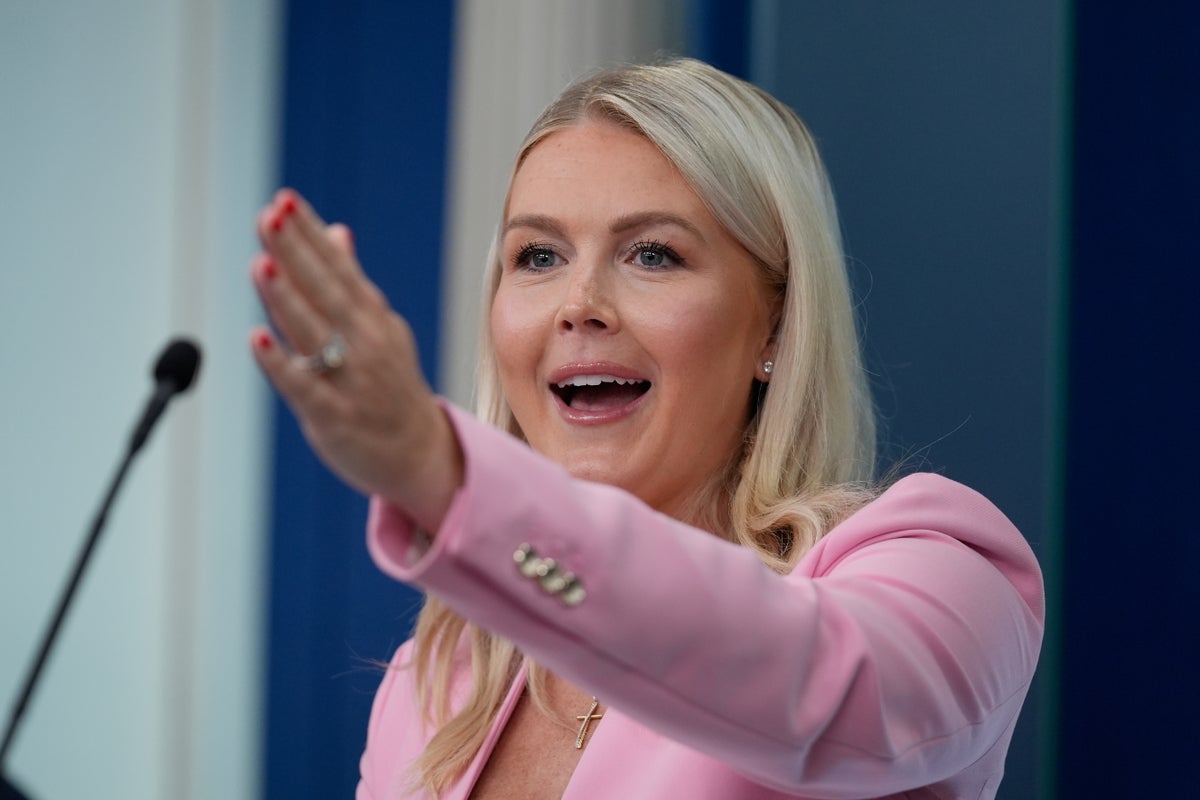
Armchair political psychologists are running the same tired play they have used for a decade, and they still do not realize they are being played.
When national commentators listen to Karoline Leavitt or analyze the latest late-night social media post from Donald Trump, they inevitably reach the same comforting, lazy consensus: He is obsessed with personal grievances. He is self-sabotaging. His psyche is too fragile to execute a coherent electoral strategy.
This analysis is not just wrong. It is a dangerous misunderstanding of modern political mechanics.
What traditional analysts label as "worrying psychological flaws" is actually a highly optimized, battle-tested system of asymmetric political communication. The critics are analyzing a bare-knuckle street fight using the rules of a high school debate tournament. If you want to understand how elections are actually won in a hyper-polarized media ecosystem, you have to stop diagnosing the candidate and start measuring the mechanics.
The Grievance Machine is an Engagement Engine
The standard Beltway complaint is that Trump focuses too much on personal score-settling instead of running on a disciplined, policy-focused platform. Critics argue this alienates moderate swing voters and harms down-ballot candidates.
This argument assumes that modern elections are won by persuading undecided voters in the middle with rational policy proposals. That assumption has been dead for twenty years.
Modern national elections are mobilization battles, not persuasion contests. In a highly polarized nation, the primary objective of a campaign is to maximize turnout among your base while demoralizing the opponent's supporters.
- The Attention Economy: In a fragmented media ecosystem, attention is the only currency that matters. A candidate talking about a standard five-point tax plan gets zero coverage. A candidate airing a highly personal grievance dominates the news cycle for 72 hours.
- Earned Media Valuation: This constant outrage cycle generates billions of dollars in free advertising. Traditional campaigns must spend hundreds of millions of dollars on television ads that voters actively mute. The "grievance" strategy forces the mainstream media to broadcast the candidate's core message for free, day in and day out.
- The Persecution Narrative: Personal grievances are not a distraction from the message; they are the message. For millions of voters who feel ignored, economically sidelined, or culturally targeted by coastal elites, a candidate who is constantly fighting personal battles is seen as a proxy warrior. His grievances validate theirs.
I have spent years analyzing campaign spending data and voter engagement metrics. While traditional campaigns pour millions into highly polished, focus-grouped television spots that move the needle by less than half a percentage point, raw, unvarnished controversy drives organic digital sharing at a scale that money simply cannot buy.
Dismantling the Myth of the Unified Party Strategy
Critics love to point out how Trump’s individualistic approach harms the broader party’s congressional prospects. They paint a picture of a selfish leader sacrificing the legislative majority to satisfy his own ego.
This view fundamentally misunderstands the structural reality of modern political parties.
A political party is no longer a centralized, top-down institution run by committee chairs in Washington. It is a loose confederation of independent brand owners, donors, and media influencers.
Traditional Campaign Model:
Party Platform ──> Candidate Message ──> Voter Persuasion ──> Turnout

Asymmetric Populist Model:
Direct Controversy ──> Media Amplification ──> Base Mobilization ──> Brand Consolidation
The expectation that a populist leader should temper his message to protect a moderate incumbent in a suburban swing district is a fantasy. Populism works by destroying the middle ground. It forces voters to choose a side.
By forcing down-ballot candidates to either defend his controversial statements or alienate the base by condemning them, Trump conducts a brutal, continuous loyalty test. It may cost the party a few highly educated suburban swing districts, but it consolidates absolute control over the party's infrastructure. To a populist leader, a slightly smaller legislative majority composed of absolute loyalists is infinitely more valuable than a larger majority filled with unreliable moderates who will block his agenda at the first sign of pressure.
The Fallacy of the Gaffe
When Leavitt or other campaign representatives make statements that the press interprets as "revealing slips" about the candidate’s state of mind, they are usually participating in a deliberate rhetorical jujitsu.
Let's break down the anatomy of a supposed campaign gaffe:
- The Statement: The campaign spokesperson makes a highly provocative statement that violates traditional political norms.
- The Outrage: The media spends days dissecting the statement, calling it a disaster, and interviewing outraged opponents.
- The Consolidation: The core supporters see the media attacking the campaign yet again, confirming their belief that the system is rigged against them.
- The Shift: The actual policy issue or negative news story that the media should have been covering is completely buried under the avalanche of commentary about the candidate's personality.
This is not a failure of strategy. It is a highly effective defensive screen. Every hour the media spends debating the candidate's "psyche" is an hour they are not spending analyzing his policy failures, his legal challenges, or his specific plans for governance. The media thinks they are exposing him; in reality, they are acting as his unpaid public relations firm.
The Actual Downside: The Volatility Trap
To be intellectually honest, this strategy is not without severe, systemic risks. While it is highly effective at consolidating power and driving base turnout, it comes with a massive structural downside.
The Volatility Principle: A campaign built entirely on conflict, personal branding, and outrage has no institutional guardrails. When the entire structure relies on the personal appeal of a single leader, there is no organizational fallback when things go wrong.
- Suburban Burnout: The constant high-voltage rhetoric creates a high floor for voter support, but it also creates a hard ceiling. It makes it nearly impossible to appeal to college-educated suburban voters, particularly women, who may agree with conservative economic policies but are exhausted by the perpetual cultural warfare.
- Governing Instability: A campaign run on asymmetric warfare is highly effective at winning elections, but it is notoriously terrible at actually governing. Because the strategy values loyalty over competence, it leads to massive staff turnover and administrative chaos once in office. You cannot run a federal bureaucracy with the same tactics you use to win a primary.
- The Succession Vacuum: Because the brand is entirely personal, it cannot be transferred. When a political movement is built around the unique psyche of one individual, it leaves no viable path for successors. The moment that individual leaves the stage, the coalition is highly likely to fragment into warring factions.
Stop Asking the Wrong Questions
The media continuously asks: "Is Trump mentally fit to lead a modern campaign?"
This is the wrong question. It assumes that a "modern campaign" must look like the campaigns of the late 20th century.
The real question we should be asking is: “Why is our media and political ecosystem so broken that a campaign built entirely on personal grievance and media manipulation is often more effective than a traditional, policy-oriented run?”
Until the press stops psychoanalyzing the candidate and starts analyzing the structural incentives that make his strategy work, they will continue to be surprised by his resilience. They are trying to diagnose a disease while actively feeding the patient the very sugar that keeps the virus alive.
Stop looking for Freudian slips in the statements of campaign spokespeople. Stop waiting for the moment the campaign "pivots" to a traditional strategy. It is not going to happen. The chaos is the strategy, the grievance is the platform, and the outrage is the fuel.