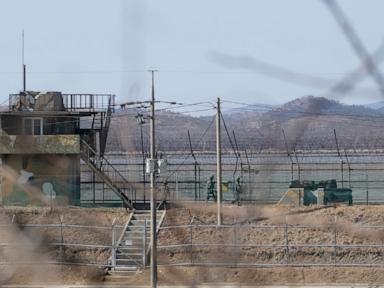
Silence on the Korean Demilitarized Zone is never peaceful. It is a loaded weapon pointed at the horizon, sustained by millions of concealed steel teeth buried just beneath the topsoil. For decades, the grass has grown thick over scars that refuse to heal. Pheasants nest in wire entanglements, and wildflowers bloom over forgotten iron.
Then comes the conculsion. Read more on a connected subject: this related article.
Three South Korean border guards learned what happens when the earth wakes up. An explosion ripped through a routine patrol path near the Military Demarcation Line, shattering the quiet and sending shivers down the spine of an uneasy peninsula. Seoul’s military investigators pieced together the fragments of twisted metal and pulverized earth, arriving at a grim conclusion: old landmines, laid long ago and shifted by torrential summer monsoons, or perhaps newly sown hazards in the constant chess match of deterrence, had torn into the flesh of men doing a job most people cannot fathom doing for a single hour.
Imagine standing on a ridge where the air tastes of pine and cold dread. Further analysis by The Washington Post explores comparable perspectives on the subject.
To understand the border is to understand a paradox. It is the most heavily fortified place on Earth, yet its deadliest weapons are completely blind. They do not care about uniform, politics, or peace treaties. They wait. They rust. They drift in the mud when the heavy rains turn the hillsides into rivers.
Military service in South Korea is a universal rite of passage, a collective burden carried by every young man who reaches the age of conscription. Mothers pack bags with heavy hearts; friends share final drinks in neon-lit alleys before the recruits disappear into the green-and-brown world of the army. When a soldier steps onto the Demilitarized Zone, he enters a theater where the armistice signed in 1953 is merely a pause button held together by duct tape and high-velocity rifles.
The recent blasts did not happen in a vacuum. They occurred against a backdrop of escalating psychological warfare. In recent months, balloons heavy with trash and debris have drifted north-to-south, while loudspeakers across the border blare bizarre soundscapes day and night—screeching machinery, eerie wails, and the relentless drone of propaganda. It is a war of nerves, fought with garbage and decibels.
But mines do not need loudspeakers. They do not need wind to carry them. They are patient.
During the monsoon season, the boundary lines blur. Swollen rivers overflow their banks. Mudslides tear down steep slopes, carrying topsoil, rocks, and whatever else was buried in the dirt for half a century. A minefield is never static. It is a living, shifting archive of paranoia. Engineers who mapped a field ten years ago are guessing if they look at it today. The ground itself shifts, sliding down ravines, burying iron deeper or pushing it dangerously close to the surface where a soldier's boot is about to fall.
When the explosion occurred, time fractured for the patrol unit.
Consider the seconds after detonation. The shockwave hits the chest before the sound registers. Dust and shredded vegetation fill the air, tasting of cordite and copper. In training, soldiers practice tactical combat casualty care until it is burned into their muscle memory. They know how to apply tourniquets under fire, how to check airways, how to keep a panicked comrade from drowning in his own shock. But knowing it in a concrete bunker is entirely different from practicing it while the earth is still smoking beneath your boots.
Three officers were injured. Their careers, their bodies, and the lives of their families changed in the span of a single heartbeat.
South Korea's Joint Chiefs of Staff moved quickly to analyze the wreckage. The shrapnel patterns, the depth of the craters, and the chemical signatures pointed overwhelmingly toward landmines. North Korea has never officially acknowledged the full extent of its mine placement across the buffer zone, nor has it ever cooperated with humanitarian demining efforts outside of specific, short-lived diplomatic thaws. The northern side of the border remains a vast, unmarked hazard zone, and nature respects no fences. When heavy rains wash south, the debris follows gravity.
This is the hidden tax of division. It is paid
The Ground That Remembers Where the War Never Stopped
news
The earth does not forget an army. Long after the boots have marched away, long after the diplomatic cables have grown cold and the headlines have drifted toward newer crises, the soil holds its breath.
Consider a strip of land twenty-four8 miles long and two-and-a-half miles wide, carved across the waist of the Korean Peninsula. It is known on maps as the Demilitarized Zone, a name that drips with a bitter, bureaucratic irony. There is nothing peaceful about it. It is a scar stitched together with concertina wire, watchtowers, and millions of hidden, waiting triggers.
On a quiet stretch near the border, three South Korean officers found out just how enduring that memory is.
An explosion fractured the silence. Not from an incoming shell or a sudden exchange of gunfire, but from beneath their feet. A border blast, sudden and vicious, tore into them. When the smoke cleared and the frantic calls for medical evacuation bounced through the encrypted radios, the military investigators began the grim work of piecing together the physics of the catastrophe. Their conclusion was as chilling as it was predictable: the culprit was likely a North Korean landmine, displaced by shifting summer rains or buried deep by decades of neglect, waiting silently for the precise moment to detonate.
We talk about geopolitical conflict as if it happens in abstract spaces. We watch leaders shake hands across shiny mahogany tables or trade sharp barbs through state media. We look at satellite imagery of missile tests and economic sanctions charts. But war, at its most visceral level, is intensely local. It is a matter of inches. It is the placement of a boot, the weight of a body, and the terrible lottery of what lies just beneath the surface of the topsoil.
To understand why a border blast can happen out of nowhere during a relative lull in hostilities, you have to look down. You have to imagine what happens when a torrential monsoon season hits the mountainous terrain of the peninsula. The rain does not respect borders. It cascades down ridges, washing away mud, carving new gullies, and carrying debris across the demarcation line. With that mud comes the hidden harvest of past decades. Unexploded ordnance and buried mines drift. They float down streams or slide beneath the roots of ancient trees, turning the landscape into a three-dimensional chessboard where the pieces move on their own.
Imagine standing on that line. The air smells of damp pine and metallic tension. You are wearing heavy gear, your senses dialed to a razor edge, scanning the horizon for movement. You are trained to look outward, toward the berms and the bunkers across the valley. You are not thinking about the mud inches from your boot. You cannot afford to think about it, because if you spent every second paralyzed by what is beneath you, you would never take a single step forward.
And yet, that is the reality for the men and women who patrol the world's most heavily fortified frontier. They live in a perpetual state of suspended history.
The Korean War never truly ended. It simply paused, dropping its voice to a frozen whisper in 1953. An armistice was signed, but a peace treaty never followed. For over seventy years, that technicality has meant that millions of families remain divided, propaganda loudspeakers occasionally blast across the valleys, and an invisible, lethal architecture of defense remains permanently activated.
When a mine detonates under the boots of border guards, it is a stark reminder that the machinery of destruction does not need human hands to keep working. It operates on automation and chemistry. It is patient. It can wait half a century for a patrol to walk down a familiar path.
The three officers who were injured in this latest blast will recover, their bodies bearing the sudden, violent signatures of a conflict older than they are. But the incident leaves behind a ghost that is harder to exorcise. It exposes the fragility of the quiet moments. We are lulled into complacency by months of relative stability, forgetting that beneath the green foliage and the quiet mountainsides lies a dormant arsenal waiting for an excuse—or a heavy rain—to wake up.
There are no grand declarations to be made here. No tidy policy solutions that can instantly sweep away the millions of hidden hazards buried in the dirt. Clearing the DMZ is a fantasy for another century, entangled as it is in a geopolitical stalemate that defies easy resolution. Until the day real reconciliation takes root, the guardians of that border will continue to walk a line where every footprint is an act of quiet courage.
The wind rustles through the dry brush along the fence line. A bird takes flight from the top of a concrete post, tracing a brief, elegant arc across the gray sky before disappearing over the ridge. Below, the ground remains still, holding its secrets, waiting for the next step.