The coffee cup sits on the kitchen counter, half-filled with liquid that went cold hours ago. Beside it, a pair of keys rests on a small ceramic dish, right where they were dropped yesterday afternoon. They will stay there tonight. They will stay there tomorrow.
In quiet neighborhoods across South Africa, grief does not always arrive with sirens or flashing lights. Sometimes it settles in as an unbearable stillness. It lives in the weight of a heavy front door that opens to an empty room, in the sudden dread that tightens a chest when a text message goes unreturned for an hour too long.
When authorities announced the discovery of the eleventh woman’s body in a mounting spate of killings, the news report was brief. It was clinical. It rolled across television
The Silence Left Behind When Another Life Is Stolen
news
category
The coffee cup sits half-full on the kitchen counter, a pale ring of foam drying slowly against the ceramic. In South Africa, that half-full cup is becoming an unbearable symbol of sudden, violent absence. When the eleventh woman's body was discovered in a recent spate of killings that have gripped the nation in a vice of fear, it did not arrive as an isolated statistic. It arrived as an earthquake.
We talk about violence in numbers. Eleven is a number. Eleven bodies. Eleven official reports filed in damp station offices where the fluorescent lights hum a low, maddening tune. But eleven is not just a digit on a police blotter. Eleven is a mother's laugh echoing down a hallway that will now stay quiet forever. Eleven is a locker key left on a hook, a textbook half-highlighted, a pair of shoes sitting by the front door waiting for a foot that will never step into them again.
Consider what happens when the news cycle turns over. A headline flashes across a screen: authorities investigate a recent surge of killings. The broadcast moves to weather. The newspaper folds. But in the communities where these women lived—where the streets are steep and dusty, where neighbors share sugar over corrugated iron fences—the silence that follows is heavy. It smells like woodsmoke and old dust. It tastes like ash.
Let us step into a hypothetical neighborhood to understand the texture of this terror. Imagine living on a road where every footstep after dark sounds like a reckoning. Let us call her Zola, though she could be anyone. Zola works late shifts, walking the final kilometer from the taxi rank to her small brick home under the feeble amber glare of municipal streetlights that flicker and die every few minutes. She carries her keys wedged between her knuckles, a makeshift armor of brass and bone. She listens for footsteps. She listens for the idling engine of a car that slows down just a fraction too much as it passes.
That is the hidden tax of this crisis. It is the constant, grinding calculation of survival. Women in these regions do not simply walk home; they navigate a minefield of probability.
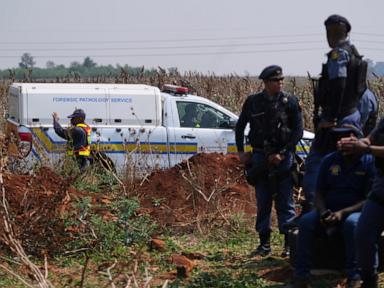
The authorities are investigating. That is the phrase the reports use. It is a sterile phrase. It implies men in crisp shirts looking at ledgers, forensic teams sweeping gravel for fibers, detectives leaning over case files in rooms smelling of stale cigarette smoke and instant coffee. But investigation is often just another word for lag time. It is the agonizing gap between a family's nightmare and an official's answer.
Why now? Why this sudden, brutal cluster of lives extinguished?
Sociologists point to crumbling infrastructure, to policing resources stretched so thin they resemble gossamer, to an underlying epidemic of domestic and gender-based violence that has simmered beneath the surface of South African society for generations like hot coals under ash. When the social fabric frays completely, the most vulnerable pay the toll in blood.
Yet, looking at systemic failure alone can make us feel helpless, as if we are staring up at a mountain too high to climb. The truth is more intimate. This crisis is sustained by impunity, by the quiet complicity of a culture that has historically looked away when women scream behind closed doors. It is sustained by the belief that certain lives are cheap, easily replaced, quickly buried, and quickly forgotten.
That is why the eleventh body matters so intensely. It is a breaking point. It forces us to look past the bureaucratic language of investigations and face the raw, bleeding human cost.
People ask what can be done when a nation's safety net is torn to ribbons. The answers offered are often dry: more patrols, better lighting, panic buttons, faster DNA processing in overburdened laboratories. These things are necessary. They are the plumbing and wiring of a secure society. But they are not enough.
True safety requires an absolute cultural reclamation. It requires teaching young boys that strength is not dominance, that rage is not entitlement, and that a woman's body is not public property to be claimed and discarded. It requires communities that refuse to whisper about abuse behind lace curtains, dragging those secrets out into the sunlight where they wither.
When the sun sets over the townships and suburbs tonight, the shadows will lengthen. Millions of women will slide their house keys between their fingers. They will look over their shoulders. They will hold their breath as a car slows down in the dark.
Until the day arrives when a walk home is just a walk home—ordinary, quiet, and safe—that half-full coffee cup on the counter will remain an indictment of us all. It will wait in the stillness, holding the place of someone who should have been there to finish it.