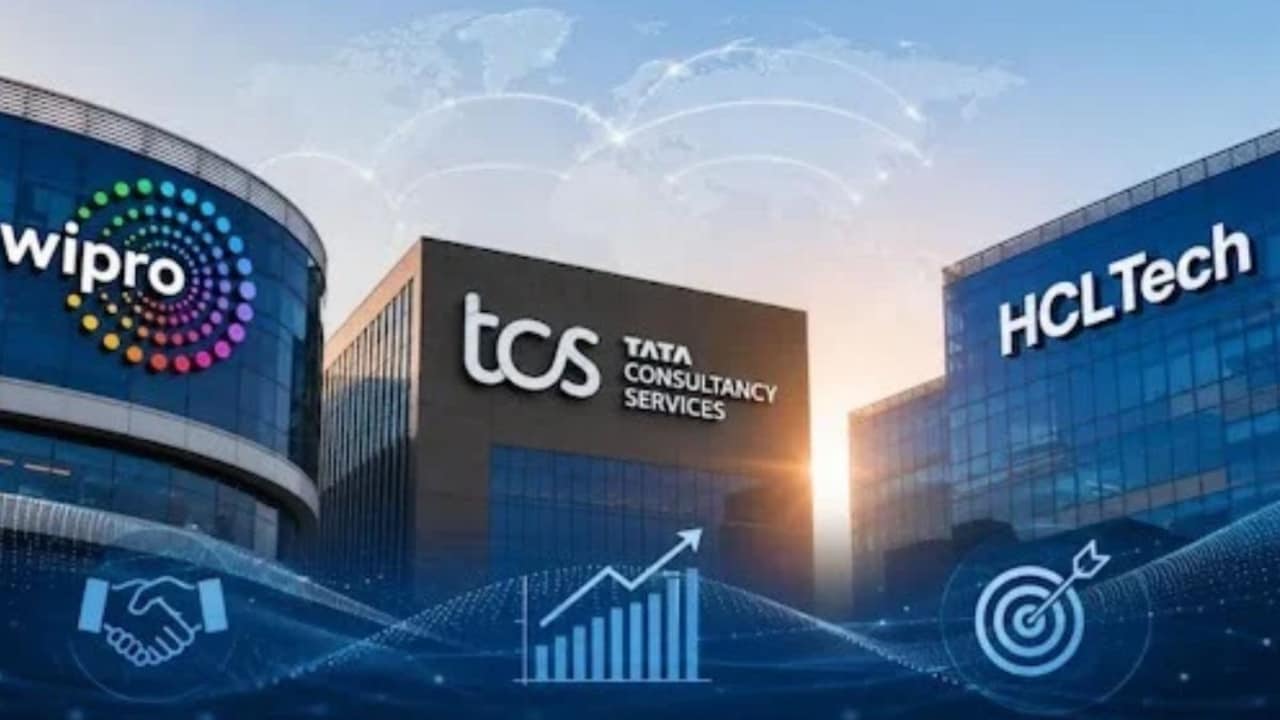
Panic is loud. Strategy is quiet. Right now, the noise machine is spinning a frantic narrative about Indian IT giants getting sidelined by US immigration restrictions and worker sponsorship suspensions. The headlines scream about closed doors, blocked pathways, and the sudden termination of standard operating procedures for permanent residency pipelines.
Every pundit in the tech corridor is hyperventilating. They want you to believe that the traditional offshore-to-onshore talent conveyor belt is dead, destroyed by bureaucratic decree and protectionist posturing.
They are dead wrong.
I have spent the last fifteen years watching outsourcing behemoths treat the H-1B visa and the EB-2 or EB-3 green card backlog as a cheap human warehousing strategy. They brought bodies across oceans, parked them in suburban office parks across New Jersey and Texas, and billed clients hourly rates while keeping employees tethered to a single employer via the perpetual carrot of permanent residency sponsorship. It was a model built on geographical arbitrage, high-volume headcounts, and margin compression disguised as digital transformation.
That model deserved to die. The current suspension is not a tragedy for Indian IT. It is an eviction notice from an outdated business model that forced these companies to act as immigration legal departments rather than high-value engineering powerhouses.
The Myth of the Offshore Advantage
Let us strip away the corporate PR and look at the math that built the modern IT services empire. For decades, the pitch was simple: we can build your software cheaper because we have access to an endless supply of engineering graduates in Bengaluru, Hyderabad, and Pune. When clients demanded onsite presence, we flew developers over or shipped them via visa pipelines.
It worked when software was about writing boilerplate code, maintaining legacy mainframes, and running massive enterprise resource planning upgrades. Those days vanished years ago, yet companies kept using the same recruitment machinery.
When a firm relies on sponsoring thousands of workers for green cards as its primary employee retention hook, something has gone fundamentally wrong with the actual work. You do not need to lock people into a seven-year legal servitude loop if your engineering culture is electric, your compensation is competitive, and your projects solve hard problems. You do that when your primary competitive advantage is a lower hourly billing rate for commoditized labor.
The suspension of sponsorship privileges forces an uncomfortable reckoning. It strips away the crutch. Firms can no longer hoard human capital in visa holding patterns, waiting for priority dates to crawl forward while billing clients top-dollar onsite rates. They now have to compete on merit, speed, and architectural brilliance.
What Everyone Gets Wrong About Local Talent
The lazy consensus in every major financial publication right now is that without direct worker sponsorship pathways, Indian service providers will lose their ability to service US Fortune 500 clients.
This assumes that US enterprise clients care about where an engineer's passport was issued. They do not. They care about velocity, security compliance, and domain expertise.
Imagine a scenario where a major financial institution in New York needs a complex cloud migration completed. Under the old paradigm, the vendor would draft a proposal heavy on onsite bodies, relying on visa holders to sit in Manhattan cubicles. That approach added friction, immense overhead, and regulatory exposure.
The smartest players in the ecosystem realized years ago that the future of global delivery is borderless and asynchronous. It is not about shipping bodies across borders; it is about shipping intelligence instantly.
By closing off the easy pipeline of imported labor, regulatory bodies have accidentally forced Indian IT firms to mature. They are pouring capital into nearshore delivery centers in Latin America, expanding deep local engineering hubs within the United States by hiring American citizens and green card holders directly, and doubling down on proprietary software platforms rather than human headcounts.
Look at the margin profiles of the firms that have already diversified their delivery models. Their operating margins are expanding precisely because they stopped trying to manage thousands of complex immigration petitions and started focusing on artificial intelligence automation, cloud-native architecture, and high-margin consulting.
The Death of Body Shopping
We need to call out what this industry was doing for thirty years: high-end body shopping.
Let us be brutally honest. A vast percentage of sponsored workers were deployed on staff-augmentation contracts, essentially functioning as outsourced temporary labor rather than strategic consultants. This created a bloated corporate structure where middle management spent more time tracking visa compliance, wage levels, and labor condition applications than optimizing code or architecting scalable systems.
When a government agency halts sponsorship privileges, it forces a purge of this administrative bloat. It separates the real technology firms from the staffing agencies disguised as software giants.
The companies that will survive and dominate the next decade are the ones cheering quietly behind closed doors while their public relations teams issue obligatory statements of concern. They wanted an excuse to kill the low-margin, high-headcount contracts that drag down their return on equity. They wanted a catalyst to accelerate localized hiring in the US market, blending local engineering leadership with hyper-efficient offshore execution hubs.
The Counter-Intuitive Truth About Retention
For years, human resources departments in major IT firms treated green card sponsorship as the ultimate golden handcuff. An employee trapped in the permanent residency backlog could not easily leave for a competitor without restarting a multi-year bureaucratic nightmare.
That created a toxic corporate culture of passive compliance. Engineers stayed not because they loved the work, but because abandoning their priority date felt like financial suicide.
When you remove the green card carrot, retention becomes an operational emergency. Companies must suddenly offer compelling career trajectories, cutting-edge technical challenges, and market-rate compensation that does not rely on immigration status as leverage.
I have watched brilliant software architects flee traditional IT services the moment their priority dates became current, simply because they were exhausted by bureaucratic stagnation. The firms losing their sponsorship privileges are suddenly forced to answer a terrifying question: if our employees are free to leave tomorrow without losing their legal status, why would they stay with us today?
Answering that question requires a complete overhaul of corporate culture, engineering standards, and leadership accountability. That is not a crisis. That is a long-overdue awakening.
Building the
Why The Green Card Suspension Is The Best Thing That Ever Happened To Indian IT
business, technology
Everyone is panicking over the recent suspensions hitting Indian IT firms from United States worker sponsorship programmes. The headlines scream about quotas, closed doors, and the death of the traditional service model. Analysts on television are mourning the end of an era, predicting mass departures and crippled margins for offshore giants. They have got it completely backwards.
This suspension is not a tragedy. It is a long-overdue detox.
I have spent the last fifteen years watching legacy IT vendors treat US visa pipelines like cheap bulk freight lines. They built entire business models on labour arbitrage, importing thousands of mid-level engineers to write basic code on-site while billing clients top-dollar rates. It was a brilliant rent-seeking strategy for an analog era. But it kept margins low relative to true software product companies, chained delivery to physical bodies sitting in cubicles across New Jersey and Texas, and addicted the industry to regulatory loopholes instead of structural innovation.
When you cut off the supply of cheap carbon, you force a shift to capital and code.
The Myth of the On-Site Necessity
Look at the premise everyone accepts without blinking: that American enterprise clients cannot function without armies of contractors physically parked in their offices. It is an argument manufactured by HR departments and immigration lawyers whose billable hours depend on maintaining friction.
The pandemic already proved that geography is mostly irrelevant to software delivery. Yet, legacy firms slipped right back into old habits the moment flights resumed, treating the H-1B lottery and related sponsorship channels as oxygen rather than oxygen masks. When a system relies on moving bodies across oceans to solve problems that can be solved over an encrypted connection, it is not an engineering operation. It is a travel agency with a high-end billing department.
By freezing these sponsorships, regulatory bodies are inadvertently doing what boardrooms lacked the spine to execute themselves. They are killing the body-shop model.
Where the Smart Money is Moving Right Now
Companies that survive this transition are already pivoting away from headcount-driven contracts toward outcome-based, proprietary platforms. Instead of renting out five hundred developers at eighty dollars an hour to patch legacy databases, the winners are deploying automated migration toolsets that finish the job in a weekend for a flat fee.
You cannot bill by the head when you have automated the head out of the workflow. That terrifies middle management. It excites anyone building actual enterprise value.
Consider the economics. When you scale through people, your revenue grows linearly while your operational overhead scales right alongside it. When you scale through IP, automation, and deep domain-specific vertical software, revenue detaches from headcount. The firms currently locked out of worker sponsorship programmes are forced to invest their massive cash reserves into building real products rather than lobbying for visa caps.
The Talent Paradox No One Wants to Discuss
Let us address the human element, because the conventional narrative paints this as a disaster for Indian engineering talent. That is paternalistic nonsense.
The top tier of Indian engineering talent stopped wanting to sit in an aging suburban office park in Schaumburg years ago. The best minds in Bengaluru, Hyderabad, and Pune want to build global products, lead remote-first open-source projects, or scale domestic unicorns that pay competitive local currency without the psychological toll of a visa lottery tethering their entire livelihood to a single corporate employer.
The sponsorship bottleneck primarily hurts the middle tier—those who used the US visa route as a default career upgrade rather than an exceptional deployment of specialized skill. If a firm's business model collapses because they cannot import generic Java developers, that business model deserved to fail. Real engineering talent goes where the hard problems are, and increasingly, those problems are being solved locally.
Stop Trying to Fix the Pipeline
Corporate boards are currently wasting millions retaining high-priced DC lobbyists to carve out exemptions or find alternative visa categories. It is a fool's errand. The regulatory wind is blowing firmly toward domestic workforce protection in the West, and no amount of lobbying will permanently reverse that political gravity.
Stop trying to patch a leaking pipe when the whole plumbing system is obsolete.
The firms that emerge from this shakeout as market leaders will be the ones that abandoned the body-shop mentality on day one. They will use the savings from reduced relocation and sponsorship overhead to fund R&D centers in emerging tech hubs across the Global South. They will sell software, not seats.
The golden handcuffs are off. If that makes you uncomfortable, you were probably selling seats instead of solutions.