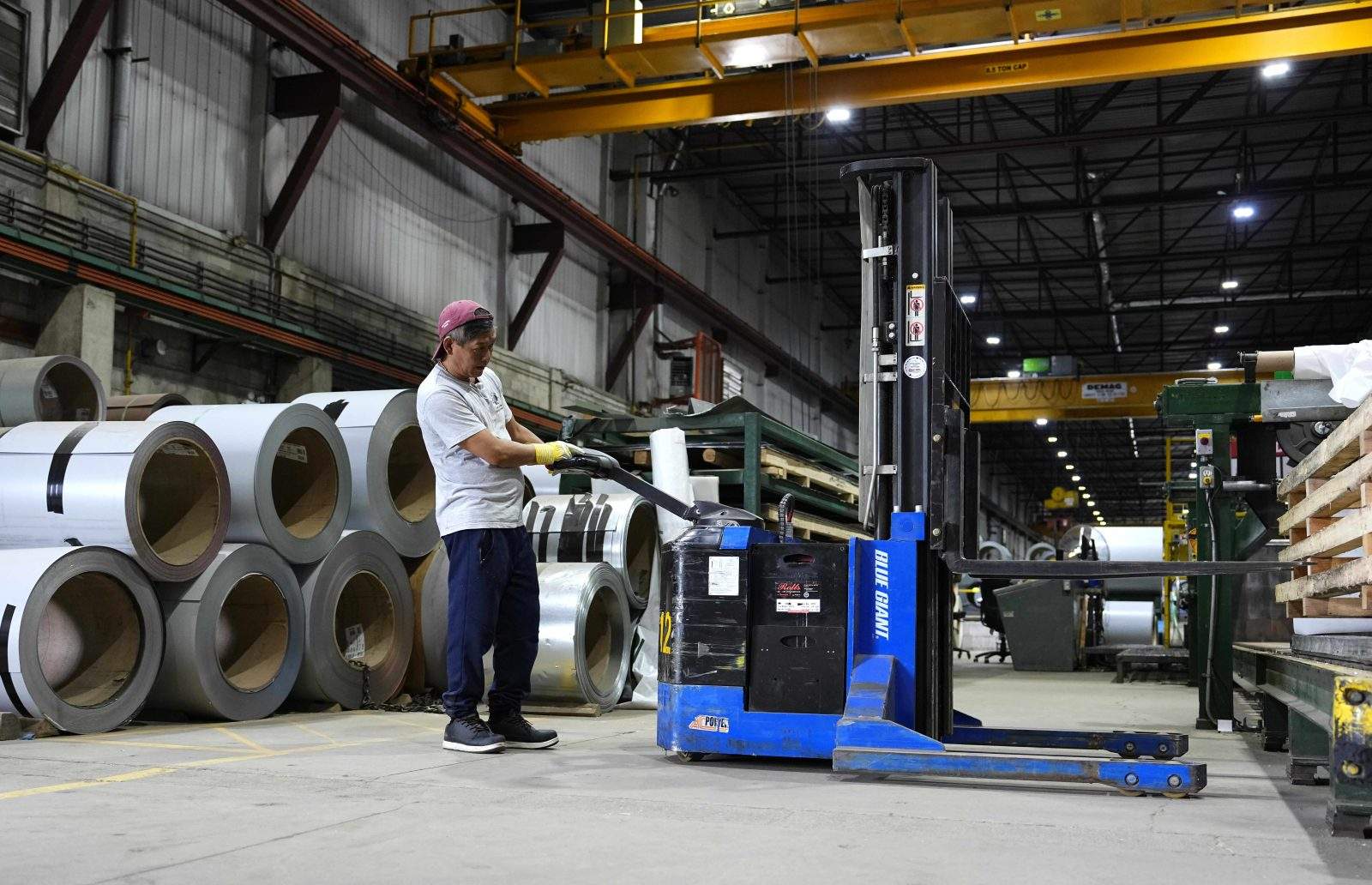
The furnace never truly sleeps. In towns like Hamilton, Ontario, the orange glow of molten metal paints the night sky, a ritual older than most of the workers standing on the floor. For decades, that heat represented a predictable rhythm: raw power melted down, shaped into coils, and shipped across an invisible line to meet the insatiable appetite of American manufacturing. But lately, the air in the breakrooms feels different. Heavy.
Consider Arthur, a machinist who has spent twenty-eight years listening to the particular, rhythmic roar of the rolling mills. He does not read policy papers at breakfast. He watches the shipping manifests. And lately, those papers tell a story of stagnation. When the White House levied steep duties on foreign metals, turning up the dial to a crushing fifty percent on steel and aluminum imports, it wasn't just a political headline scribbled in Washington. For Arthur and thousands like him, it was a sudden structural shift in the tectonic plates of continental trade.
The Canadian steel industry group recently delivered a sobering assessment that most workers already felt in their bones: these heavy metal tariffs are not a temporary squall. They are the new climate.
Trade winds blow harsh and cold when protectionism takes root. For generations, the economic architecture between neighbors was built on the premise of open borders and integrated supply chains. A car manufactured in Ontario relied on steel forged stateside; an American skyscraper drew its beams from Canadian foundries. Tariffs act like sand poured directly into that finely tuned engine. They create an artificial wall where cooperation used to live, forcing companies to re-engineer decades-old logistics overnight.
When the cost of crossing the border spikes by half, the math changes instantly. Executives in boardrooms from Toronto to Detroit stop asking how to optimize cross-border partnerships and start asking how to survive isolation.
The consequences ripple outward in concentric circles of friction. On the American side, companies that depend on imported steel—builders, manufacturers, and fabricators—find themselves shouldering inflated overhead costs. A small-scale tool manufacturer in Oregon or a heavy-equipment maker in the Midwest suddenly watches their operational budget stretch to the breaking point, forced to choose between absorbing massive losses or passing them down to everyday consumers. Meanwhile, Canadian producers face a bitter paradox. As industry leaders point out, the domestic market simply cannot absorb the sheer volume of galvanized steel rolling out of plants like Stelco. They need to export. They need the American market. Without it, the mills face agonizing choices, from scaling back shifts to confronting painful layoffs that shake the very foundation of working-class communities.
Diplomats still meet behind closed doors. Negotiators trade proposals week after week, searching for a path back to predictability. Political tides shift in Congress, and new leaders promise relief just over the horizon. Yet, industry insiders know a fundamental truth: pulling back policy walls is infinitely harder than building them. Once supply chains fracture and capital redirects inward, the old map ceases to exist.
Back on the factory floor, the shift change siren cuts through the din. Workers pull off their heavy gloves, wiping soot from their brows. They know the debates happening in distant capitals will shape their livelihood for years to come. The heat inside the furnace remains blindingly bright, but the horizon outside has never looked more uncertain.
Joly Exposes Stelco's Trump Tariff Move After Securing Canadian Jobs
This video provides context on the political and economic pressures facing Canadian steel producers and workers amid ongoing trade tensions.