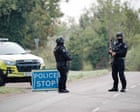
Every July, commentators drag out the same tired script about Drumcree. They look at the quiet fields, the lack of physical clashes, and the heavy police cordons, then immediately publish the standard diagnosis: the absence of a riot does not mean the underlying tension has evaporated. They tell us that the relative calm is just a ticking clock, a fragile pause before old tribal wounds tear open again.
It is a comfortable narrative. It requires zero analytical heavy lifting, feeds on historical nostalgia, and keeps the peace-process industry safely employed. It is also completely wrong. In related news, we also covered: What the Repeated Tragedies at Manhattan Homeless Shelters Actually Reveal About Safety.
Focusing on whether the Orange Order walks down Garvaghy Road misses the structural economic and social transformation rewriting Northern Ireland's actual reality. The lazy consensus insists that symbols dictate destiny. I have watched analysts obsess over serial parades while the entire commercial landscape shifted beneath their feet. We are treating a twentieth-century political theater piece as if it holds the key to twenty-first-century stability, ignoring the fact that the actors have aged out and the audience has walked away.
The Myth of Perpetual Tribal Equilibrium
Let us define terms. When establishment journalists talk about the Drumcree standoff, they rely on a zero-sum framework: unionist grievance versus nationalist resistance, locked in an eternal tug-of-war where every missed step on a hill is a powder keg. This model assumes that community identity in Northern Ireland remains frozen in amber, permanently dictated by whether a church parade secures its traditional route. NPR has also covered this important topic in extensive detail.
Data tells a vastly different story. Employment rates, foreign direct investment, and shifting demographic footprints show a population far more interested in cost-of-living metrics, housing availability, and cross-border tech hubs than ancestral turf wars. When you look at local polling over the past decade, generational priorities have fractured the old monoliths. Younger demographics on both sides of the sectarian divide view the annual standoffs with the same enthusiasm they reserve for dial-up internet.
Yet, institutional commentators refuse to let go. Why? Because peace is an administrative nightmare to monetize, whereas perpetual tension generates effortless opinion columns.
Imagine a scenario where every political analyst in Belfast woke up tomorrow morning and decided to judge the health of the region by median household income rather than church parade permissions. The entire pundit class would be out of work by noon.
Where the Conventional Analysis Breaks Down
The core error in the standard commentary is mistaking institutional inertia for active engagement. The Orange Order still files for its march; the Parades Commission still issues its determinations; a handful of protestors still show up for the cameras. It looks like the nineties on repeat.
Beneath that thin veneer of ritualized confrontation, the incentive structures have collapsed. Businesses across Portadown and surrounding areas learned long ago that instability kills investment. Local chambers of commerce do not care about Garvaghy Road; they care about supply chains, skilled labor retention, and infrastructure spending. The economic cost of past civil unrest created an inoculated business community that actively works around political posturing.
Of course, my contrarian stance comes with a downside. By dismissing these standoffs as hollow echoes, I risk underestimating the very real psychological damage that decades of division inflicted on older residents. Trauma is not a spreadsheet. For individuals who lived through the worst of the Troubles, a heavy police presence on a Sunday morning brings back visceral fear. That pain is real.
However, confusing individual trauma with systemic political risk is analytical malpractice. A localized, ritualized dispute between dwindling institutional remnants does not dictate the trajectory of a modern European regional economy.
Dismantling the Manufactured Crisis
Let us address the persistent questions that fill comment sections every summer.
Why won't they just compromise? Because compromise requires both sides to value the outcome more than the grievance, and right now, the primary value of the Drumcree dispute is its utility as a security blanket for political hardliners who have nothing else to offer.
Is the lack of violence deceptive? Only if you believe that a dormant dispute is identical to an active threat. By that logic, every cold war border is moments away from a nuclear exchange. Societies evolve past their flashpoints precisely because the cost of maintaining the conflict outweighs any conceivable gain.
If you want to understand Northern Ireland's trajectory, stop looking at an Orange lodge church service. Look at Belfast's thriving software sector. Look at the cross-border logistics firms optimizing trade routes. Look at the demographic shifts rendering old sectarian math obsolete.
The standoff at Drumcree is not a simmering threat to peace. It is a heritage project. Treat it like one.