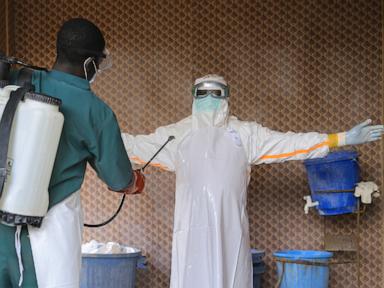
The headlines always follow the exact same script. They flash high casualty counts, track rising case curves, and demand emergency funding for vaccines and containment tents. The narrative surrounding major outbreaks in Central Africa reduces complex socio-political fractures to a simple mathematical tragedy. When reports trumpet figures exceeding 4,000 deaths from a single epidemic wave, they manage to be simultaneously accurate and deeply misleading.
We are tracking the wrong metric. We are treating a symptom of institutional rot as if it were a pure pathogen problem.
I have spent years watching international response apparatuses roll into volatile provinces with billions of dollars worth of high-tech gear, only to watch local populations actively hide the sick. Bureaucrats scratch their heads in air-conditioned boardrooms, wondering why villagers distrust medical teams in hazmat suits. They blame ignorance. They blame superstition. They are wrong. The resistance is not born of primitive fear; it is a rational, calculated rejection of a system that treats affected communities as biological hazards rather than human beings.
The Misdiagnosis of Fear
Epidemiologists love to talk about community engagement as a PR hurdle. If we just explain the science better, the logic goes, people will stop burying their dead in secret.
This view ignores the brutal history on the ground. When an international health intervention arrives backed by armed state forces, enforcing curfews and quarantine zones while basic food security and civilian protection are ignored, the outbreak response becomes indistinguishable from military occupation. The refusal to cooperate with clinical teams is rarely an epistemological failure. It is a political veto.
Consider the standard playbook of foreign aid during a hemorrhagic fever crisis. Millions pour into imported therapeutics and isolation wards managed by foreign personnel who speak none of the local languages. Meanwhile, the local clinic five miles down the road lacks running water, gloves, and paracetamol. When foreign doctors fly in wearing space suits to treat an elite-prioritized disease while everyday malaria and cholera kill ten times as many children quietly in the shadows, residents notice.
The backlash against response teams is a symptom of structural neglect. Until we stop treating local populations as vectors to be managed and start treating them as stakeholders with valid grievances against the state, every containment strategy will rely on coercion. And coercion in public health is a catastrophic failure mode.
Why High-Tech Bio-Containment Backfires
The conventional wisdom dictates that stopping a deadly pathogen requires maximum centralization. Build massive treatment centers, centralize testing, and funnel every suspected case through bureaucratic bottlenecks.
This approach violates every principle of rapid, localized disease intelligence. Centralized mega-clinics are perceived by local communities as holding facilities where relatives go to die out of sight, stripped of traditional burial rites and cultural dignity. Families hide their sick relatives under floorboards, not because they do not care, but because the alternative means total disenfranchisement from the loss of their loved ones.
When you design a containment protocol that outlaws grieving, you guarantee evasion.
A superior operational model reverses this paradigm entirely. Decentralize care to the neighborhood level. Empower local healers and community leaders who already possess the trust of the populace. Provide them with basic protective barriers and hydration tools, rather than flying in western clinicians who require armed guards to walk through a market. If the community owns the response, the outbreak burns out organically. If the response is imposed from above by men with rifles and foreign accents, the community goes underground.
The True Cost of Panic-Driven Funding
Global health financing operates on a perverse incentive structure. Quiet, persistent killers like nutritional deficiencies, lower respiratory infections, and waterborne diseases receive a fraction of the budget because they lack cinematic terror. Ebola commands global headlines, emergency UN resolutions, and massive capital injections because it kills fast and looks terrifying on television.
When a crisis hits the four-thousand-death mark, the money cannons fire indiscriminately. Contracts are signed with pharmaceutical suppliers and logistics firms. A vast industrial complex of crisis management spins up overnight.
Yet, when the panic subsides and the cameras leave, the permanent health infrastructure is often left worse than before. Local health workers recruited temporarily for the emergency see their stipends vanish. Facilities built for isolation are abandoned. The underlying poverty, lack of clean water, and collapsed governance structures remain completely untouched, primed for the next pathogen to exploit.
We are funding episodic firestorms while refusing to fix the dry timber of the forest.
Dismantling the Savior Complex
The international response mechanism suffers from an incurable case of historical amnesia. Every decade, the same drama plays out in the Congo basin or West Africa. A novel flare-up occurs, western institutions panic, colonial-era containment tactics are hastily redeployed, resistance flares up, brute force is applied, and the curve eventually flattens through a mix of natural immunity and exhausted compliance. Then everyone pats themselves on the back and goes home until the next cycle.
This is not progress. This is an expensive, high-mortality loop.
To break it, we have to abandon the fantasy that health security can be delivered at gunpoint or through top-down philanthropy. Real security requires structural parity, genuine local leadership, and an admission that governance and biology are inextricably linked.
Stop asking why local populations are suspicious of modern medicine. Start asking why modern medicine has spent a century giving them legitimate reasons to be.