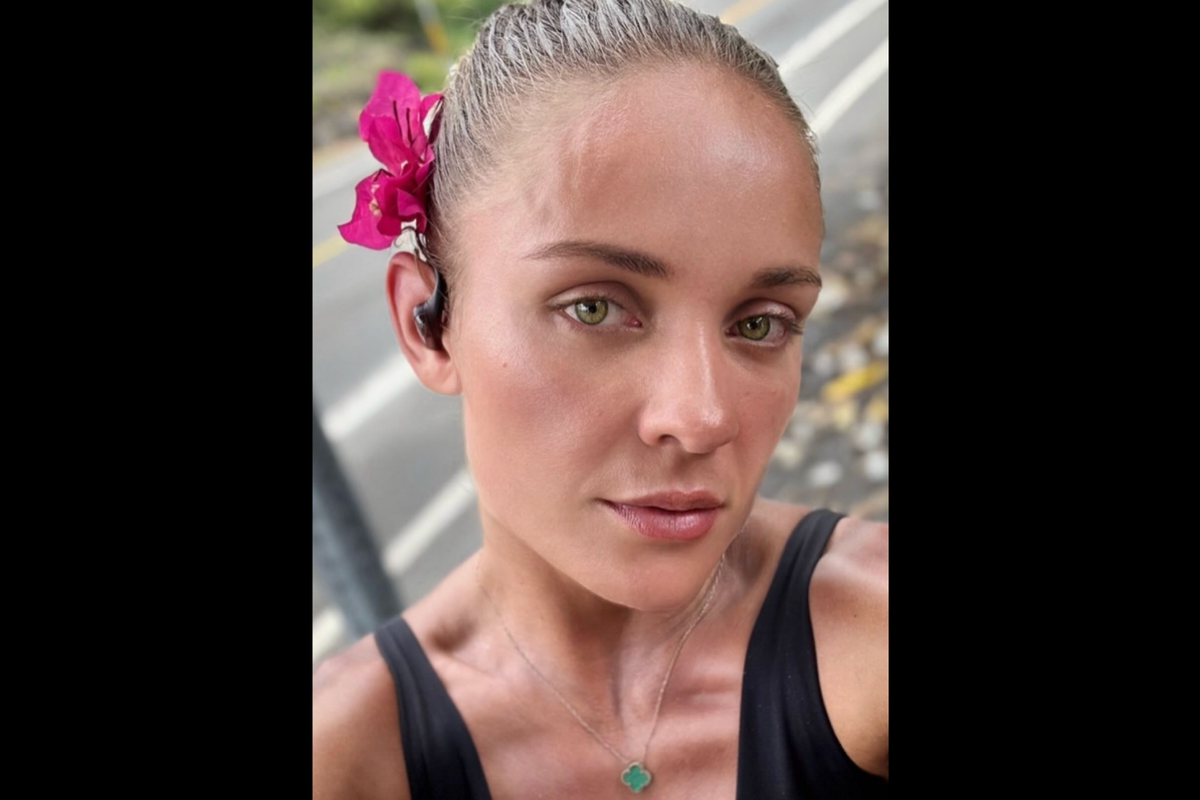
The headlines always follow the same script. A vibrant, sun-kissed influencer with 200,000 followers collapses during the swim or the run of a 140.6-mile race. The public reacts with "shock" and "tragedy." They call it a freak accident. They blame the heat in Texas or a hidden genetic defect.
They are wrong. There is nothing "freak" about a body shutting down when it is being treated like a content farm rather than a biological organism.
We have reached a point where the aesthetic of fitness has completely decoupled from the reality of health. The recent death of a Brazilian fitness influencer at Ironman Texas isn't an isolated tragedy; it is the logical conclusion of a culture that values the grind over the glimmer of actual physiological longevity. If you think a 17-hour race is the pinnacle of wellness, you’ve been sold a lie by a marketing department in Tampa.
The Aesthetic Fallacy
Influencers live in a world of visual extremes. To maintain the "fitness" look—the vascularity, the low body fat, the muscle definition—they often employ protocols that are diametrically opposed to endurance performance.
I have consulted for athletes who look like Greek gods but possess the blood chemistry of a Victorian ghost. They are chronically dehydrated to look "shredded" for the 'gram. They use thermogenics to keep their metabolic rate high. They live in a state of systemic inflammation. Then, they decide to drop into one of the most grueling physical tests on the planet.
The heart doesn’t care about your six-pack. In fact, that six-pack is often a sign that you lack the visceral fat stores and hormonal balance required to survive extreme thermal stress. When you combine the diuretic effect of "looking lean" with the 90-degree humidity of a Texas spring, you aren't an athlete. You are a ticking time bomb.
The Mathematics of a Cardiac Event
Let’s look at the actual physics of the Ironman swim. Most deaths in triathlon happen in the water. The "lazy consensus" says it's drowning. The data suggests SIPE: Swimming-Induced Pulmonary Edema.
$P_{cap} > \pi_{cap} + P_{if}$
When you shove a body primed by high-intensity "influencer" workouts into cold water, or even warm water under high adrenaline, peripheral vasoconstriction kicks in. Blood is forced into the central thoracic cavity. The pressure in the pulmonary capillaries ($P_{cap}$) spikes. If that pressure exceeds the oncotic pressure ($\pi_{cap}$) and interstitial fluid pressure ($P_{if}$), fluid floods the lungs.
You aren't drowning in the lake. You are drowning in your own blood. Influencers, who often carry more muscle mass than the traditional "skinny-fat" endurance athlete, create even higher internal pressures. Their hearts have to work harder to move blood through dense, hyper-toned tissue that is demanding oxygen it can’t get.
The Myth of the Healthy Heart
The endurance industry has done a masterful job of convincing the public that more is always better. If a 5k is good, a marathon is better, and an Ironman is the "ultimate" achievement.
This is physiological gaslighting.
Long-term endurance training at high intensities leads to "Athlete’s Heart," a condition characterized by ventricular hypertrophy. While often benign, the "influencer" version of this—mixing heavy resistance training with sudden, high-volume endurance blocks—creates a specific type of cardiac remodeling that increases the risk of atrial fibrillation and myocardial scarring.
I’ve seen cardiac MRIs of 30-year-old endurance junkies that look like they belong to 70-year-old smokers. We are seeing a rise in "Late Gadolinium Enhancement" (LGE), which is essentially scarring on the heart muscle. This scar tissue becomes a circuit for arrhythmias. When the heat of Texas hits and your electrolytes are slightly off because you were trying to maintain a "dry" look for your pre-race photos, the circuit trips. The lights go out.
Texas is a Red Flag Not a Race Track
Texas in late April or May is a graveyard for the unprepared. The humidity prevents evaporative cooling. Your sweat doesn't disappear; it just sits on your skin while your core temperature climbs toward 104°F.
The "influencer" mindset handles this by posting a quote about "pain being temporary." This is dangerous idiocy. Pain is a feedback loop. When your heart rate variability (HRV) bottoms out and your perceived exertion is a 10 while your pace is a crawl, your body is begging you to stop. But the "content" requires the finish line.
We are incentivizing people to ignore their own biological survival mechanisms for the sake of a digital medal and a high-engagement post. The Ironman "All World Athlete" status has become the new blue checkmark, and people are literally dying to get it.
The Supplement Shadow
Nobody wants to talk about the "natural" supplements that dominate the influencer space. Pre-workouts loaded with exotic stimulants, "fat burners" that act as potent vasoconstrictors, and high-dose caffeine protocols.
Take a person who has been using stimulants to power through 5:00 AM gym sessions for three years. Put them in a high-stress, mass-start swim. Their sympathetic nervous system is already redlining. The addition of race-day adrenaline creates a "catecholamine storm." The heart's electrical system can't handle the load. It’s not a "freak accident." It’s an overdose of stress on an over-stimulated system.
The Wrong Questions
People ask: "How can we make these races safer?"
They ask: "Was the medical tent properly staffed?"
These are the wrong questions. The real question is: "Why are we validating extreme endurance as a proxy for health?"
An Ironman is not a health event. It is a feat of ego and logistics. It is an organized bout of self-destruction. If we treated it with the same caution we treat professional MMA or high-altitude mountaineering, we might see fewer bodies on the pavement. Instead, we frame it as the "lifestyle" goal for every person who buys a pair of expensive running shoes.
Stop Training Like an Influencer
If you want to actually survive your 30s and 40s with a functioning cardiovascular system, you need to abandon the influencer blueprint.
- Prioritize Internal Metrics over External Aesthetics: If your resting heart rate is climbing while your "leanness" is increasing, you are failing.
- End the Stimulant Dependency: If you can't train without a proprietary blend of caffeine and "mood enhancers," you shouldn't be training for an endurance event. You are masking fatigue that is trying to save your life.
- Respect the Heat: If the Wet Bulb Globe Temperature (WBGT) is over 80°F, your "PR" doesn't matter. The physics of heat dissipation are non-negotiable.
- Demand Scans, Not Likes: Before you sign up for a full distance race, get a calcium score and a stress echo. Not because you’re "old," but because you’ve been redlining your engine for the sake of a camera.
The fitness industry doesn't want you to be healthy; it wants you to be a consumer of "the grind." But the grind eventually turns everything to dust, including your heart muscle.
Stop chasing the finish line for the sake of the feed. The most impressive "fitness" achievement isn't a medal from Texas; it’s being alive and functional at 80. You won't get there by redlining a dehydrated, over-caffeinated, hyper-inflamed body through a swamp in May.
Check your ego at the transition rack. Or don't. The medical tent has plenty of body bags for those who think "mind over matter" applies to cardiac physiology.